Week 1 of the Program: Part 1

Halfway through our first week with our Japanese students, we already seem to be making some progress! My group consists of six interns and two incredibly bright Japanese high school students, named Miyu and Kayato. Both started out a bit quiet on Monday, but throughout the week have gotten more confident with asking questions and reading. 

To encourage the students towards a global mindset, we’ve been discussing culture, the American and Japanese educational systems, and ways that our students can apply the subjects they love in school now to college, study abroad, and future life goals. To engage the students with speaking and listening to English, we have played games like telephone and story-creating, talked about the 2020 Tokyo Olympics, and given presentations on college majors and career paths for certain academic interests.

For the Olympics (Tuesday afternoon), we spent time having the students think of ways they personally could assist in making the Games a success. Responses included teaching foreigners about Japanese culture and language, opening up their homes to visitors from all over the world, and encouraging the government to introduce a large-scale free wifi program around Tokyo. They gave their responses a ton of thought and didn't hesitate to ask our opinions as well! We finished the discussion by creating posters and having the Japanese students in each group present their ideas to the entire program- probably a stressful experience for all of them, but it made our students really put the English phrases they had been learning for the past few days to work. 

Japanese students present alongside their intern mentors. 

Japanese students present alongside their intern mentors. 

The intern presentations on the universities we attend and our majors have hopefully sparked some interest in the students. My group has a good mixture of economics, math, and Japanese majors, and we all have other interests that came out in our presentations! Kayato asked a lot of questions during intern Lynda’s math major presentation, and Miyu seemed eager to gather as much information as possible on American universities overall. She and Kayato were also both interested in the focus on sports in college- Miyu loves to dance, while Kayato plays basketball, and both were wondering how to continue those interests at an American university. We ended up speaking about not only our academic interests, but on how we and other American students enjoy our time outside the classroom as well. 

On Tuesday, my students began asking questions about life in America versus Japan, and we spent a while (very interestingly) discussing Kayato’s question about why he thinks Americans are more creative than Japanese. The interns and students alike got very into the discussion while we thought of possible reasons, eventually finding some aspects of Japanese culture are even more creative than in America! 

The interns in my group have also been doing daily vocabulary lists for our students- just to keep track of useful words they’ve had trouble with and can practice more. Every morning when the students come in, we’ve been starting off the session by reviewing hard words from the day before. We’ve taught them the definitions of cooperate, unjust, and nuanced, just to name a few. The interns will keep building on our list as the week goes on, and give the students the final list at the end of the week for them to keep practicing. 

So far, the English level these students not only come into the program with but also the speed at which they pick up speaking is amazing to me. I hope that every week starts out as smoothly as this one. 

Enter: Sharehouses!

Sharehouses are common across Tokyo for both foreigners and Japanese alike. They are homes in the city, housing anywhere from three or four to over ten people, with separate bedrooms and shared cooking, living, and bathroom facilities. If you’re looking to immerse yourself in Japanese culture and language but don’t want to live with a host family, a sharehouse provides you with an immediate community of like-minded (and similar-aged) university students, workers, and foreign visitors! 

All of the Come on Out interns are living in sharehouses (and a few with host families for part of their stay in Japan). I’m ecstatic to have a room in a sharehouse for the six weeks I am here- I have stayed with host families before and absolutely loved the experience, but I also wanted to try living on my own in Japan and cooking my own meals! I think that figuring out Japanese grocery stores is a learning experience about Japanese culture in and of itself. (Post coming later about Japanese grocery stores).

My sharehouse is in Jiyugaoka, a fantastic neighborhood filled with a mixture of boutique stores, custom coffee shops, bakeries, beautiful residential areas, and amazingly stylish residents. In my plain, untailored American clothes, I stuck out like a sore thumb.

Beautiful square in Jiyugaoka, surrounded by designer stores and cafes. 

Beautiful square in Jiyugaoka, surrounded by designer stores and cafes. 

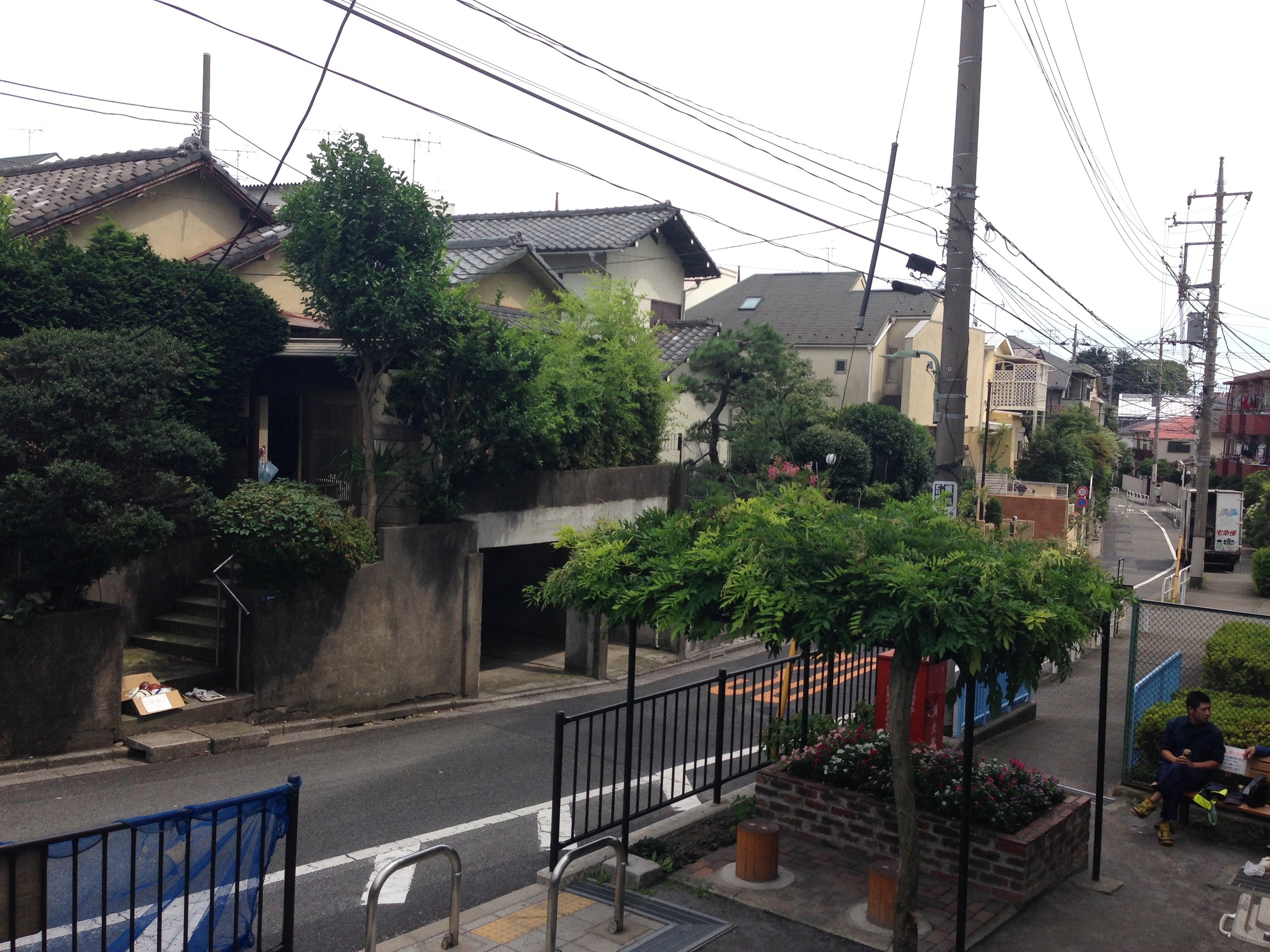
My house is located in a much quieter residential section, surrounded on all sides by other homes. It’s only a 30 second walk to a nearby konbini where I plan to get breakfast every morning, and only another minute to my train station, Midorigaoka Station. I live right next to the train tracks, and it’s fascinating to see the gates come down over the tracks whenever a train is passing by, momentarily stopping traffic on the thin roads of my area. 

Lots of tangled telephone wires around the train tracks. 

Lots of tangled telephone wires around the train tracks. 

Rows of homes along tree-lined streets. 

Rows of homes along tree-lined streets. 

Five minutes west on foot is Okayama, a more bustling area around Tokyo Institute of Technology. Small restaurants and snack stores abound in the thin alleyway of the area.

Bustling alley near Okayama Station.

Bustling alley near Okayama Station.

I stopped at a Kaldi Coffee last night, an upscale coffee and specialty foods store chain common across Tokyo, and got a free cup of iced coffee and a great look into Japanese home coffee culture (so many different types of fancy coffee beans you can have ground for you!). They also carry a lot of foreign products like American chocolates and peanut butter, impossible to find in Japan elsewhere, imported cheeses, as well as many different wines. It’s the kind of store you would stop at before heading to a picnic in one of Tokyo’s many parks! Half an hour on foot (or one train stop) is the bustling center of Jiyugaoka. Either way, I have plenty in my area to explore (and eat)! 


Orientation Weekend

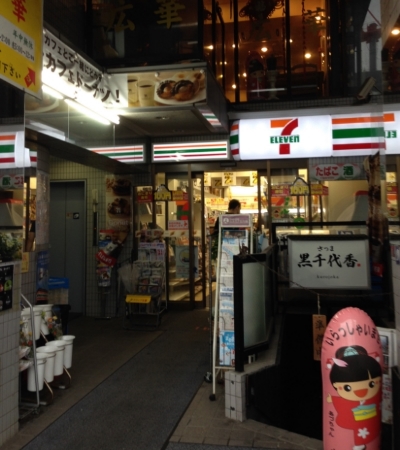
Saturday morning, orientation programs started! Just as exciting, I finally got the melon pan I had been looking forward to. Two other interns and I woke up early to explore a konbini (Japanese version of a convenience store) near the hotel. A konbini, though it shares some similarities to the American version of a convenience store, is honestly a completely different experience. A konbini sells everything from shampoo to fully cooked, ready to eat meals, and are everywhere in Tokyo- at least on every corner. It’s hard to walk two minutes without seeing one of the brightly lit signs. The melon pan I bought there is a cross between a cheap bread and a sugar cookie, shaped like a tortoise shell, and not tasting at all like melon. I also got a CC Lemon Vitamin C drink- fizzy and lemony, it was just what I needed to wake myself up a bit. 

An example of a konbini. 

An example of a konbini. 

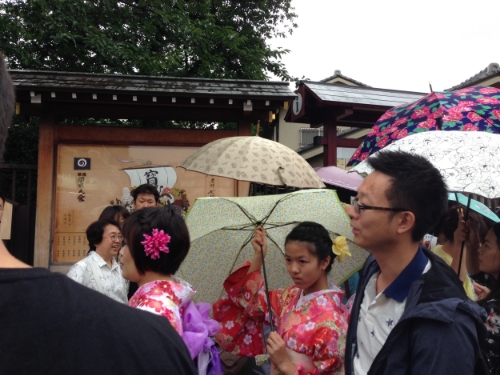
After breakfast, we had some free time to explore Asakusa. A festival was going on at the shrine at Senso-ji, the main temple complex in Asakusa that forms its largest tourist attraction. The temple was beautiful and people dressed in beautiful yukata (traditional Japanese casual summer dress) were everywhere!

Some of the beautiful yukata (along with the amazing umbrellas) seen during the festival.

Some of the beautiful yukata (along with the amazing umbrellas) seen during the festival.

The temple in the daylight. 

The temple in the daylight. 

However, my favorite part of the festival was the amazing variety of food stalls all around the temple. You could buy every street food from yakitori (grilled meat on a stick) to takoyaki (fried octopus bread balls) to sweets like manju and dango (sticky rice balls with sweet sauces or filled with bean paste). 

Sounds delicious, right? One of the many food stands outside the temple. 

Sounds delicious, right? One of the many food stands outside the temple. 

Saturday continued with a walk past Tokyo Skytree (the largest structure in Tokyo) to arrive at the Disaster Training Center. We went through four simulations in smaller groups, being trained on how to brave the force of a tsunami, how to extinguish a fire (with practice fire extinguishers), how to survive a level 7 earthquake, and how to escape a smoke-filled room during a fire. All the simulations were completely safe, but were great practice should disaster strike! We also watched a harrowing video depicting the Great Eastern Japan Earthquake and resulting tsunami, and the aftereffects around Japan. 

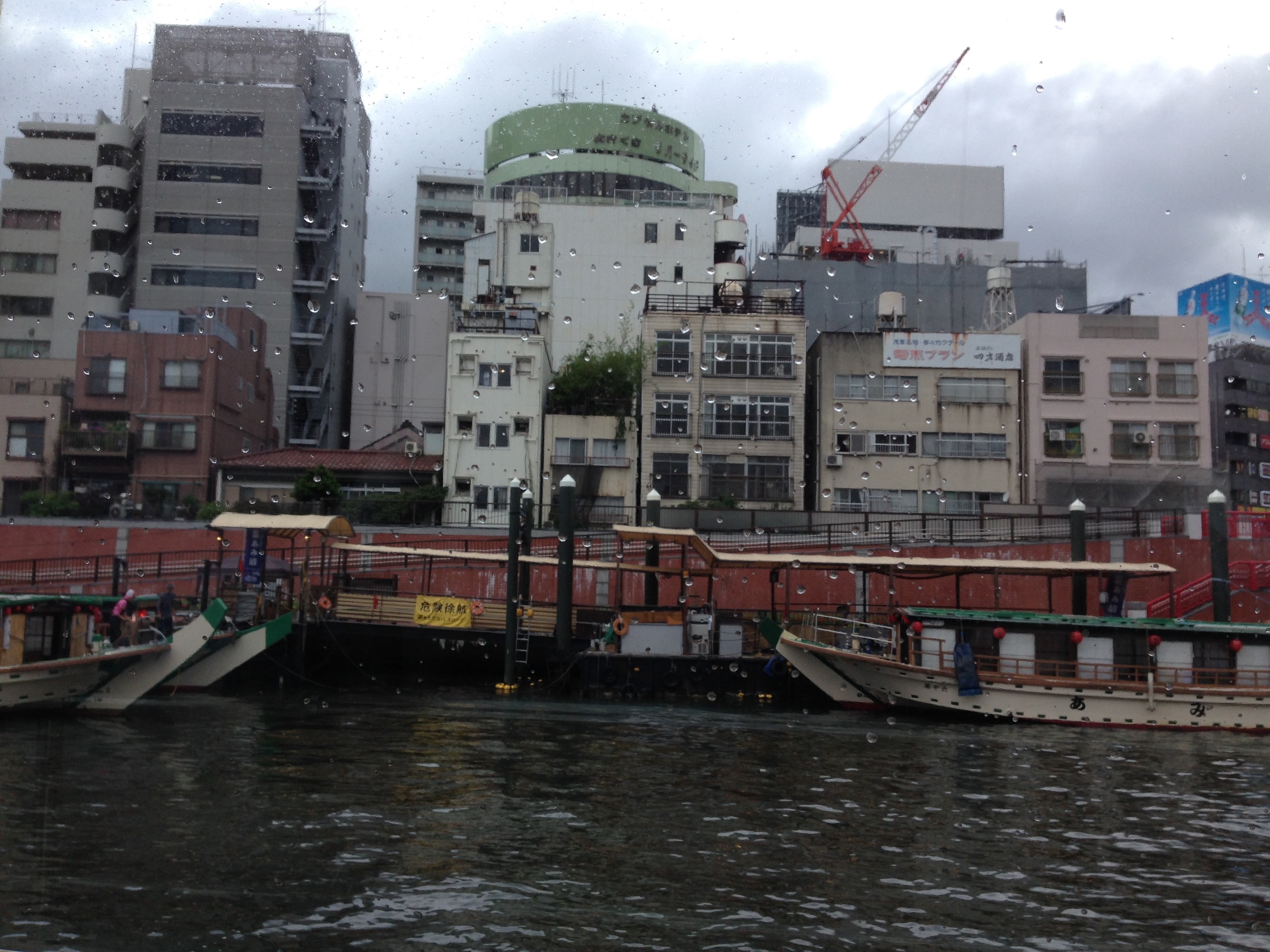
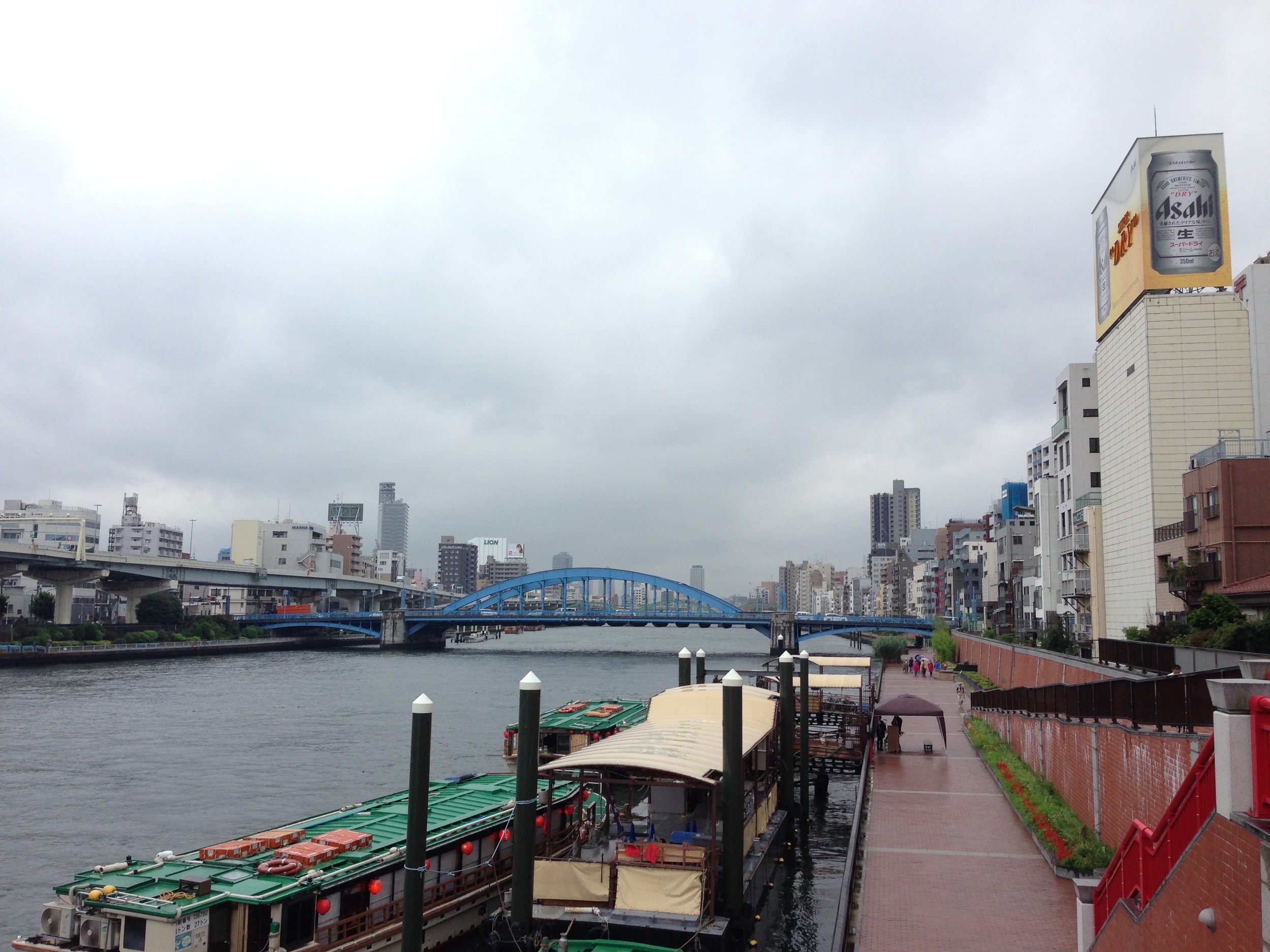
After the disaster training came a short boat ride to Hamamatsucho (floating past famous areas like Tsukiji Fish Market on the water) and a ride on the Yamanote Train Line to dinner in Akihabara. Dinner was at an izakaya (traditional Japanese pub) where we had our own private room! The meal included nabe (a stewpot of vegetables and meat cooked at the table on a small stove) and amazing appetizers of meat gelatin, potatoes, salads, and tuna sashimi.

Floating past other boats in the rain. 

Floating past other boats in the rain. 

The three hour long dinner was accompanied by loud conversations between the interns and program heads, who came to join us for long periods of time at our tables. Even though we were a bit exhausted after the day, a few interns and I ended up walking back from the dinner to the hostel (about 45 minute walk) to see more of the city before we left for our share houses the next day! The walk was the perfect ending to the day, and we passed through areas of Tokyo that we will likely not have time to come back to.  

Another boat picture: View down the boat path.

Another boat picture: View down the boat path.

One last picture- a view of Tokyo Skytree from a shopping center in Asakusa!

One last picture- a view of Tokyo Skytree from a shopping center in Asakusa!