
By SAM O’BRIEN
As one grows older, it becomes more and more likely that they hold a wish to travel back in time to talk with their younger self. Oftentimes, this desire is rooted in regrets, and the purpose of the visit is to warn oneself, to try and change the course of a river whose curves have already been sailed. Occasionally, the opposite is true: life turns out to be better and more interesting than anticipated. One wants to travel back to reassure their younger self that what they desire is not unattainable, but rather directly in front of them. They want to dispel the perpetual haze that surrounds our present and reveal a future that is both unexpected and satisfying. This is more in line with how I am feeling right now.
Almost exactly two years prior to me writing this very sentence, I was accepted into the Global English Workshop, now Camp, as a coach. My acceptance came in the midst of the pandemic, so when I affirmed my desire to participate, I was fully aware that the program would be run virtually. This fact saddened me a little, but it didn’t dash my hopes at all. Though my physical body would not be there, I would still have the chance to experience Japan through meaningful conversations with students. I was in my final year of college, completing a degree in linguistics, and I was thrilled to have an authentic language exchange experience. The twin miracles of fiber optic undersea cables and ridiculously good online administrative staffing would combine to convey me and hundreds of other coaches, for a couple hours of the day (whether it was 2 AM or 8 PM), to thousands of webcams all over Japan. For three consecutive weekend-long programs, we convened at the same times and met with the same groups of students. The time we spent together was brief, but the ground covered was comparatively vast: we discussed where we lived and how we spent our time; we shared the experience of our school lives, connecting what we loved to study with who we were; we worked together to think about global issues on both a personal and global scale; and all the time between was spent growing closer through whatever games worked over the internet or the random conversations spurred on by curiosity.

It was difficult at times, though, especially on the first days. I was always uncertain of whether I could form a connection with my group, and this uncertainty would grow if I had particularly quiet students. I was just as nervous as they were; how were we going to open up to one another? What if we just sit there for 5 hours straight saying nothing at all? Fortunately, that feeling is never lasting. There were silences, yes, but those were just opportunities for more icebreakers or more time spent simply acclimating. Nervousness is natural and overcoming it together can bring people a lot closer than expected. My first year in the program showed me that others felt the same kind of desire to learn and to grow as I did, and that we could use this shared desire to help each other become more aware of ourselves and the world. It’s funny now remembering that I did all of that while sitting down in my quiet apartment, alone, save for the faces on my laptop’s screen. The workshop was a unique job and one that demanded a lot out of me. I consumed many Red Bulls and nearly as many microwavable burritos. I would spend my break time walking the empty early morning streets of Los Angeles, wondering what SDG I would discuss with my students next. By the end of every weekend, I was nodding off while playing Jackbox in the staff social Zoom meeting. I am thankful for the world it opened, but I will admit that it was an isolating time, due mostly to the time differences between everyone. It wasn’t until my second year that I really started to get to know other coaches and leaders, but I was happy I spent my first year catching my bearings and learning the ropes.
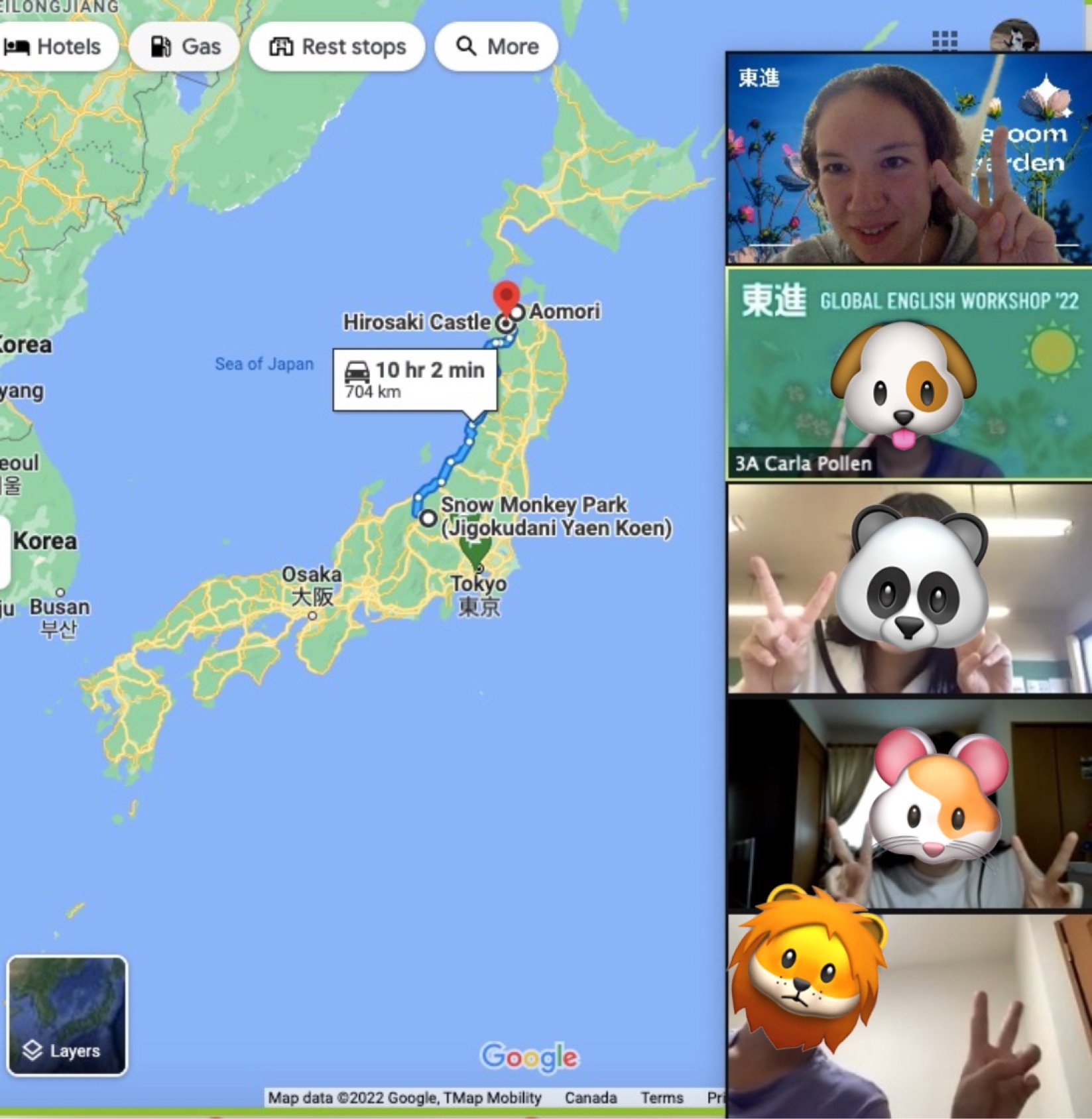
2021 was such an enriching experience for me that I was fully committed to doing it again in 2022, regardless of whether it was in person or virtual. I was graduated, had begun living in a new apartment in Koreatown, and had a hosting gig at a wine bar: it was time to hop into those ethernet cables and travel to Japan again. This time, I was excited to try my hand at being a leader, which meant that instead of being responsible for a group of students, I would be responsible for a group of coaches, each with their own group of students. Given that the program would still be run virtually, my responsibilities differed slightly from those of a physical program. Similarly to the physical counterpart, I was tasked with maintaining the connections between students and their coaches, though in this case the connections were internet-based rather than emotional. Days (and by days, I mean late nights and early mornings) were spent hopping around different Zoom breakout rooms and watching coaches slowly coax the timid students out of their shells. Occasionally, I would join in myself and spend a few minutes getting to know a group. As a leader, my interactions with students had less depth, but I was able to talk to a much larger number of them than ever as a coach.

I also got to see the program on a macro level. Before, I was a part of a group that was itself part of a larger group of groups. Now, I was on the outside of the larger group and thus able to take in its full breadth. I was better able to connect with the other coaches and learn about their lives and interests because I did not have to worry about my own group. The ability of the staff at Toshin and Come On Out to connect these brilliant minds and facilitate a weekend of growth and enjoyment impressed me greatly. Problems were identified and dealt with with such relative ease that one was likely to forget just how many moving parts there were. I felt less nervous overall because I had done the program the year before, so I was able to focus more on meeting my fellow participants and building relationships with them. I am most grateful for my co-leaders (shout out to Shih-Wei and Cassandra!!). Their dedication and kind hearts made every weekend so fun and fulfilling. Some nights, the program would be over, and our homeroom would hang out in discord until very very early the next morning. I may have regretted those sessions the following morning, but in the moment, I never wanted to leave. My second year of the Global English Camp was just as rewarding as my first, albeit in different ways. I saw a lot more of the inner workings of the program and got a better sense of the program’s motivations, as opposed to merely its methods. After its conclusion, I felt an even stronger conviction to keep walking down the GEC path. It was up in the air whether 2023 would still be online or a return to the real world, but I was determined to participate once more.

My best piece of advice for folks if they ever participate in an online program like GEC is this: TRY NOT TO WORK AT A RESTAURANT, ESPECIALLY ONE THAT DOES BRUNCH, WHILE DOING AN ONLINE PROGRAM THAT REQUIRES YOU TO BE AWAKE UNTIL THE EARLY MORNING. One would hope that their manager would be understanding of a situation like this and change the schedule accordingly, but one should not bet on this hope. GEC 2022 was a very good experience for me, but the life I had to live around it was nigh unbearable. By the end of the third weekend, I was reporting to duty at the restaurant at 9 in the morning, about 4 or 5 hours after I had finally gone to bed. I stood at my spot in front of the entrance with deep bags underneath my eyes and irritation in my voice. I was able to do both, but at the cost of my sanity and emotional health. It wasn’t such a bad thing, however, because the stress of it all motivated me to quit that job and pursue other forms of work that were more in line with my interests. Fortunately, after a month or two of looking, I was hired as a data analyst for a writing software company. It was a contract position, so I knew that I had flexibility when it came time to do GEC. So I waited patiently as the team's email updates slowly trickled out the information. I watched as it went from “potentially in person” to “tentatively in person” to “probably in person,” and my excitement grew. One day, an email contained a link to an interest survey, one where returning coaches could let the team know whether they were still interested in doing the 2023 program and what their loose availability was. Along with the Global English Camp, this form also advertised a program known as “On Your Mark,” which was being held in the spring. I had never heard of it before, but according to the information given to me it was a weeklong program similar to GEC, where students would have the opportunity to learn from overseas counselors. Despite not knowing much more than this, I decided to apply. Just a little over a month later I received my acceptance and learned that the program was definitely going to be in person! I honestly couldn’t believe it. At that point, I just thought I would be doing something online like in years past, but it was real and I was actually going to go to Japan.

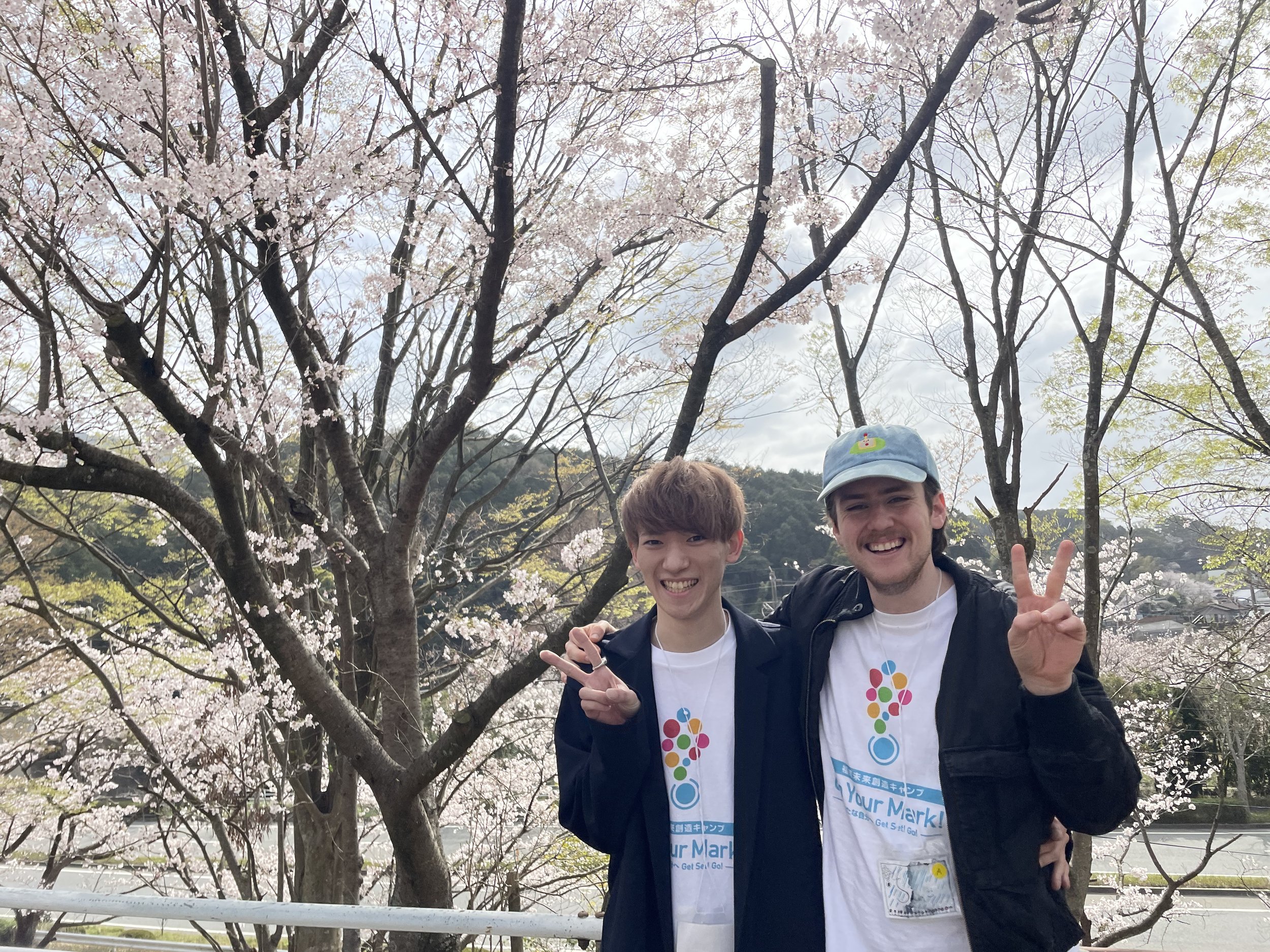
I could fill a whole two other essays with my experience at On Your Mark! It was a time of many firsts. Not only was it my first time in Japan, but it was also my first sleepaway camp. It was a week packed with activities, sights, friendships, exercises, and emotions. If you want a great overview of what it was like to be a counselor, you should definitely read my friend Belle’s blogpost, "‘I’ve Got a Dream!’ - On Your Mark Spring 2023 Experience." I feel very lucky to have met her and so many other amazing and talented people through OYM. Unlike the previous two years, I was in the same physical location as my co-counsellors, meaning that we could build our friendships by actually doing things like taking walks in the forest, having a barbecue, or exploring the city. I have a shy nature, but I never felt anxious while staying in Fukuoka. Everybody, from the counselors to the staff to the students, made me feel so welcome and valued. I felt as though they opened up a part of me that had been closed without my realizing it. I felt better about myself and the things that I was capable of doing. I was not reborn, but redefined. I became more like myself. Like GEC, it was demanding work: the days started early and went late into the night, but it never felt like too much because of all the support. By the end of the week, we said our goodbyes with tears in our eyes because we had all helped one another redefine ourselves in some way. The fact that it was face-to-face was very empowering to me. I had only done programs like this online, so I was still unsure of how this one would operate, but I saw the same principles being demonstrated: responsibility, amiability, timeliness, and attention to detail. OYM was a wonderful opportunity to experience what overseas work is like, especially the travel portion. I didn’t know what the program was until late last year, but it far surpassed anything I could have expected. Doing it strengthened my dedication to GEC even further and gave me a taste of what a non-virtual program could be like.

Now that it is June once more, preparations for GEC 2023 are well underway. In fact, a month from now, I will be in Japan again, acting as a leader for another year. I had no expectations when I participated for the first time in 2021. I knew that the program was in line with the kind of career I wanted to have, but not much else. I didn’t know how to teach this kind of content, I was nervous about my ability to connect with kids, and I had never left the country for more than a week. I could not imagine myself as I am now, having done two programs online and one in person. So, I want this time to be different. Again, I am sitting on the precipice of something I have never done before. This time, though, I have a sense of how things will be. I have done similar work now. I have met and grown with dozens of students; I have worked with dozens of talented graduates and undergraduates; and I have spent dozens of hours behind a computer screen talking on Zoom and Discord. I know now to greet the unknown with my hands open and to be willing to accept anything from experience.