The Day Laughter Became the Best Teacher: My Experience at Global English Camp

Program Experiences - Cayla Okafor

I didn’t need an alarm to wake up on time on July 18, 2025. Anxiety caused my eyes to flutter open several hours before they needed to that day.

I woke up with anticipation building in my heart and spilling out through my actions. From seven to nine am, I tried to swallow the rock lodged in my throat. I put my hand on my own leg to stop it from its own continuous tremble. I might’ve even asked my co-coach ten times if she was nervous, hoping that her response would find a new way to calm my own anxieties. Little did I know, the very thing causing my nerves would be the antidote. 

Three boys sitting in a line on the top floor of the Shinjuku venture turned their heads as my co-coach and I approached the table. Their smiles met mine, and my nerves started to melt, dripping down from my chest and pooling around my chair as soon as I sat down.

I think most people can go their whole lives without fully realizing the power of humor. Before this experience, I had not seen its true impact. Humor transcends culture, bringing people of different backgrounds together to share something that is special and unique. It’s hard to be anxious when you’re laughing, and I laughed with my students everyday in the Shinjuku building. With the way the program was organized, this feat was easy. 

The first two days of the program are spent breaking down the barriers that naturally occur when meeting someone for the first time. From ‘two truths and lie’ and ‘splat’ to to konbini runs – where we debated whether kinokonoyama was the supreme chocolate treat— the students’ walls of unfamiliarity began to crumble. On Day three, a sense of comfortability is established, one that was built through laughter and conversations, and it is about to deepen. 

Day three is a widely loved day, the day where we laugh the hardest, where jokes are flying around the room so fast to the point where it’s hard to catch your breath. It is skit day. In the morning, teachers help their students prepare a short play for the class; it can be about a folktale, a commercial, or a general lesson that they want to relay to the public. Regardless of the prompt they choose, the students have complete creative freedom to take the act where they want it to go. Making something that is funny and creative in a new language is far from easy, but this is what makes it extremely rewarding. In my experience, the process of crafting the skit is the best. When the students are brainstorming and joking with one another while asking the teacher whether they can stand in as a side character (I was asked if I wanted to be the peach in Momotaro several times), the air feels light. So light that one forgets that they are in an organized classroom, all they are experiencing is simply a blithe, fruitful conversation. 

The end of the day comes before you know it and that means it is time for the performances to occur. Nerves once again build in the students, and the teachers try to ease them through breathing exercises. However, after the first minute of the first performance where the class bursts out laughing at some absurd, but clever retort, the jitters tend to fade. Watching your students release their inhibitions on stage, let down their guard and have fun, is a moment that stays with you.

Skit day is just one of the many moments created to make the students smile. Staff held surprise runway shows, kahoot games, UNO marathons, and Hollywood competitions in order to create a sense of excitement. 

In this program, the students have five days to improve their English skills, five days immersed in an unfamiliar environment with unfamiliar faces, unsure of what is to occur. The least that the teachers can do is make them smile while they’re here. Laughing is often seen as a distraction, a way to deter someone from an academic goal. But the truth is that it is an essential part of learning. Anxiety can impede someone from truly understanding, how can one digest material when they never feel at ease? 

A laugh from my student is priceless; it means something is going well, that they are growing, and I know that Global English Camp will be filled with many more laughs in the future.
Dinishika WeerarathnaComment
Japan in Three Parts: The People, The Students, The Places

Program Experience - Isla Milne-Smith

Introduction

After spending five weeks in Japan, and (obviously) posting all about it on Instagram, coming home meant answering the same question over and over: “How was Japan?” My friends and family would press me to “tell them everything,” but I never knew where to start. It feels like when someone asks for your favorite song and suddenly every single song you’ve ever listened to vanishes from your brain. There was just too much to say.

Writing this post is my way of untangling my thoughts and putting them into words. Even so, what you’ll read here barely scratches the surface. But here’s my best attempt: breaking down my experience into three parts: the people, the students, and the places.

The people

The first highlight of the program was the people. Traveling halfway across the world without knowing anyone was intimidating, but I wouldn’t have changed a thing. From the moment I landed, everyone was so welcoming. On my very first night, I met a girl and within hours we were wandering around the city together; making friends was that easy.

During those first few days, we stayed in a hostel where I shared a room with seven other girls. They invited me to a temple the very next morning even though we had just met. One of them ended up becoming my closest friend in the program—I’m going to visit her in England in a couple of months!

When I finally met my assigned team, I was nervous. These were the people who could make or break my experience. But, as it turned out, I had nothing to worry about. We became a close-knit group, and I loved getting to know people from so many different backgrounds: math, medicine, theatre, anthropology. It can be easy to gravitate toward the same types of people without even realizing it, but this program forced me to step outside that pattern and broaden my horizons.

And while the friendships were incredible, what struck me most was how smart everyone was. They say you should never be the smartest person in the room, and I definitely wasn’t; but that was the best part. Just being around everyone somehow made me a better person. I picked up confidence and inspiration almost by osmosis. Before this program, I never would have written a blog post like this and put it out into the world. But after watching everyone else be proactively involved in their communities and put themselves out there, I felt like I could too.

The students

Of course, I can’t write about this experience without talking about the students. Before teaching started, I heard people say the students were the heart of the program. If I’m being honest, I didn’t really believe it - I assumed it was just one of those things people had to say. But I was so wrong; the students were even better than anyone could have prepared me for.

They were polite, nervous in a way I could relate to, endlessly kind, and unbelievably smart. I cared about them so much more than I thought was possible. One moment that still makes me tear up happened in the last week when my group remembered the word “reliable.” I almost cried because I was so proud of them, and it still makes me tear up thinking about it now.

And it wasn’t just about how great they were - it was about realizing how much of an impact we had on each other. At the end of each week, students presented their “life missions.” In the final week, a student named Yona mentioned me in her speech. She said I inspired her because I was a kind teacher who made her want to learn more English. I still don’t really have words for how amazing that felt.

But the part that left the biggest mark on me was my homestay. I stayed with a student and her family in Okayama for a week. I was nervous going in—living with strangers in a language I didn’t speak felt daunting. But, like so many things on this trip, I was completely wrong. The family was wonderful. The mom made the most delicious food, and the daughter, Nana, was funny, sweet, and patiently translated everything for me. That week is one of my most treasured memories, and we all cried when I left. If you get a chance to be placed with a homestay family, I couldn’t recommend it enough.

The places

And of course, I can’t write about Japan without actually writing about Japan itself. So here are a few of my favorite places:

Fushimi, Kyoto

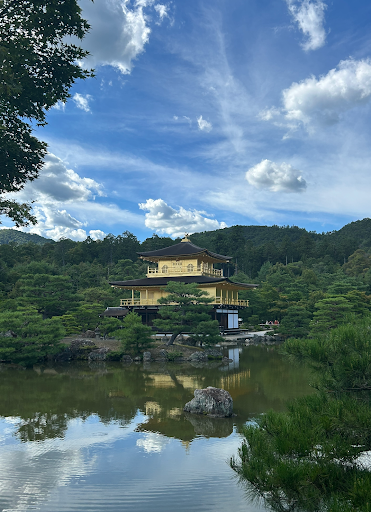
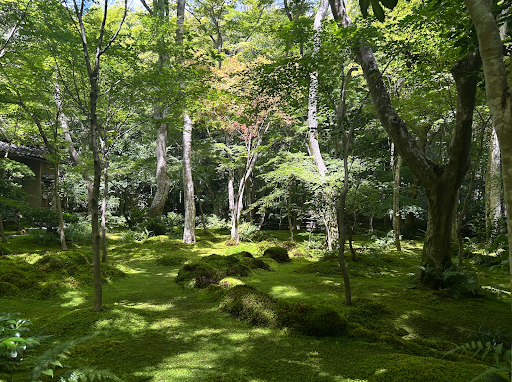
For the first two weeks, our venue was in Osaka, but I lived in Fushimi, Kyoto with three other people on my team. The neighborhood was stunning (see pictures below), and we even managed a day trip into Kyoto at a time when, miraculously, it wasn’t busy at all.

Our walk home in Fushimi

Our Kyoto daytrip to Fushimi Inari, Gio-Ji, and Kinkaku-ji

Hiroshima and Miyajima

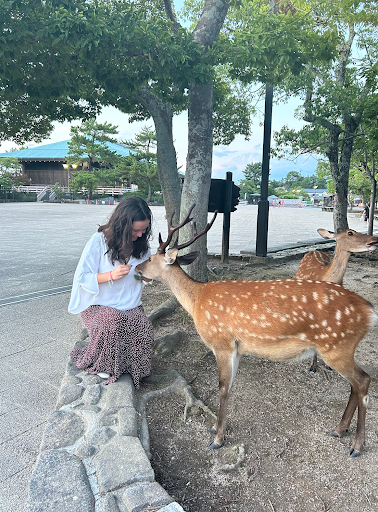
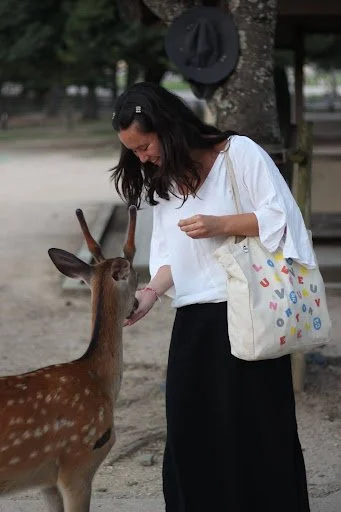
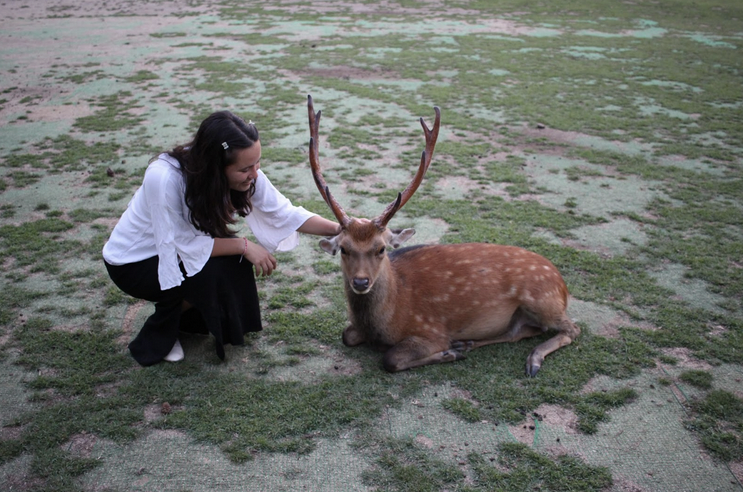
After work one day, we took the ferry to Miyajima for less than five Canadian dollars. We stayed for hours: saw the deer, ate dinner while fending them off, and just sat by the water talking.

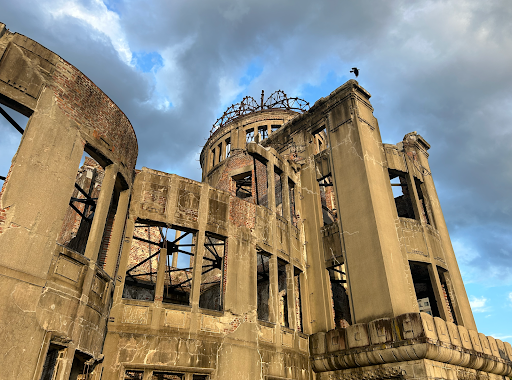
We were also in Hiroshima for the 80th anniversary of the atomic bomb, and the Toshin staff generously took us to the Hiroshima Peace Memorial and the nearby river for us to join in the remembrance. It was an incredibly moving and special experience.

The Peace Memorial and the 80th anniversary remembrance ceremony

The ride to Miyajima and the deer there.

Nara

We also traveled here after work, and I loved how I could still see Japan even while coaching from 10-5. A beautiful and peaceful trip.

Kobe

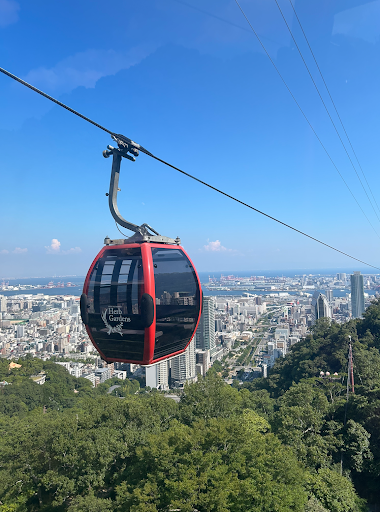
A friend and I spent a day in Kobe visiting temples and the Herb Garden. The gondola ride up gave us breathtaking views, and the walk down through the gardens was just as beautiful. I highly recommend it.


Dinishika WeerarathnaComment
Reflections from the Traveling Mentor Program '24

by seth bobrowsky, tmp ‘24 mentor

“The dance is called ‘Mayim Mayim’ and we’d like you to do it with us.” — A student at the On Your Mark program asks if I would like to perform a popular Japanese children’s dance in the talent show with our advisory group. 

How familiar the name sounded; in my childhood, a world away in California, I would join in a Jewish folk dance by the same name at Bar Mitzvah celebrations with my family and friends. 

I dismissed this as coincidence—I thought, five thousand miles away, in a country where Judaism is as rare as forks at the dinner table, there is no chance an old Jewish dance could be popular. Surely, they must be referring to another song.

And yet, when the students began playing the music, the same yearning tune, the same Klezmer flourishes, struck my ear at once. How could it be? I asked if the students knew what Mayim Mayim meant (“Water Water” in Hebrew) and explained that I grew up doing the same dance.

When the talent show came around, my group and I gathered all 80 campers and counselors. After demonstrating the movements, we linked arms and spun in a clapping, cheering loop. 

Here is something I never expected: a resounding similarity, a common nostalgia, shared between two groups of vastly different people. Sometimes barriers of language and culture made it easy to feel divided from the students, and we would struggle to bridge the gap in a curriculum packed with valuable and challenging exercises. Then, golden moments like these broke through the walls of language to open deeper understanding. With the music, our differences dissolved. We danced to a melody that connected all of us—no explanation, no translation, necessary. 

At the end of a long day and a long week, isn’t that the best medicine?

The story of “Mayim Mayim” captures the essence of the Traveling Mentor Program.

The program is a dynamic intercultural journey that is challenging and hands-on. It carried us across the country, from the urban playground of Tokyo to the verdant rice fields of Himi city to the tranquil tide pools of Miura Peninsula and beyond. From discussing tourism initiatives in a meeting with the Himi City mayor to singing live on Japanese radio with my wonderfully talented colleague Shenn, each day hid a new, unpredictable surprise. In Himi City, a post-beach-cleanup energy burst drove a spontaneous sprint to the water where campers and counselors alike lapped in the shallows, admiring (and avoiding) the jellyfish and starfish sharing in the fun. In Miura, too many cooks in the kitchen led to glorious feasts and jam sessions accompanied by campers on a small upright piano. 

Students in every age group astonished me with their intelligence, drive, optimism, and passion not only in their pursuit of English fluency but also in their hopes and dreams to contribute to their communities in meaningful ways. After presenting lectures on my study of political science and life at my university, I was happy to receive individual questions and interest. Later, I was moved to see students I had spoken with empowered to share their newfound inspiration to achieve their goals via political science, or else a renewed interest in higher education. Each day, I saw the students’ confidence blossom. At the end of the week in both Himi City and Fukuoka, I found fulfillment in watching students declare during final speech presentations: this is who I want to be, this is how I want to leave my mark on the world!

Mentorship has always been a pillar in my life. This experience has concretized my mission to continue down its rewarding path. I am proud of the impact I had together with my fellow counselors on the lives of the students. At the same time, I am humbled by the profound wisdom I gathered from the students along the way–not to mention all of the laughter and fun. 

Here learning is a two-way street. And even if sometimes it feels like we are moving in different directions, we all move along one road. Just look at us dancing in a great circle to the same song!

Come On OutComment