Where to Hike in Tokyo
 

For hardcore outdoors enthusiasts, the 7+ hour overnight climb of Mount Fuji may be a dream come true. If you prefer a more leisurely experience with nature, Mount Takao might be the right fit for you. It certainly was for me.

Mount Takao is a popular sightseeing destination with a plethora of fun activities beyond those you might expect on a mountain.

The area is easily accessible from Tokyo, with a direct train from Shinjuku Station on the Keio Line taking about 50 minutes and costing ¥390—perfect for a daytrip. The train takes you to Takaosanguchi station (高尾山口駅), a few minutes’ walk from the foot of the mountain.

kotsuzake

kotsuzake

As for hiking the mountain, several options are available. There are six numbered trails up the mountain.

#1 takes about 90 minutes to traverse and is the most popular and easiest technically, being fully paved, and has the best access to the mountain’s non-hiking attractions. #2-#6 are unpaved and offer varying levels of steepness and difficulty.

Expect to meet many fellow hikers!
tako-sugi

tako-sugi

The “Beer Mount” is an all you can eat and all you can drink outdoor restaurant that runs during the summer months. It serves mostly Japanese cuisine from a buffet—dumplings, oden, and a variety of beers, sake, and teas and other soft drinks. Though very busy on the weekends and evenings, we had little trouble finding seats on a weekday afternoon. While a bit of a splurge (at ¥3800 for men and ¥3300 for women for two hours), I found both food and drink to be great and especially delicious after working up an appetite from hiking. After eating, we sauntered the rest of the way down trail #1 and took the train back to Shinjuku.

5_bridge.jpg
4_summit.jpg

A multitude of shops and restaurants line the road from the station to the trailheads, and it was here that my hiking buddy and I made our first stop for a treat: kotsuzake[1] (骨酒, literally “bone sake”), a uniquely Japanese beverage consisting of hot sake steeped with a whole grilled fish.

To my surprise, I enjoyed this despite my initial hesitance. The fish lended a wonderful roasty, salted, and mildly but not overbearingly fishy flavor to the sake, while the fish (eaten afterward) was infused with the sake’s sweetness, not unlike a marinade.

I would wholeheartedly recommend it!

2_octotree.jpg

For maximum relaxation, both a chair lift or cable car can take you about halfway up the mountain. My friend and I opted for the chair lift, which offered excellent sightseeing on the way up, followed by trail #1 to the summit.

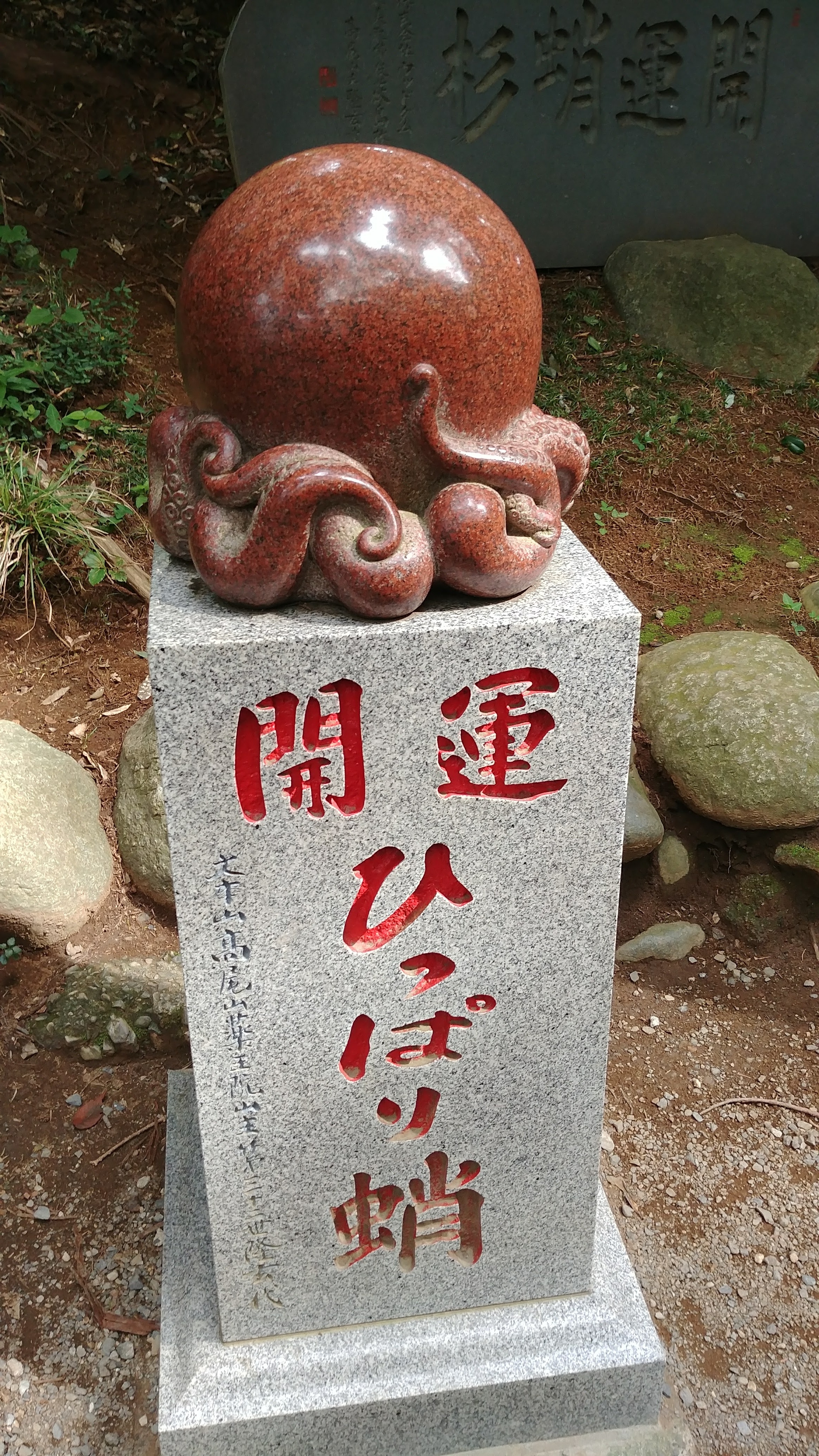
Along the trail we stopped at “tako-sugi,” a cedar tree with octopus-like roots commemorated by a very cute statue. We also saw Yakuoin Temple, a buddhist temple with beautiful architecture and more statues. Once you reach it, the summit offers wonderful views of Tokyo and, if you’re lucky with weather, Mount Fuji.

Descending the mountain, we opted for trail #4, which was only slightly more difficult than the paved trail but brought us deeper into the forest and over a highly photogenic wooden suspension bridge. This trail rejoined trail #1 at the halfway point, near the chairlift and cable car stations as well as our final stop for the day: the Takao “Beer Mount.”

6_beermount.jpg

With all the trail options and supplementary activities (including many I didn’t mention here), Mount Takao a trip easily tailored to individual tastes whether you’re a nature aficionado, relaxed foodie and sightseer, or anywhere in between. I hope you make a trip!

[1] Sometimes iwanazake (iwana being a type of fish) or iwana no kotsuzake


Written by Colin MacGinnitie, Global English Camp 2019 Leader, University of Chicago

Edited by Paige Goetz, Director of Communications

Come On OutComment
Eating Halal in Japan
2.jpg

Assalamualaikum!

(Peace!)

3.jpg

I was an intern on English Camp 2018 - what a time it was! But how did I eat Halal in Tokyo?

It’s no surprise that you can't assume food is Halal when you walk into a restaurant. The Muslim population is not high across Japan, but Tokyo has Nepalese and Turkish communities which makes finding Halal food reasonable.

7.jpg

One advantage you have is apps! For me, Halal Gourmet Japan and Halal Navi made life easier. These apps find halal places near your location and organise them by type of food. In the mood for a kebab? Turkish place down the road! Want curry? Indo-Nepalese restaurant round the corner. Halal ramen? Just one station away.

8.jpg

Let's cut to the chase.

You're here for my recommendations. Here are some of my favourites from last year!

1.jpg

1. Halal Sakura

Japan〒110-0003 Tōkyō-to, Taito City, Negishi, 2-chōme−18−11 ルート根岸第二ビル1F・2F

4.jpg

2. Ayam-Ya Okachimachi

4-chōme-10-1 Taitō, 台東区 Taito City, Tōkyō-to 110-0016, Japan

5.jpg

3. CURRY HOUSE CoCo ICHIBANYA HALAL

Japan, 〒101-0023 Tōkyō-to, Chiyoda City, Kanda Matsunagachō, 16 内尾松永ビル1F

9.jpg

4. Turkish Restaurant Cankaya

Japan 〒160-0023 Tōkyō-to, Shinjuku City, Nishishinjuku, 1-chōme−15−7 西口ライフビル3F

10.jpg

5. 権八 浅草吾妻橋/Gonpachi Asakusa Azumabashi

Japan〒111-0034 Tokyo, Taito City, Kaminarimon, 2 Chome−1−15 1F2F 中川ビル

12.jpg

6. Menya Honolu Ebisu - Halal Ramen

Japan 〒150-0022 Tōkyō-to, Shibuya City, Ebisuminami, 1-chōme−23−1 ABC亜米利加橋1F

Written by Zain, Global English Camp 2019 Leader, Imperial College London

Edited by Paige Goetz, Director of Communications

Come On OutComment
What *Not* to Pack for Japan

This packing guide is about everything I brought to Japan that I should’ve left at home, and some recommended items you may not think about.

How much did I bring?

  • large suitcase (checked bag)

  • smaller suitcase (carry on)

  • backpack (personal item)

    My checked bag was overweight, so I had to remove one bag of Costco candy, shampoo, and conditioner. Then it was 49lbs, right under the limit.

Things I SHOULD’ve left at home:

  • ½ of my clothes (more details below)

  • travel mug for hot coffee/tea

  • flip flops

  • the Costco bags of candy for students

57289429_822811421408648_8566997009918066688_n.jpg

Me standing out as a foreigner with my shorts in Tokyo.

Clothes to unpack: I could’ve left my sweatshirt, short shorts, low neck shirts, thin strapped dresses, ripped jeans, and leggings at home. Also, don’t bring crop tops. (You may feel like an exhibit at the zoo.) This, of course, is only if you care about not standing out.

Don’t bring a thermos. I never wished for a hot beverage the whole summer. Just a waste of space.

Flip flops are considered ダサい (unfashionable). Consider bringing another waterproof sandal to the beach. Flip flops are not popular, but surprisingly crocs are, especially with dad-age men. Also, avoid shoes that resemble slippers. People will make fun of you for wearing slippers in public.

As for candy, bring a small bag. My students said that American candy was too sweet. Go for nuts or chocolate instead.

Here is a picture of me, July 13, 2018:

Screen+Shot+2019-06-16+at+17.17.39.jpg

Ignorant traveler with an overweight suitcase at the airport.


THEN WHAT SHOULD I UNPACK?

Japan is hot and humid. I would compare a Japanese summer to stepping into a sauna. There is a word for this in Japanese, 蒸し暑い (mushi atsui). I am from Michigan, where summers are also hot, but not as humid, so I was not prepared. Also, the temperature doesn’t drop when the sun sets during summer! Which means jacket-appropriate evenings are typically not a thing.

There are many differences between Japanese fashion and western fashion. Compared to America, all genders tend to put more effort into their daily outfits. You won’t see many jeans, t-shirt, sneaker types. Women especially tend to dress more conservatively. You will often see people wearing full-length pants and long sleeve shirts when it is 95F outside.

Screen+Shot+2019-06-16+at+18.03.40.jpg

“Feels like 116.”

SO What clothes should I pack?

Research typical Japanese fashion and bring those clothes. Mix and match pants, skirts, and different tops. (If you’re teaching, check your dress code.) You can make different outfit combinations with only a few pieces. Leave dresses and rompers at home, since these take up space and allow only one outfit option.

What’s the problem? So what if you brought EXTRRA stuff?

Answer: There are stairs all over the place. In train stations. At crosswalks. In houses. Unless you are hulk and can easily hoist your suitcase up and down several flights of stairs, then you need to pack as light as possible. There are elevators, but they can be troublesome to find. It is easier to bring less.

MY Recommended items you should buy in Japan instead:

  • sheets, pillow, towels

  • shampoo and conditioner/soap

  • sunscreen, anti-itch cream (ムヒ muhi is excellent), bug repellant

  • clothes ( you could just buy everything there if you wanted to!)

  • small whiteboard for class (very useful, some smaller venues might provide you with one for the week)

  • folding fan / 扇子 / sensu (these are really useful and everyone uses them)

MY RECOMMENDED Items you should bring from home:

  • medicines

  • deodorant

  • tampons

  • rechargeable battery such as a Mycharge

The ideal luggage situation would probably be one medium suitcase and a backpack. Of course, you will probably buy souvenirs and be in need of another bag when you return home. Not to worry, just pick one up at your local Don Quijote while you are in Japan!


By Gabrielle

Gabrielle was a Global English Camp intern in 2018 and is returning as a Leader for their second summer in 2019. They look forward to seeing you all in Japan this summer and will try to follow their own advice to pack light!

Come On OutComment