
Noble Shoes – A Kind Way to Bring Changes
 

By Tatsiana Coquerel

“Everything, all sorts of things in the world, appear through multiple-lens spectacles as different views of the shoe’s form to me.” -Noriyuki Misawa


“A pair of old boots”, illustration by Tatsiana Coquerel

Shoes are powerful personal items that we use to define ourselves as individuals. We throw away shoes only when we have destroyed them. A pair of shoes can be discarded, but the memories associated with wearing them will stay with us for the rest of our lives. The perception of movement in a pair of comfortable shoes and success was always clear for me. I remember very well my first runners and sensation of freedom under my feet. It felt like I was running for all eternity. I adapted with great joy the Nike “Just Do It” slogan in my everyday life as a reminder to drive, to push myself beyond my limits. Shoes have always given me a sense of balance, comfort and strength in my life: “as long as you have running shoes and have a good road, you can run to your heart’s content”.  

Flicking through the pages of the glossy magazines today, featuring luxury footwear and fashion, we are unlikely to come across the image of the craftsman carefully cutting the patterns and hand-stitching the shoes. The idea of the contemporary designer or shoemaker of the 21st century will inevitably be clean and sophisticated, portraying the strength and the power of the manufacturing force of the footwear empire they own. Unfortunately, the popularity of handcrafted shoes by hand today is decreasing, being replaced by the shoes mass produced. There is a notable nostalgia in it when you realise that something beautiful is vanishing or going to disappear. And then you ask yourself a question - Can I stop it? Can I hold on to it? What can I do to keep it alive?  

Imagine for a second that the craftsmanship of making shoes by hand has died and been forgotten, and we all wear 3D-printed shoes. And one day we stumble across a pair of beautifully crafted old brogues somewhere in the attic. We would recognise the beautiful quality of leather, attention to detail and perfect shape. What would we do after that? Some of us would throw them away, some of us would be curious if they still can be repaired. For me, personally, they would be a subject for research about who made them, how and when…
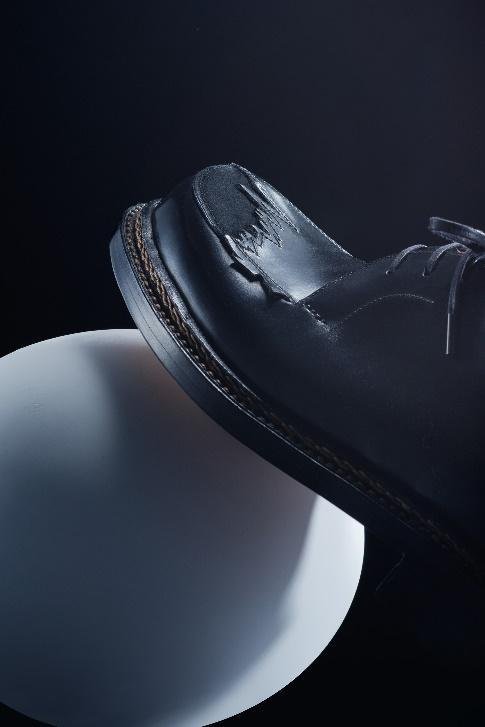
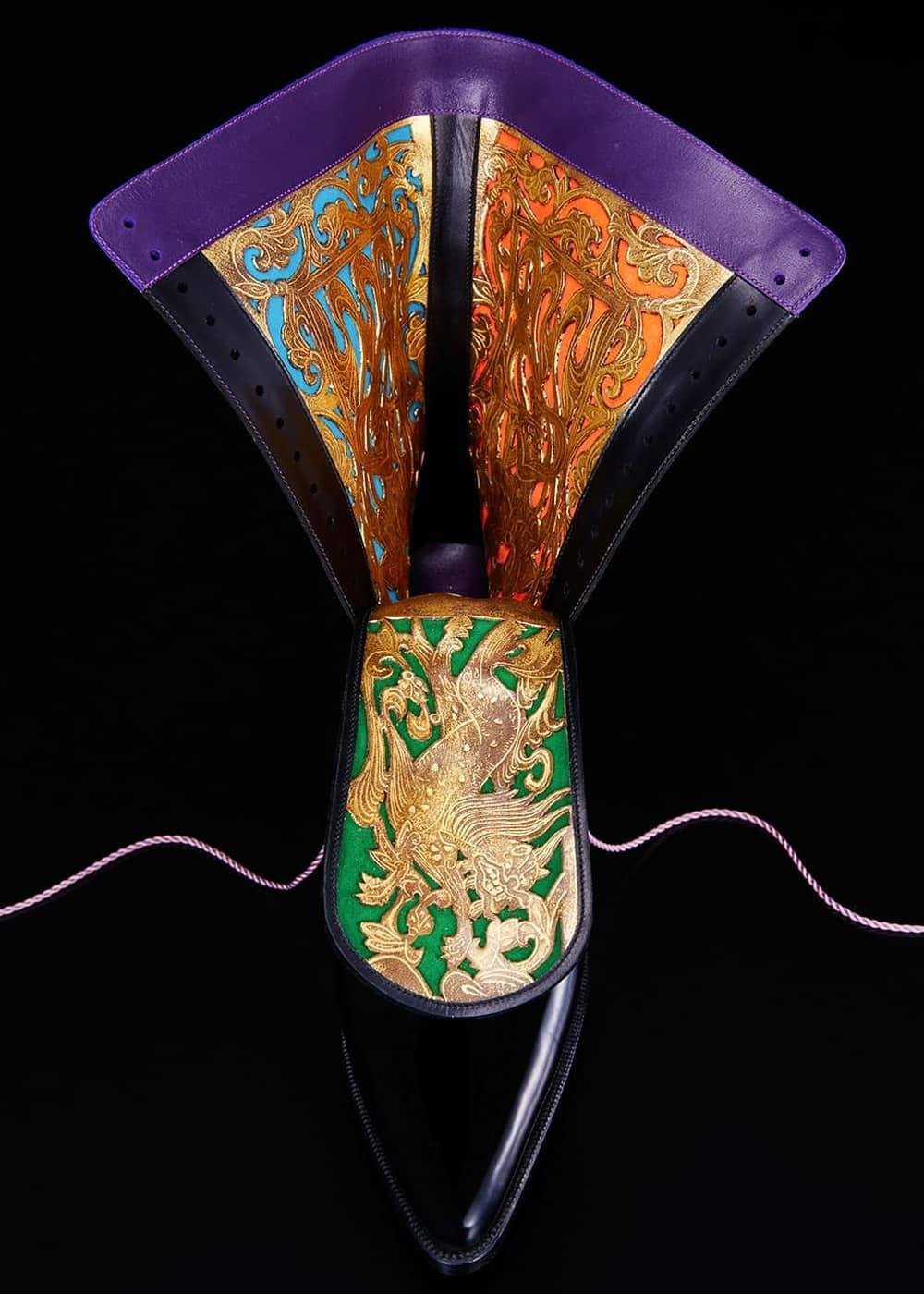
What defines an excellent hand-made shoe? The perfect shoe for me is the shoe that was made by craftsmen using their learnt ability of heart, head and hands in balance during the process of creation. In comparison the skills possessed by the machine cannot be equal to the skills of the artisan. Human knowledge of the craft is intricate and comprises emotional, physical and intellectual involvement. The more well-made shoes are, the more care has gone into them, the more they will last a whole lifetime and will be handed down from one generation to the next.

The knowledge of shoemaking craft in Japan, built up over the centuries, has been enriched with the technology over the last decades. In this technology, there are ideas for future development. The story of contemporary shoemaking craft in Japan is a vivid “fairy-tale” filled with many hardships, creativity and great achievements in the realm of mass-consumption and mass-production. While the craft of making shoes by hand is dying in Europe, it is blooming in Japan. Japanese artisans brought back shoemaking skills learned in Europe, producing functional bespoke footwear. Noriyuki Misawa is a contemporary Japanese footwear designer, whose shoes can be described not just as functional, but as real pieces of art. Trained as a shoemaker in Austria, Misawa carries on old traditions in shoemaking trying to find his own path as an artist and designer (Fig1-2 below).

As shoe consumption has increased, they have become harder to recycle. The quality has gotten worse, so people just throw them into the bin. Leather from disposable garments and footwear has a damaging effect on Earth despite the common view that it is harmless. In fact, the chemical processes employed during manufacturing inhibit natural decomposition. 

The growing interest of the contemporary consumer in the origin of manufactured goods and its quality inspires many companies around the world to improve the quality of the materials and encourages a sustainable approach in manufacturing. Yoshihisa Tanaka, designer from Tokyo, found a solution in producing eco-friendly footwear packaging by transforming the waste into shoeboxes for a New Balance’s runners. The designer investigates the upcycled materials and blends them in washi paper, which is used after to make a shoe box (Fig.3).

Fig. 3 Boxes for runners made from washi paper

Washi paper is a traditional Japanese paper made by hand using natural ingredients. “According to the Nihon Shoki, a chronicle of Japan that was written in A.D. 720, paper was introduced by Korean Buddhist monks in the early A.D. 600s. At that time, paper was initially used for writing scriptures as Buddhism took root throughout Japan”. Washi paper is very adaptable and eco-friendly. In comparison with paper produced by factories, the process in creating washi paper only uses new branches cut from trees, which means saving the trees and forests. Hand-made washi paper is also chemical-free and biodegradable. Machine-made paper has largely replaced washi paper, but there are few artisans in different cities throughout Japan that keep the old paper-making traditions alive. An example is the Food Paper brand. Located in Echizen, a birthplace of the craft of making traditional Japanese washi paper, Masami Igarashi, the creator behind the Food Paper, uses vegetable peels and other food waste as the basis of her paper products (Fig.4).
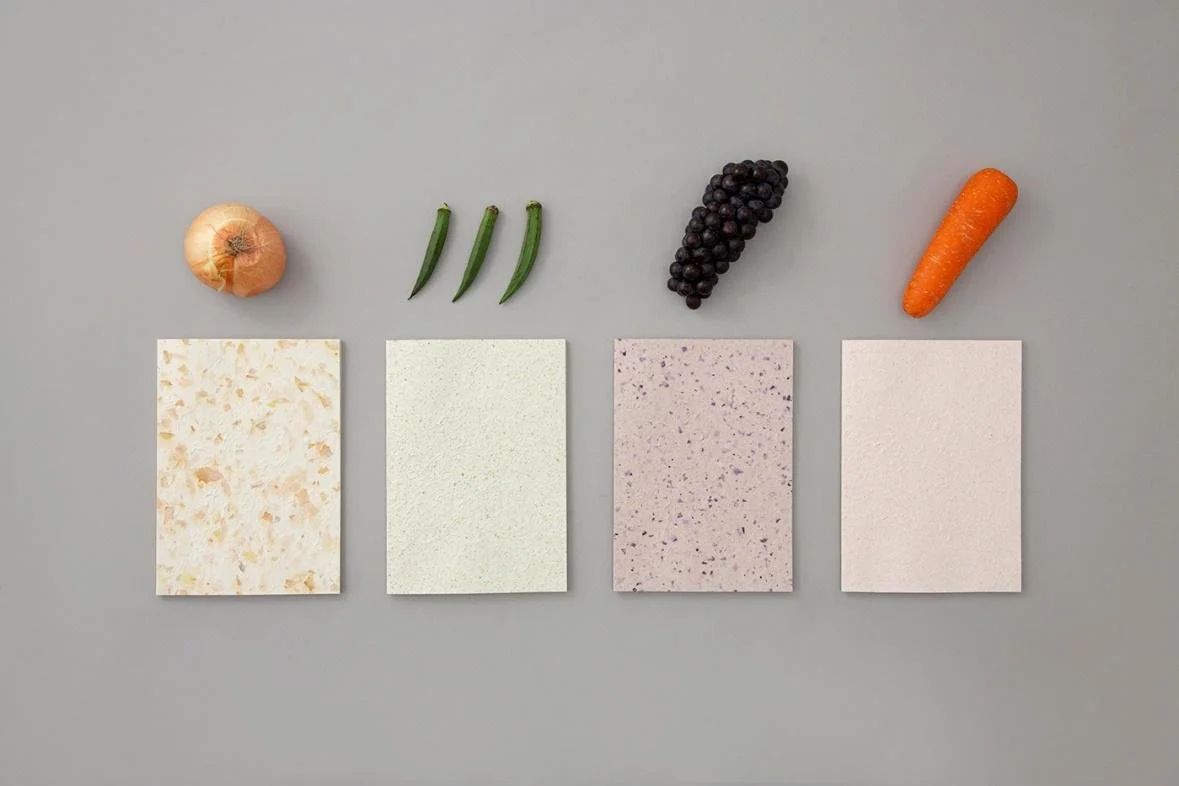
Fig.4 Washi paper made by Masami Igarashi, Food Paper

By creating innovative and eco-friendly products and things, designers and researchers bring modern aesthetics, constant innovation and change the way people think. Are many designers following this path? It depends on each brand and how they define "sustainability." German brand WILDLING as an example brings innovation and creativity in producing contemporary footwear from washi paper. The brand is using washi paper produced by Japanese company ITOITEX, which regards washi as their important Japanese culture and the gift from the nature (Fig.5).

Making shoes or making washi paper by hand is a very skilled craft, which involves processes and actions that, step by step, transform from a material into an artefact.  In any discussion about craftsmanship and manufacturing of things, it is easy to overstate the value of tradition or progress. Uncompromising narratives of tradition can restrain a craftsman's material intelligence of established ways of doing things, while industrial reforms that concentrate on development, incline to believe that new is necessarily better, and thus ignore the importance of craftsmanship. But it is best to see these two concepts equally dependent on each other rather than opposed.

What is the life of the shoe today? It is desired, attained, briefly used and then promptly discarded. Such a cycle of production, consumption and waste is spinning out of control. Mechanisation has made it possible for consumers in the 21st century to have many pairs of shoes. Despite the fading importance of handcrafted goods produced individually and with care, craftsmanship still has relevance in today’s culture. There is nothing wrong with mass-produced shoes. But there is something extraordinary in knowing that shoes were put together piece-by-piece by skilful hands of an artisan. There is a noble feeling in owning something bespoke. You can see and feel the difference in quality, and you know that someone else cared enough to make it perfect. It is something far out of reach of the cold, metal machines. 

Fig.5 TANUKI UMI by WILDLING, Shoes made using washi paper,

Writing this article, I hope to awaken the art of appreciation of forgotten and disappearing things, such as shoemaking craft, the craft of making traditional washi paper and furthermore simplicity of life, detached from materialistic obsessions.  It means going back to the elements of pure quality rather than the false pretence with an idealisation of “perfection”. It means treading lightly on the planet and knowing how to appreciate whatever is coming across. Our predisposition to chop it up into parts—craft versus industry, producer versus consumer, handmade versus mass-produced—is in itself a big problem. Such easy antagonism makes it impossible to share sympathies for both craftsmanship and industrial methods of making things, preventing us from fully appreciating material intelligence in its entirety. We should remember how absolutely vital the new technology is and how much meaning every handmade object brings into our lives. I do not intend to praise the craftsmanship and critique the effect of the industrialisation on the development of the contemporary footwear industry. By taking close analyses of both craftsmanship and mechanisation, we must not forget about the past. The 21st-century technological achievements do not need to diminish our appreciation for the hand-made things. There are many ways in which new technology aids, rather than destroys. It is so vital in this case to resolve the artistic dilemma about how to create beautiful things without disheartening materialism. There is a ‘middle way’: respect all forms of material intelligence, no matter how established, innovative or old-fashioned they are. For those companies around the world that are determined to bring craftsmanship back to the forefront of the footwear market, it is a constant struggle to convince consumers that quality beats price in the long term. The battle is both ideological and economic. Luckily mass-production has not absolutely won this battle yet. Therefore, it is in everyone’s interest to prevent the traditional skills from disappearing. Keeping the tradition of hand-made shoes and hand-made washi paper as discussed above - means keeping a vanishing aesthetic of craft alive in any form of expression available.  

Cambridge Dictionary gives the definition of “noble”, as “moral, honest, brave and kind”. Why are all these definitions relevant in our discussion? I think they can be linked perfectly to the picture of a master shoemaker or a washi paper artisan, who are brave enough not to follow the trends, who are kind enough in the way of thinking about the impact of their creations on people’s life, who are moral and noble in a way they are choosing the materials and techniques to preserve the nature and most importantly the environment. It would be no surprise that the hands of the artisans like this will create “noble shoes”, shoes that can bring changes and a new way of thinking towards a sustainable future. And as a result, hopefully, we will take deeper interest in the craftsmanship of handmade shoes or handmade washi paper in the era of mass-production and never-ending technological changes. Shoes help people to walk better. I hope that by ‘walking better’ people will start “thinking better”. By saying this, I mean our personal choices as individuals, designers, artists and human beings. If we stop cherishing and buying things crafted by hand, we will lose the awareness that making something with care and skill is precious in the sense of knowledge and traditions. I believe that the forgotten shoemaking craft like the craft of making washi paper will never die. It may be overlooked from time to time, but like a phoenix will be born again. 

Every story we tell or write has the beginning and inevitably the end. I know that my passion for Japanese culture and craft and my appreciation of all brave artisans in Japan and around the world will not end here in this article. I will be traveling around cities and little villages, around the stories written and spoken in a search of a perfect shoe or a perfect washi paper or maybe a perfect kimono. Maybe one day I will be lucky and I will find my “wabi-sabi”. But this will be another story to tell…

Reference list: 

Noriyuki Misawa shoes:

https://www.noriyukimisawa.com/profile/

https://www.instagram.com/noriyukimisawa/

Yoshihisa Tanaka × Tokyo Design Studio cooperative research vol.02:

https://vimeo.com/572815829

http://awagami.jugem.jp/?cid=3

What is Japanese washi paper:

https://japanobjects.com/features/washi-paper

Information about Eshizen washi paper (artisans, history):

https://www.echizenwashi.jp/english/

Paper and Culture Museum in Eshizen to visit:

https://www.echizenwashi.jp/english/information/museum.html

Udatsu Craft centre and Museum in Eshizen. Paper-making house: information about paper making techniques and tools:

https://www.echizenwashi.jp/udatsu/about/

Igarashi Paper Mill Co, Ltd, Food Paper:

https://foodpaper.jp/

Wildling footwear:

https://www.wildling.shoes/en

https://www.wildling.shoes/en/collections/shop/products/tanuki-umi-rw

ITOITEX washi paper brand:

https://itoitex.co.jp/en/

Sources:

Murakami, H, What I talk about when I talk about running (London 2009), p.33

Noriyuki Misawa shoes, https://www.noriyukimisawa.com/artandcraft/ [accessed 24.10.21]

Boxes made from Washi paper, http://awagami.jugem.jp/?cid=3 [accessed 23.10.21]

Unlocking the mystery of Japan’s perfect paper, National Geographic, https://www.nationalgeographic.com/travel/article/unlocking-mystery-of-japans-perfect-washi-paper [accessed 23.10.21]

Washi paper made by Masami Igarashi, Food Paper, https://foodpaper.jp/ [ accessed 23.10.21]

TANUKI UMI by WILDLING, Shoes made using washi paper, https://www.wildling.shoes/en/collections/shop/products/tanuki-umi-rw [accessed 24.10.21]

Come On OutComment
The Art of Japanese Dolls

By Tatsiana Coquerel

What is a doll? For most of us, it represents a toy, but the human form has been replicated for other purposes for as long as people have been living on the earth. Dolls have a long history and they represent different cultural platforms around the world. They have been collected by their admirers, they can be found in different museums, private collections and just at homes of ordinary people. In some countries, dolls are closely associated with rituals and religion. In Japan, a doll is not just a child’s toy. It is a God, a hero, an emperor, an amulet. It can be a religious sculpture, a decorative statuette, a treasured family heirloom, a souvenir and an art object. A Japanese Doll has many functions: it is a healer of illnesses, a giver of health, a granter of wishes, it will make you rich, it is a living national treasure and folkcraft artefact very often made by anonymous artists. They are everything other than a plaything, standing separately from the ones that are made for the masses. Japanese dolls can be considered as ethnic copies of the people from the past in folk costumes with traditional objects in their hands. The use of traditional images and deep folk roots create an expressive world for viewers and admirers of these dolls. 

Fig. 1 - Dolls in the form of the Emperor and Empress, Edo period (1603-1868 AD), National Museum of Ireland 2018, Dublin, (catalogue reference DB:1938.13, DB:1938.14).

Fig. 1 - Dolls in the form of the Emperor and Empress, Edo period (1603-1868 AD), National Museum of Ireland 2018, Dublin, (catalogue reference DB:1938.13, DB:1938.14).

Throughout the whole cultural history of Japan, the doll motif is weaved like a silk thread into it. The material culture of these dolls embraced all aspects of Japanese life serving different purposes in culture, religious traditions and education. My passion and desire to investigate the world of dolls and how they are made in different countries led me to the National Museum of Ireland, where there is a big collection of dolls. Among them, there are two Japanese Dolls: Wooden figures in the form of Emperor and Empress. They belong to the Albert Bender Collection (Fig. 1) and represent Dairi-bina dolls for the girls’ festival in Japan. These dolls are six inches high and made from wood, carved and painted. The Emperor figure is in a ceremonial robe and head accessory. The Empress is also in a ceremonial dress, head accessory is missing. These dolls were made during the Edo period (1603-1868) by the artist Sadaichi Tanaka.

Japanese dolls hina ningyo have been a very popular traditional worldwide known craft. The tradition of doll making in Japan goes back in time to around 300 years ago. Hina ningyo dolls go far beyond our definition of dolls. Frederick Starr (1858-1933), the noted University of Chicago anthropologist, in addressing the members of the Atlantic Society of Japan in 1926 on the subject of hina ningyo dolls said, “Suffice it to say that anyone who thinks of the doll’s festival as a play, or a display, for the amusement of little girls, is wide of the mark. It is a serious ceremonial, the significance of which deserves recognition” (Scott Pate, 2008, p.54). 

Japan’s ningyo culture was established during the Edo period (1603-1868), when dolls emerged into big businesses, souvenir items and luxurious gifts. Dolls of various forms were produced and sold throughout Japan. As the nation prospered economically, so did the ningyo market. The three most important markets of these dolls were found in three cities: Edo (Tokyo), Kyoto and Osaka. These cities held the largest concentrations of doll shops in the country. These shops sold to locals, visiting tourists of all classes and were also shipping dolls to different regions in Japan. Based on the reliable statistics of the Japanese economy, there were doll exports and imports through the port of Osaka. In the 1930s, ningyo became recognized as an art, and an independently Japanese and highly diverse culture of ningyo dolls was established. 

image3.png

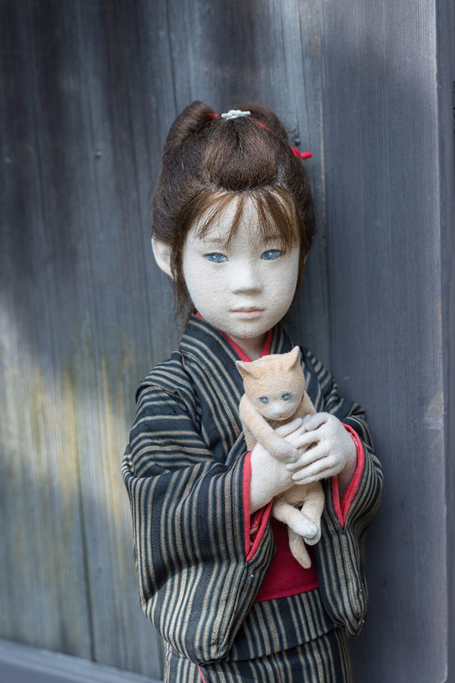
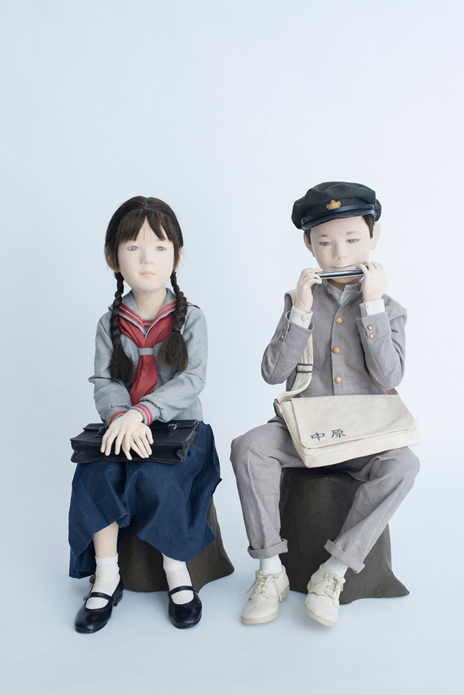
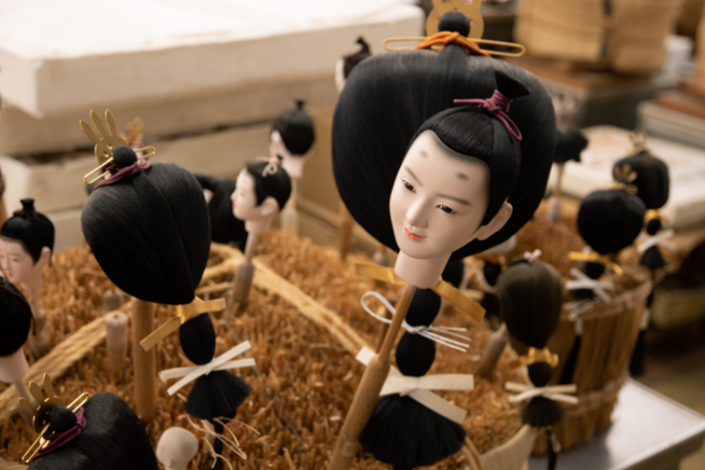
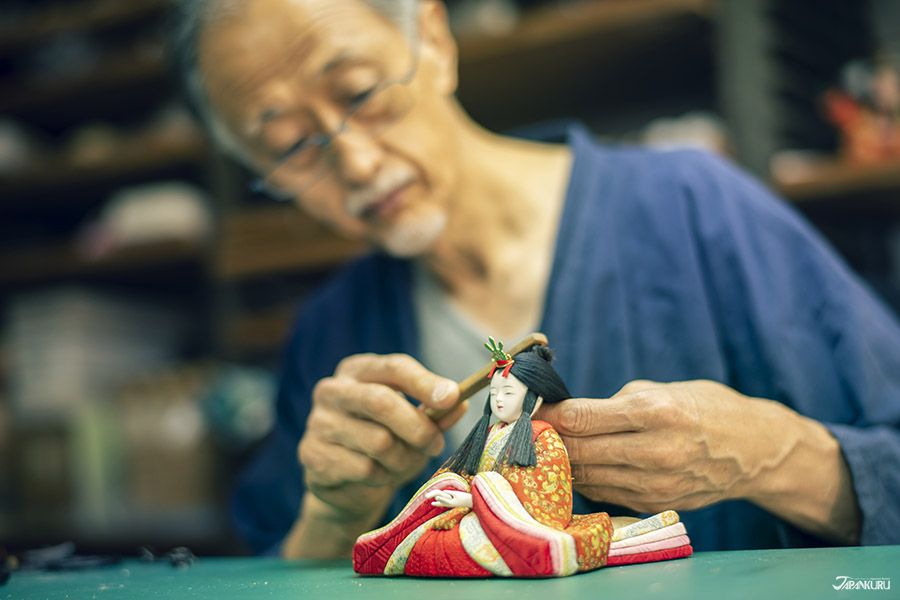
  The history of many ningyo forms is hidden in their mystery. Like most of the ningyo dolls, they were made for personal amusement for the elite class, but over the centuries their adorable qualities attracted a wider audience. At the present, the castle town of Iwatsuki is the largest producer of dolls in Japan and the major center of doll making craft. The doll makers of Iwatsuki are highly respected. They’ve been carrying the traditional craft of making dolls since the 1700s. The main reason for the location of this craft during the Edo period in Iwatsuki was the access to a very special wood from the paulownia trees that was excellent for woodcarving. Since then, it has become a center of traditional doll making craft in Japan. It is very common for grandparents to buy a set of hina dolls for new granddaughters, and the shops in Iwatsuki are very popular in the months before the Hinamatsuri holiday (also called Doll’s Day or Girls’ Day). This is a religious holiday in Japan, which is celebrated on the 3rd of March each year. Japanese people believe that Hina dolls bring happiness and prosperity to their families. They cherish these dolls with grace and warmth in their hearts. At the present, Iwatsuki takes great pride in its status as Japan’s largest producer of traditional dolls (Fig. 2 above, Fig. 3-6 at the bottom of the page).

It takes more than ten artisans to make a doll, where each artisan is responsible for different stages of the process creating the head of the doll, hands, arms, and little accessories to go with a doll. In the era of industrialization, when toys are mass-produced, this is such a remarkable example of a truly handmade craft. If you are interested to know more about Iwatsuki doll making craft, visit the Iwatsuki Ningyo Museum, located in Saitama Prefecture, which is Japan’s largest producer of ningyo dolls. The main purpose of the museum is to provide an overview of the beauty and history of ningyo in connection to Japanese culture.

There is a common saying that “Beauty is in the eye of the beholder.” The essential beauty of art objects never changes, but how this beauty is interpreted frequently does. Japanese dolls are a great example of subjective changes in perceiving beauty and value, and thus, evolved into a very popular collecting activity. The best collections of Japanese dolls belong to Japanese museums and academic communities. Thanks to the passion and enthusiasm of the private collectors, the art of Japanese dolls was preserved and continued to evolve.  Alan Scott Pate is a leading expert on Japanese Dolls in the US. He specializes in religious and figural art of Japan from the Edo period and earlier. Pate has curated exhibitions, lectured on Japanese dolls and has been published widely in journals focusing on Japanese antiques. Thanks to his passion and shared knowledge about Japanese dolls of different forms, the art of Hina Dolls attracts more attention from the public, collectors, curators of the museums and contemporary doll artists. Read more about Pate and curated collections here: https://www.antiquejapanesedolls.com/

Since times of antiquity, there has been a strong belief that Japanese dolls function as a wish for the happiness of children at the time of their birth. Now, at the hands of many contemporary skilled craftsmen, Japanese dolls act as kind guardian spirits, who watch over Japanese people and protect them in their journey through life. They comfort them in times of sadness, give them courage in times of loneliness, and share their joy in times of happiness. A doll given as a blessing for the happiness and prosperity of a child will embody the sincerity of the giver’s wish, and help the child to grow up happy and healthy. 

Very often when we mention the definition “doll” to describe artistic work, it brings negative association. The word “doll” indicates certain expectations. Some artists prefer to call their work creation or figurative sculpture. Whether described as dolls or as mixed-media decorative sculptures, each piece of an artwork opens a dialogue between the artist and the viewer. Yuki Atae is one of the most highly recognized contemporary doll artists in Japan. His delicate and nostalgic art dolls have gained popularity worldwide. He mainly portrays everyday moments in ordinary people’s lives with realism, humor and warmth (Fig. 6-7 left). Yuki Atae explained why he is creating dolls: “I thought this is the only thing I should do. I didn’t care whether I could make a living by it or not.'' The work of the artist you can admire at the Kawaguchiko Muse Museum, which together with Yoyukikan are small museums located in a corner of Yagizaki Park on the shores of Lake Kawaguchi at the foot of Mt. Fuji. Opened in June, 1993 and named after the Goddess of Greek mythological art, the museum displays Yuki Atae’s doll works. You can visit an exhibition here or DollCafe or simply marvel at Mt. Fuji from the muse garden facing Lake Kawaguchiko. People that highly admire dolls by Yuki Atae mention that his work brings back memories about childhood, their families and Japanese traditions. With his miniature dolls, he reminds them about the tenderness that people have lost nowadays. This is an example of how a doll can speak to us about ourselves and our conditions as humans. 

Dolls connect to people spiritually. We should never forget it or ignore it. Dolls make us feel more alive in their presence. This is why we cherish them. Perhaps one day, hundreds of thousands of years from now, archeologists will extract ancient artifacts from the 21st century in the buried remains of our cities. Among the ruins they may discover an exquisite doll with delicate features. They may even find several of these lost, crafted remnants across different continents around the world. Charmed by their beauty, they will marvel at the people who created, owned and loved them and the civilization that left them behind.

References / Places to visit in Japan:

Iwatsuki - The Town of Japanese Dolls:

https://www.japankuru.com/en/culture/e2251.html

Iwatsuki Ningyo Museum:

https://ningyo-muse.jp/modules/info/index.php?action=PageView&page_id=13

KAWAGUCHIKO MUSE MUSEUM:

http://www.fkchannel.jp/muse/facility/

Yuki Atae Dolls:

https://atae-yuki.com/

SCOTT PATE, A., (2008) Japanese Dolls. The fascinating world of Ningyo. Singapore: Tuttle Publishing, 2008

Come On OutComment
Onsens 101: Where to Go and What to Do

By Lena Strong

      Traveling to a foreign country is fun and exciting! As a Come On Out Japan intern, you get the chance to travel all over Japan— hopping from plane to shinkansen (Japan’s high-speed rail), visiting different islands and prefectures— a whirlwind of movement from place to place. You’ve probably heard the wise advice to pack as light as possible, but no matter how strict you adhere to this advice, traveling is tiring. Lugging suitcases around, switching time zones, moving in and out of share houses, all while working hard in the classroom can be exhausting.

      This may seem overwhelming at first but don’t worry, for Japan has the key to ultimate relaxation...onsens. If you are walking through a village and see the symbol ♨ or the kanji 湯, then you have come upon an onsen, or a Japanese hot spring. Japan being a volcanically active island, people have been harnessing the land’s natural resources for thousands of years, and to this day public bath culture continues to thrive.

Screen Shot 2021-03-07 at 9.06.27 AM.png

Where should I go?

      The geothermally heated water, rich with minerals and natural gases, provides health benefits in addition to a soothing experience. Traditionally located outdoors, there are a variety of facilities that offer both indoor and outdoor bathing, though it is tough to beat immersing yourself in the steaming waters amidst the sounds and sights of Japan’s beautiful forests. If you are staying in Tokyo, then you are close to the well-known waters of Hakone. However, the most famous onsen in Japan is Kusatsu, known for its high-quality hot springs that are said to heal every illness but lovesickness.

      If you are a history lover, or a fan of Spirited Away, then you should visit Dōgo Onsen, Japan’s oldest public bath. Around 3,000 years old, this hot spring has been the frequent destination of common people and the Imperial Family alike. Its most famous attraction is the Dōgo Onsen Honkan, a wooden public bathhouse with a maze of stairways, passages, and rooms that is said to have inspired Miyazaki’s popular animated film.

What should I do?

Here are some tips to help you during your own visit to a Japanese onsen:

Screen Shot 2021-03-07 at 9.02.06 AM.png

1. Check whether the facility allows tattoos.

Tattoos are a bit of a taboo in Japan and some onsens do not allow guests with tattoos. For this reason, it is important to check beforehand whether the onsen allows tattoos if you have any too large to cover up. 

2. Hit the locker room.

When you first arrive at an onsen, the proper etiquette is to shower before entering the baths to ensure cleanliness. The onsen will provide you with a key to a locker where you can secure your items during the time you spend at the baths. 

Screen Shot 2021-03-07 at 9.01.50 AM.png

3. Strip!

Everyone using the hot springs will be naked, so don’t be shy! Though traditionally men and women bathed in the same space, most places nowadays have separate bathing areas for men and women.

4. Alternate between cold and hot baths.

If you get overheated from the hot springs, cool off a bit in the colder baths available. This allows you to maintain a comfortable body temperature and increase your stamina for relaxing in the hot baths. It is also nice to sit in the sauna for a bit if you need a break from the water. 

Screen Shot 2021-03-07 at 9.02.19 AM.png

5. Hydrate.

Drink lots of water before and after your visit as long periods of sitting in hot baths can leave you dehydrated. Lots of places offer refreshments and snacks you can purchase after your visit.  

6. Be respectful.

It is good to be mindful of proper etiquette when you are a foreigner traveling to Japan for the first time. In general, onsens are social places where quiet chit-chat is acceptable, just don’t get too rowdy. You are able to take a small towel into the baths with you, but be careful to not let it under the water. Also, if you have long hair make sure you tie it up or wrap it in a small towel— nobody wants to sit in a bath with floating hairballs!

      Whether you are visiting Japan in the summertime or winter, the experience of an authentic onsen is well worth your time. Even the macaques destress and enjoy the natural hot springs in the land of the rising sun!


daniel-gregoire-Yn4OgJ4WocU-unsplash.jpg
Come On OutComment