Kawagoe Day Trip

This past weekend, we had a program sponsored trip to Kawagoe, a town about an hour train ride from Ikebukuro Station in northern Tokyo. Once we got there, we got to experience a traditional tea ceremony and meditation at an 1200 year old temple, and explore a traditional alley specializing in candy! 

Outside the temple. 

Outside the temple. 

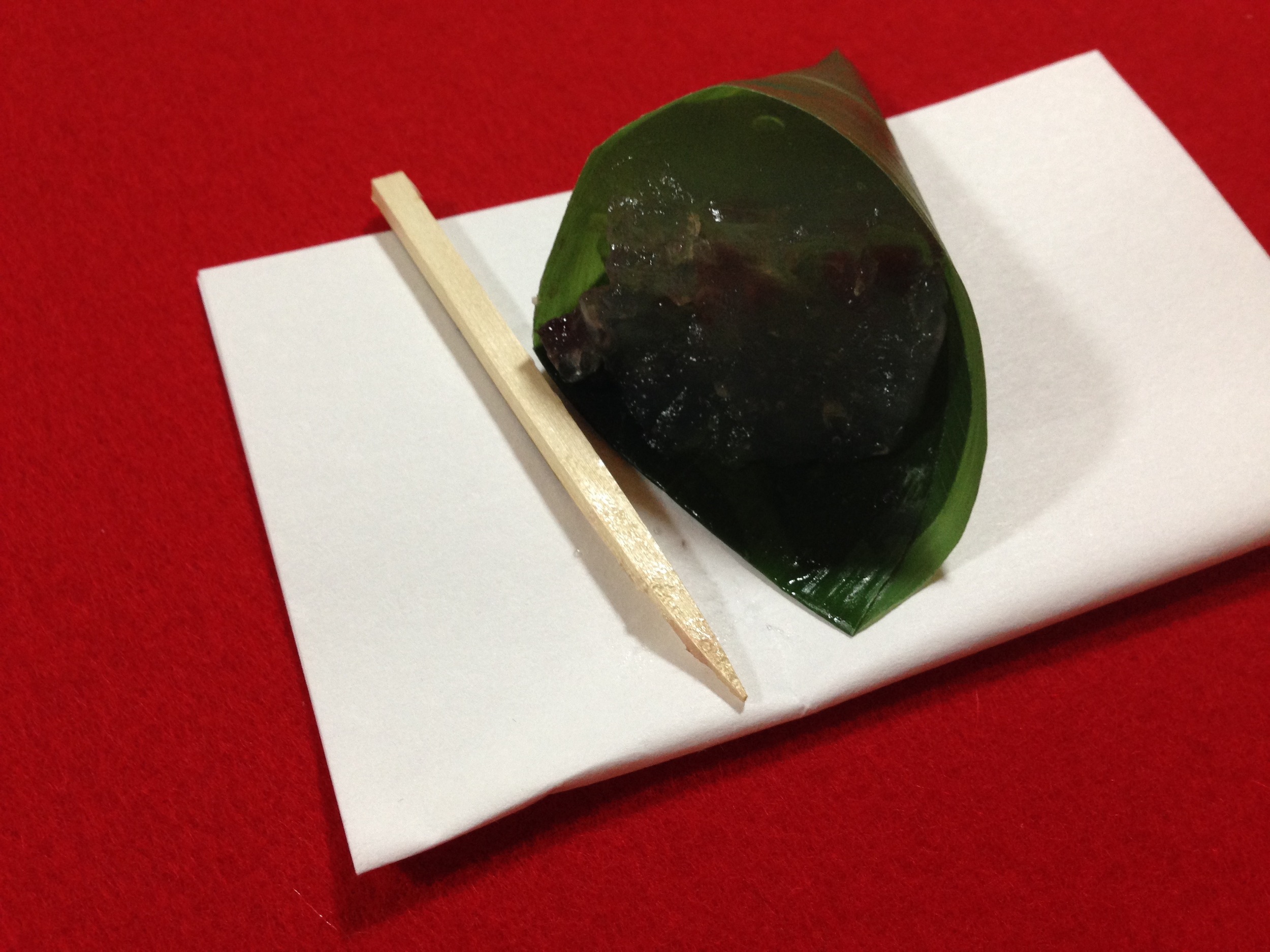
The tea ceremony was beautiful. Even though there were so many of us interns there, the ceremony still felt incredibly intimate. The best part was that we could ask the monk leading the tea ceremony as many questions as we wanted! Lots of interns asked about the history of tea ceremony, how long it usually lasts, when it is performed, etc. The room the tea ceremony was performed in in the temple was a traditional room with a tatami floor, and there was a beautiful flower arrangement that was the focus of the room- apparently, the arrangement is changed every day to reflect the new day. We each received a delicious cup of fresh matcha tea, and also a Japanese traditional sweet- a type of rice gelatin with bean paste wrapped in a leaf. 
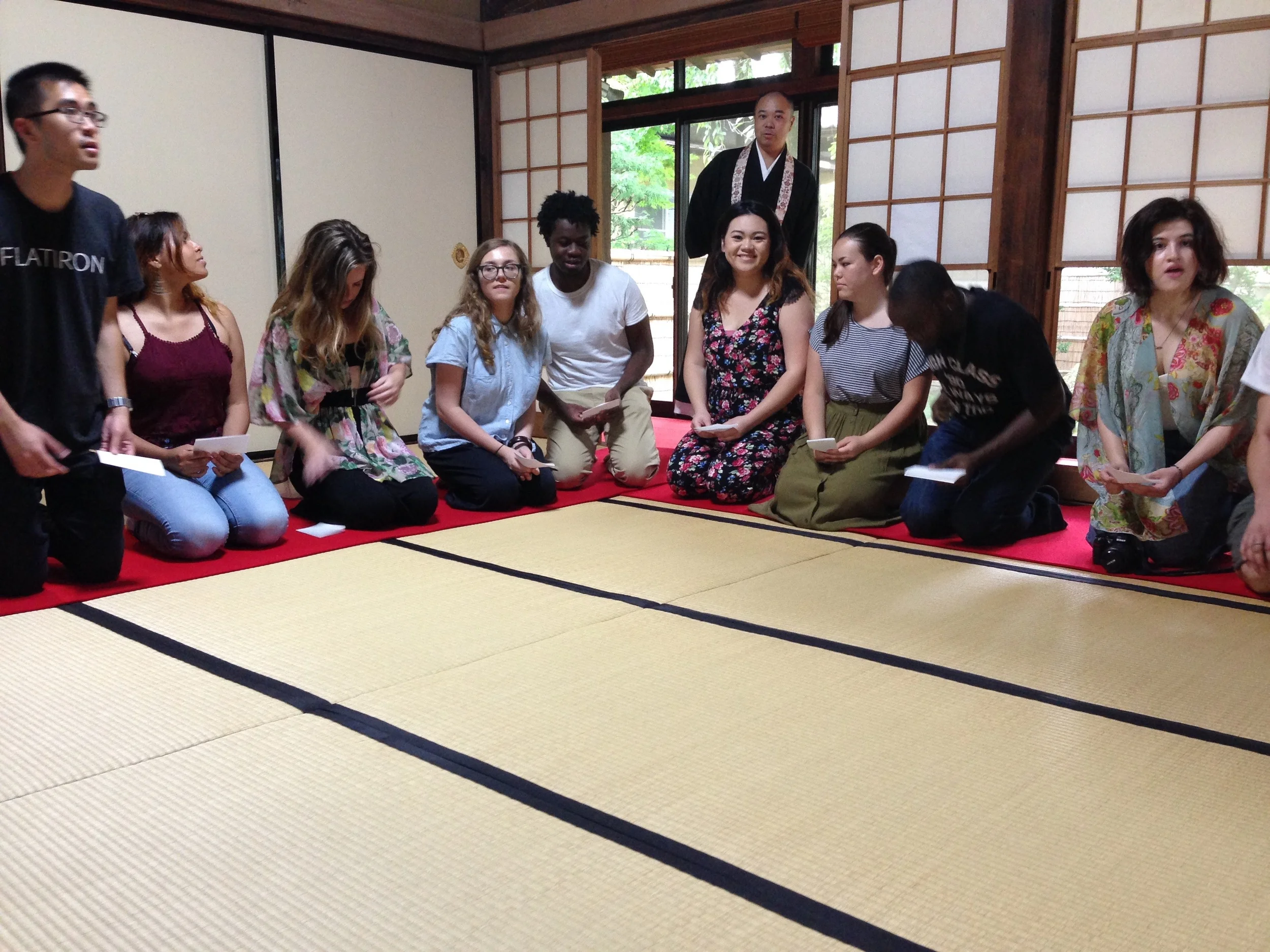
Various faces made while waiting for tea! :)
Various faces made while waiting for tea! :)

The Japanese sweet they served us. 

The Japanese sweet they served us. 

After the tea ceremony, we learned about meditation. For fifteen minutes, we experienced the ritual that monks complete for up to two or three hours everyday! We learned the correct position and correct breathing patterns (legs crossed, with one leg on top of the other, arms folded neatly, breathing slow and steady, and looking at a point about 2 meters ahead of you). We all sat in a line and meditated in the temple, watched carefully by the head monk who tapped us if our breathing was unsteady, our positions changed, or we became unfocused or distracted. All in all, an incredibly calming experience.

Lastly in the temple was a calligraphy class! We learned some history of calligraphy and were taught how to create one character on paper that we got to take home with us. Mine was incredibly messy and looked nothing like the example character we were given, but it was super fun to practice.

Teaching us calligraphy. 

Teaching us calligraphy. 

My practice sheet. 

My practice sheet. 

Kawagoe is a beautiful town to explore because there was so much to do and so much energy. The stores were very touristy but had all kinds of souvenirs and snacks to try. I got a sweet potato soft serve ice cream cone which was a lot more delicious than it sounds! We finally made it to the candy alley, famous for its different kinds of Japanese sweets (including a massive sweet soy breadstick that looked a lot like a charred French baguette, a strange pounded mountain root on a stick, and my favorite dango, or rice dumplings, smothered in sweet sauce). Unfortunately, by the time I arrived at the candy alley, many of the stores were closing, but I could still pick up a snack or two.

A quick look at some of the Edo-style buildings in Kawagoe. 

A quick look at some of the Edo-style buildings in Kawagoe. 

All in all, a great day trip. I love Tokyo so much, but it was nice to spend a calm day away from the city but know that I was close enough to return whenever I wanted. 

Week 2 of the Program
Interns and students play a guessing game. 

Interns and students play a guessing game. 

The second week of the program brought a few surprises and many tears. I had two new Japanese high schools students, Shu and Souto. Shu came in with an amazing wealth of English vocabulary but no way to connect the words into sentences- even by the end of the first day, it was astounding to see how much progress he had made in terms of speaking and how much he had already grown to love asking questions. Souto was a bit shyer and very nervous about speaking at first, but as he warmed up to speaking with the other two interns and me, he quickly got more comfortable and loved sharing ideas and talking about his daily life. Together, I think the two of them encouraged each other as well.

We kept a running vocabulary list throughout the week, teaching the students words like “combine” or “residual” and having them repeat the words and use them in sentences during class when they wanted to explain something to us. I believe this really helped them not only with skills in explaining concepts in English, but also helped them practice sounding out unfamiliar words and encouraged them to continue growing their English vocabularies!

Throughout the week, we covered complicated topics like ideas for helping the Tokyo 2020 Olympics be a success and ways to help the world use more clean energy. Our group found simple ways for every Japanese person to save more energy, whether it was turning off the lights when not in the room or not using as much water when you shower. In addition, my students were fascinated by the idea of AI (Artificial Intelligence) being used in electric cars, and wanted to find a way to combine both ideas into one energy saving vehicle. 

We quickly found that giving presentations was going to be the biggest challenge for these two- both were incredibly nervous onstage and had not yet gained the confidence to speak English in front of a larger group of people. The first presentation was rocky; however, the next day, they worked even harder to ask us questions on how they could improve. After we watched (via youtube) Steve Jobs and Malala Yousafzai give speeches, our group reviewed how to give a great speech and hold the audience’s attention. For their final speeches on their life missions, Souto and Shu borrowed things like Steve Job’s confidence and Malala’s repetition of important phrases to enhance their own speeches.

I also gave a presentation in front of the class this week- on my major at University of Chicago and on how it connects to my life mission. I think my presentation went okay- I definitely need to find a better way to explain how economics and my other major, Law Letters and Society, work together to form my life mission, but I think the students had fun with the economics logic puzzle I introduced to them. I hoped that my being on stage would help my students become more excited about getting on the stage themselves.

The Life Mission speeches Friday afternoon were a stark and amazing contrast to my student’s behavior during presentations earlier in the week. They had transformed from shy and nervous to excited and eager to share their missions with the class. Shu volunteered to be one of the first students to present, bounded onto the stage to present, spoke clearly and thoughtfully, and as he sat back down in his seat, asked us if he could present to the class again! He wanted to create a nonprofit to help send wasted resources in countries like Japan and America to war-torn countries. Souto did his presentation on his life mission using math and science- to make a more practical and easy way for people to listen to music. His idea, using audio waves on different frequencies for different people, was something I could barely explain myself in English, yet he excitedly shared his ideas with the class, giving examples until all of the interns and students were nodding along with his enthusiasm. 

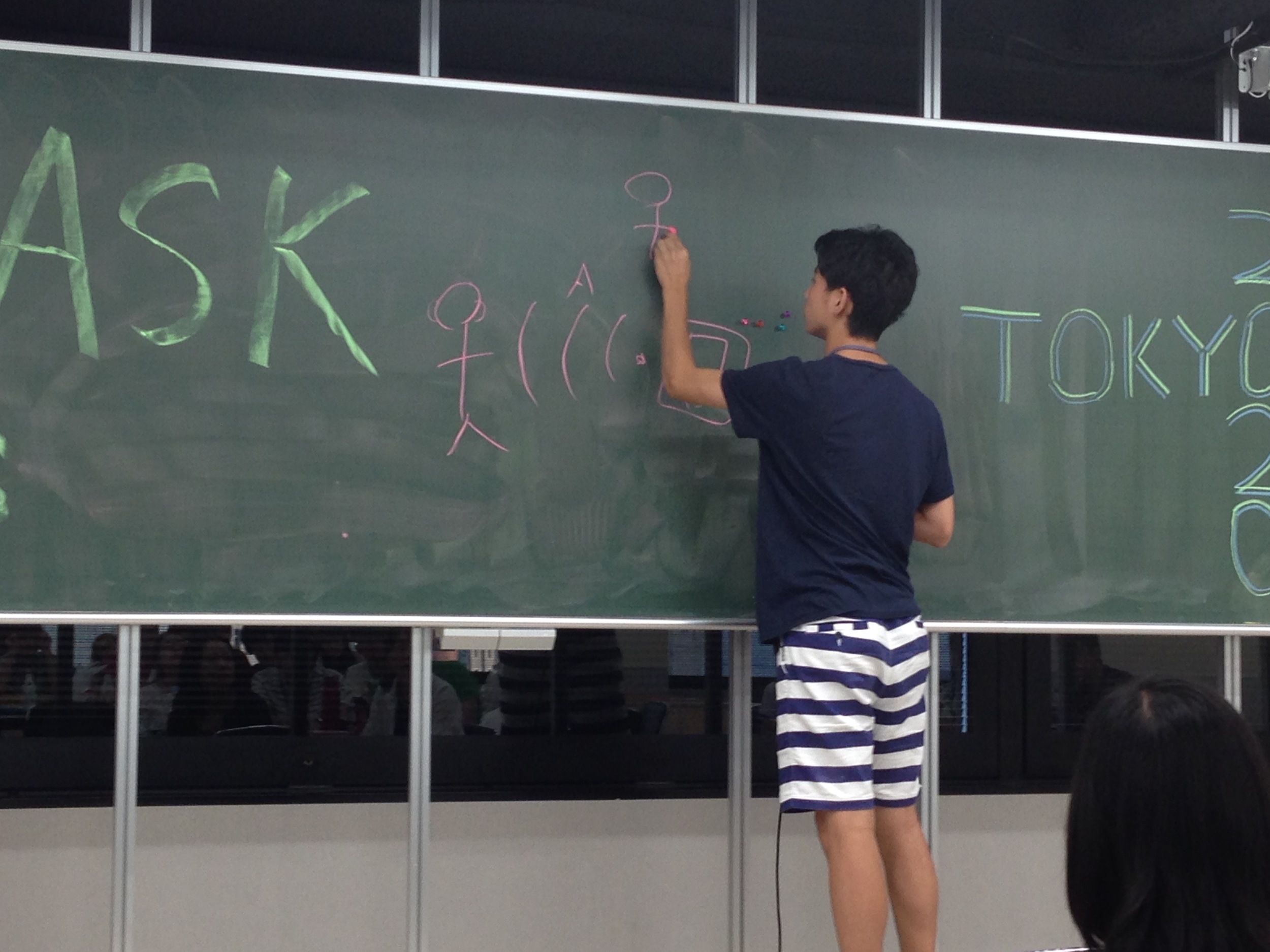
Drawing out an explanation. 

Drawing out an explanation. 

All in all, we were so incredibly proud of these two for not only conquering their stage fright, but improving so rapidly in English in under a week. These students have once again shown me that I need to be a better teacher in order to keep up with how fast they can learn. 

Week 1 of the Program: Part 2

Thursday and Friday classes showed just how much improvement our students had made over the course of only five days! Thursday was largely centered around on the UN Sustainable Development Goals, where our group chose to focus on how global education policy can be improved to provide access to education for all students. Kayato and Miyu suggested reforms from tons of research on education initiatives they had done the night before, and we interns kept them digging deeper into how the reforms they found could be applied to not only their lives but in places around the globe lacking strong educational systems.

Miyu had focused her research on the adoption of technology in classrooms, and suggested that schools in developing countries offer classes for parents as well, to start a conversation about what education can do for their children. Kayato thought that Japan should send more educational aid to developing countries, and decided that he would like to be part of his initiative and go abroad to teach. He had seen examples of organizations like UNESCO building private schools in Cambodia and Vietnam and the corresponding rise in income for people attending those schools, and talked to the group about those initiatives and how we can apply many of the same tactics around the globe. All in all, a fascinating discussion, not just because we could hear them talk so well in English about such important and difficult topics.

blog2016.jpg

We also focused a bit on correct speech format, and taught Miyu and Kayato the proper way to form an introduction, body, and conclusion of a speech. (Apparently, speeches or even talking in front of the class is incredibly rare in Japanese schools, so the practice here was much needed.) We prepared them for a speech on their UN Sustainable Development Goal (all of which went incredibly well), which also served as preparation for their big speech Friday on the Life Mission they think will suit their talents and interests. 

Friday afternoon, the students all came to the front of the classroom and presented their Life Missions. Before these speeches, I had of course seen the rapid improvement in my own students’ English skills and had noticed it in others, but I hadn’t realized the impact that a full week of speaking nothing but English could have on these students. Some sounded nearly fluent, and the ones that weren’t quite there yet had gained so much confidence in their speaking and were eager to keep learning.

Life Mission Presentations!

Life Mission Presentations!

Also fascinating and amazing was hearing the life missions themselves- the students were a diverse group and wanted to do everything from flight surgery (be a surgeon to astronauts) to work as a translator in Haneda Airport in Tokyo- but they all had one thing in common. Every single student wanted to have a job that connected them beyond Japan and to the international community. They wanted to continue learning English and go on to learn more languages, and they wanted to study abroad, go to college in the US, or spend time traveling and working abroad. Many of them hadn’t thought much about what they wanted to do specifically before this week, and the majority had no idea they would enjoy English so much or that they would want to have a more internationally focused career. Hearing the impact our talks about our American universities, our majors, and our hopeful future careers had on these kids really astounded me. Inever in a million years would have thought that I could have so much of an impact on formulating these kids’ lives, and I was so proud of the ways they have found to give their talents back to the world. 

Our closing ceremony with the kids was full of tears, from both interns and students. A few interns gave speeches in Japanese (with the funniest reactions from the students who hadn’t realized any of us could actually speak anything other than English), and we all took photos together and talked in small groups to say goodbye to the kids. 

I’m looking forward to my next round of students, and if they are anything like the past week’s bunch, there will be a lot of tears (again) at the closing ceremony Friday afternoon. 

Come On OutComment