Mistakes Were Made: No Go Seikou

My 7am alarm blared. I scrambled out of bed, full of eagerness to begin a fresh week of mentoring a new set of students. Every week started like this for me, except one thing was clearly different: it was Wednesday. Our team had decided to take on Seikou Gakuin’s rare Global English Camp dates, a school whose camp began on Wednesday and ended on Sunday rather than the normal Monday to Friday. This meant that rather than the usual five day camp with two sweet days respite, our team would get one extra long weekend and then proceed to teach 10 days in a row.

It was certainly a challenge, but one we were willing to take on.

My house, comprised of myself and two teammates, frantically gathered our things, preparing early for the one hour train ahead of us. Eventually, with all our backpacks packed (and triple checked, of course), we headed out into the hot and humid Tokyo day, a Global English Camp mentor’s worst enemy. We completed our usual ritual of complaining about the heat on our tiresome 8 minute walk, making sure to throw in at least one joke about frying an egg on the street before making it to the station. Upon arriving by the station, I sighed out a quiet tadaima as I spotted Lawson's, a convenience store. My sanctuary. My second home. My breakfast. The other mentors and I rushed in, eager to buy some precious onigiri (of course filled with Tuna Mayo) and then scarfed them down moments later.

The train ride was an hour commute with three transfers. It was no joke. It tested our patience, attention, and awareness. I could feel my legs giving in as we reached the final train, as there are never any seats available on the train (and when there are, you feel bad taking it from any potential old ladies swaying precariously in the aisle). Then, the final station came into sight. The train slowed to a careful stop and emerged into the station. We found the rest of our team waiting for us around the corner. It had been a week since we were last united - all of us were scattered across Japan from Fukouka to Okinawa, so we took some time to catch up and talk about our experiences. Now all that was left was to wait for school staff to greet us and provide escort to the school. And we waited.

And waited.

We waited a little more.

We went to the 7/11 for lunch.

We waited.

I could see the look of slight panic on our team leader’s face as she decided to make a call to investigate. She went over to the side as we continued to chatter. Moments later, with a look of disaster in her eyes, she rejoined us.

"So staff says we start Thursday,” she said with a slight laugh. “Not today, but that's ridiculous. I'm sure he's definitely wrong.”

We agreed - what a ridiculous notion that everyone amongst our team misunderstood that we started today rather than tomorrow. That would mean this school's week would intersect with our next week of teaching, which would respectively end and begin on Monday. Ridiculous we scoffed.

We decided to walk towards the school while the staff figured out their mistake, because obviously, we knew we were right. We walked for another eight minutes or so, winding through the streets towards the school on the hill. We came upon the next slope when our team leader received another call. We decided to wait in the shade while it was clarified, sure we would be meeting the students shortly, making jokes about what we would possibly be doing if it was cancelled. And in that moment, our team leader got off the phone. Even without using words, the "Disaster!" was palpable on her face.

School began Thursday.

Maybe we should have listened a little better.


Written by Alex Prosi, Global English Camp 2019 Leader, University of Michigan

Edited by Paige Goetz, Director of Communications

Come On OutComment
How to Learn Japanese before Summer

Foreign travel can be tough, especially when you don’t speak a word of the local language.

This was my situation before joining Global English Camp in 2017. With a few months until Global English Camp 2019 gets underway, I thought I would share my thoughts about going to Japan with little to no Japanese ability, and what you can do before stepping on that flight to Tokyo this summer.

Personally, I didn’t speak a word of Japanese before applying to the programme. I started studying the day I received my acceptance, and although I’m by no means fluent, I know enough to get by and have very basic conversations.

In my opinion, learning Japanese isn’t necessary to have a great time in Japan, but knowing even a bit will enhance your experience this summer. You will be able to go beyond the typical trails by yourself, locals will greatly appreciate your efforts, and the opportunity to surprise your students with some Japanese at the end of the week is one you should absolutely take!

Anyway, let’s get into it!

Part I: Being in Japan with no/ minimal Japanese

Before discussing any steps you could take to learn some Japanese, I’ll share my thoughts about three key areas of intern life, and how to navigate them without being able to speak or read Japanese: work, travel and restaurants.

Work

In short, we don’t speak any Japanese at work. The only time you may want to speak some Japanese will be at the closing ceremony, held at the end of English Camp, every Friday. You have the opportunity to speak to your students and hand out their participation certificates, and you might want to say a few words in Japanese (entirely optional, but well worth it).

Travel

The majority of your travel around Japan will be on the trains and metro. Luckily, announcements are usually made in English and Japanese, and signs are bilingual. Ticket machines also have an English option. The stations may actually present more of a challenge than the language barrier, as some of these stations are small cities, and finding the right exit can be tricky.

In terms of actual navigation, Google Maps is your best friend. A search for your journey should tell you:

  • the line (and its colour)

  • departure time

  • type of train (only in Japanese usually, but it can be helpful to match up the characters against the departure boards)

  • platform

  • price, and (sometimes)

  • which exit

In the rare occasion that Google doesn’t help you, station staff (like many people in Japan) are extremely helpful, often walking you to the right location.

Restaurants

Food/ bar/ restaurant vocabulary is where I focused the majority of my attention, and one that I recommend you focus on too. Many food-related words are derived from European languages, for example; menyuu, koh-hee, biiru, chokorēto, aisu kurīmu, or orenji. Recognising items on the menu or being able to ask for a recommendation is a great skill to have – in my totally unbiased opinion, Japan has the best food in the world.

In some izakaya (bars), there are tablets for ordering, with English available, while in most restaurants English menus are available (if the waiter hasn’t automatically brought you one). In fast food restaurants ordering can be done by pointing to an English menu.

If you are venturing to more niche places (which I highly recommend), some research ahead of time can help, but in the past, I have asked the waiter’s recommendation, and just gone with whatever is brought out (with mixed results), or even just pointed at other people’s food and said, ‘same, please!’

By the way, recommendation in Japanese is osusume.

Interns successfully navigating a restaurant with no Japanese skill - job done!

Interns successfully navigating a restaurant with no Japanese skill - job done!

I should also stress that the likelihood of you being alone/ in a group where nobody speaks any Japanese is low. Even if you are, the likelihood of also being without a phone to translate, or the other person not speaking any English is even lower. But still, these times occur, so it’s good to be aware.

Part II: I’m coming to Japan in 3 months and want to say more than ‘konnichiwa’ – how!?

As I mentioned at the start, I started learning Japanese the day I received my acceptance to COO in 2017. That gave me roughly 3 months – similar to what you have now. Here are five resources I used to try and learn as much as possible before arriving in Tokyo. 

Picture5.png

1) Apps (Memrise)

There is a plethora of apps available to learn languages nowadays, with Duolingo probably being the most well-known. However, I found it clunky and too slow for Japanese (it’s definitely better-suited to European languages). Memrise is my top recommendation.

Memrise has many courses available, but its Japanese 1-7 courses are extensive. It has good courses for learning the hiragana and katakana alphabets quickly. Memrise is great for spaced repetition learning of vocabulary and some isolated phrases, however it does not teach grammar, and doesn’t help with forming full sentences. As a starting point however, I think it’s excellent.

Also, while discussing apps – get Google Translate! I keep it on the front page of my phone when I’m in Japan and was crucial for me to talk with my host family in Okinawa. To bring up a quick word you have forgotten, or to translate written text with the picture function, it is a vital resource.

Picture6.png

2) Phrasebook

Phrasebooks have stood the test of time for a reason. Even though they are (arguably) outdated, having a Japanese phrasebook has come in handy for me a few times. There is a lot of useless information for our immediate purposes (i.e. phrases regarding car mechanics), but to learn some basic phrases (duh) or questions, for example around restaurants or directions, it can be very useful.

4) Japanese From Zero Youtube Account

This channel goes from very basic to more advance grammar topics and was my main grammar resource. The host, George, is a lifelong Japanese speaker who presents topics in a very simple way. There are also accompanying textbooks, but I didn’t go that far.

Picture8.png

 5) Abroad in Japan

Chris Broad covers all aspects of life in Japan. I highly recommend watching his videos or listening to his podcast. He doesn’t cover much on language but shares his story about going from not speaking a word of Japanese to fluency (including writing), and the resources and techniques he used to do it.

Picture9.png

6) Instagram

Follow Japanese hashtags like #日本語.

Many pages provide quick tips which are good reminders throughout those mindless moments scrolling through your feed.

Picture10.png

5) Tofugu

www.tofugu.com is a Japanese language/ culture/ travel blog that has amazing contributors like Dogen (find him on YouTube too), and lots of practical language knowledge for beginner and advanced Japanese learners. 

They also have a kanji learning system, called WaniKani. It is a paid system, but the first 3 levels are free, meaning you could learn ~200 vocabulary words. I have only briefly used WaniKani, but as an all-in-one system, it could be a good option to pick up some words before the summer. 

Picture11.png

Additional: Textbooks

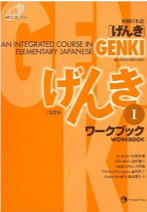
You may have noticed that I didn’t mention any textbooks. If you want to go down that tried and tested route, then there are many good books available, like Genki or Japanese From Zero. Personally, I thought a textbook for ~£40 wouldn’t be economic, especially with the above available. Also, I wanted resources that I could bring to Japan, and so a large textbook did not make sense in terms of packing (pack light!). I just need my phone, my pocket phrasebook and a notebook, and I’m all set!

 I focused here on the resources I used, as opposed to the techniques and schedule I followed to learn effectively. That’s a whole different topic, but in general I focused on efficiency. Learning hiragana and katakana was a simple first step, and then I focused on the topics that would occur the most frequently – food, directions, basic questions and standard introductions (and more food). 

Whatever you decide, I hope this has helped remove some of the fears of not being able to speak Japanese and given some good advice if you do want to pick up a few words and phrases before coming to Japan this summer.

頑張って!

Justin

I’m Justin, a postgrad law student from London, and 2019 will be my third summer with COO! Around the programme I have travelled around Hokkaido, Okinawa, Kansai and Tokyo. This year I’ll be going to Kyushu after the programme! Feel free to reach out to me on Facebook with any questions or see my Instagram (@justy.ldn) for my past pictures from Japan!

—

Written by Justin Seymour, Global English Camp 2019 Leader, London School of Economics

Edited by Paige Goetz, Director of Communications

Come On OutComment
A Typical Day of Global English Camp

The Global English Camp program is constantly changing, expanding, and improving. This means there is a chance that past Global English Camp mentors had a totally different experience than the mentors nowadays. That being said, some aspects have stuck around. As a past mentor, I’d like to shed some light on your everyday life!

*This example focuses on a typical day in Tokyo. Homestays and satellite schools may affect your week day.


9:30AM

IMG_20180723_100617.jpg

Whether you’re in Tokyo or Hokkaido, you should be arriving at the venue around 9:30AM. If you have a homestay, you may be arriving earlier. Before class begins, there is usually a quick meeting with other mentors. Sometimes, Toshin staff are involved. This is a convenient time to eat your breakfast and prepare for the rest of the week, such as fill out goodbye letters for your students. It’s also the perfect chance to bond with other mentors. Students arrive as early as nine in the morning, but the official English Camp day doesn’t start until 10AM.


10:00AM

Each day covers different topics in the textbook, but usually, mornings involve small group discussions and speaking exercises / games. 


12:00PM

Lunch! At certain school venues, you can go to restaurants with your students. Check with staff at the venue first. Otherwise, you can go to a convenience store and grab some food, go out with other interns to a restaurant, or pack a lunch. Some school venues want mentors to eat with the students every day; others don’t mind what you do during this time.


1:00PM 

Class resumes. Be on time! The afternoon involves more table discussions. Most importantly, there are student speeches and presentations at the end. 


5:00PM

Students fill out daily report sheets - these are important! Mentors must also fill out their own daily report sheet. This is your chance to report any students who may be struggling at your table, or if you have personal concerns of your own. Your report will be reviewed by staff.


5:15PM

Once students leave the venue, mentors are also allowed to leave. Clean up all the garbage and snacks at your table. In Japanese schools, there are no janitors. Students and mentors must pick up after themselves. Please remember this!

5:30PM and onward:

You are free to do whatever you like. Sometimes, there are scheduled activities and language classes happening that are sponsored by the program. Other times, there are unofficial plans created by returning staff who want you to tag along during their adventures. If you want to venture out on your own or hang out with friends, you’re welcome to do so as well.

That’s it!

As someone who’s done this program, I will say that you have a lot of independence. No one is telling you to go home at the end of the day, or spend your money wisely, or eat right - you must possess that responsibility for yourself. Remember that you’re doing this program to impact high school students - not to just have fun in Japan - so you should be awake and healthy for your students every day! Although I had a lot of independence on this program, I never felt alone, since there were always so many other interns around my living area and school venue.

The Global English Camp program changed my life. I hope it changes yours!

—

Written by Paige Goetz, Director of Communications

Come On OutComment