One lesson at a time: How Come On Out Japan inspires change over languages and lockdowns

BY Theodore Nze, COme on out japan returnee

How can I make a difference in the world?" It's a question that often keeps me awake at night. With so much happening globally, it's natural to wonder how one person can create positive change. This question weighed heavily on my mind when I first applied to join the Come On Out Programme in 2021.

Back then, COVID-19 was the primary concern worldwide, particularly in Japan. As the world grappled with the pandemic, the urgency of making a positive impact felt more pronounced. Initially, what drew me to Come On Out Japan was the chance to travel to Japan for free (let's be honest), especially after enduring multiple lockdowns. However, when the program announced that all teaching would be online, I felt a bit disappointed. Nonetheless, since I had no other summer plans and enjoyed teaching, I decided to give it a shot. Looking back, I'm so grateful I did.

My first impression of the program was the contagious excitement among everyone involved. Shifting online ensured that participants were genuinely passionate about teaching and forming global connections, rather than just seeking a free trip. I was also struck by the diverse talents and passions of my colleagues. For example, my teaching partner, Jessica, had transitioned from dentistry to pursuing her dreams in the music industry. Another team member was involved in designing technology to aid people with disabilities. Come On Out Japan had attracted a diverse range of talent, united by a love for teaching and Japan.

The program kicked off with onboarding and training sessions, where we had ample opportunity to ask questions and gather information. We were assured that our leaders would be available throughout the program for support. One rule that stood out to me was the requirement to speak solely in English to create an immersive environment. As a Japanese major, this presented an exciting challenge. Would we be able to effectively communicate? What if the students didn't understand my explanations? Only time would tell.

Initially nervous but giggly, the students, aged fourteen to seventeen, gradually opened up as we got to know each other. We learned not only their names and faces but also their passions, aspirations, and how learning English was helping them achieve their goals. Some aimed to become nurses, others scientists, while some simply desired to travel the world.

Returning to the original question, the Come On Out textbook, with its focus on the UN's Sustainable Development Goals, highlighted the concept of positive change. With the diverse interests and ambitions among the students, there was a palpable frustration at wanting to express their opinions but struggling to find the right words. This frustration, I believe, is one of the program's most significant aspects, as it underscores the benefits of learning a new language and the opportunities it unlocks.

As the program neared its end, it was heartening to witness the students' increased confidence in expressing themselves in English. It was also during this time that I revealed my proficiency in Japanese, which I think made them realise that despite being the foreigner they struggled to understand while speaking English, I too had complex thoughts and feelings that language could convey.

Come On Out Japan, with its curriculum, participants, and eager students, served as a guide on how to create visible positive change in the world. As cliché as it may sound, I genuinely felt that I learned as much from my students as they did from me. The program's emphasis on fostering global connections, promoting language learning, and empowering students to express themselves effectively contributes to creating a more interconnected and understanding world. I'm excited to return this year (in Japan this time — yay!) and continue striving to make a difference. Hope to see you there!

Come On OutComment
Come On Out: Beyond Borders, Beyond Expectations, Beyond just a Summer Program

By Gwen McKee, Former Director of Communications and Operations

Let me preface this blog by saying: I am not a blogger, nor a student of poetry or words or the English language in any way (so, apologies if this is not written quite as well as it should be). However, that is what makes my experience at Come On Out so incredibly valuable. When I first applied to be an intern at Global English Camp in 2018 after coincidentally opening an email newsletter from my department (for the first time that year), I was certain that I would not receive an invitation to the program. Me, only with my arts and technology background, teach English in Japan? Absurd. However, I quickly discovered that this program (and company as a whole) is about so much more than teaching English. It’s about mentoring the next generation IN ENGLISH about our personal experiences in education and school life, as well as showing them about the world. 

In fact, it was this experience in art and technology that gave me the extremely lucky opportunity to take over as the Director of Design & Technology at Come On Out after the program (a title which would later change). Throughout the next four and a half years, I would go on to not only collaborate to run four Global English Camp programs with over 600 yearly participants and over 5,000 students, run a successful internship program of 24, and design, create, and manage five websites and their social media marketing, but also meet my fiancé, build a foundation for my career, meet some of my closest friends, explore the world, and understand what fulfillment in a workplace truly means.

And that is why it is so difficult to say goodbye to this amazing company. Come On Out is a rewarding and interesting place to work, with varied projects and goals. Duties ranged from designing social media graphics to managing website bugs in our teacher scheduling system to collaborating with partners, interns, and contractors all over the world from Japan to Sri Lanka to Spain to South Africa. As exciting as this all was, I must say that the most rewarding part of it all were the ones that allowed me to pass on the opportunities that I received to other young adults. 

At our internship program, we created spaces for students and recent graduates to discover their interests and gain experience in fields like web design, curriculum development, and social media analytics. At Come On Out English, Come On Out eTEFL, and Come Online, we created spaces for aspiring English teachers to learn new skills and get paid for teaching students abroad. And of course, at Come On Out Japan’s Global English Camp and Global English Workshop, we allowed non-English teachers to coach and mentor students in Japan, while gaining travel experience and meeting new friends from around the world. It all boils down to these cross-cultural connections and experiences that help us grow. That’s what draws us all in, and that’s what keeps us here.

And now, I’m off to new adventures, across the world again. I met my fiancé and some of my best friends at Global English Camp 2019, and he proposed in Japan during Global English Camp 2023. I’ve moved to London to build a life with him, and I’ll continue to follow (and maybe participate again in) future Global English Camps. I wish all of you the best of luck, thank you for keeping this program alive and thriving, and さようなら!

Here are my best pieces of advice for getting the most out of your English Camp experience:


  1. Be open to exploration! Take advantage of every second that you are in Japan. It’s great to stay comfortable, but if you can, use evenings and weekends to discover new places, walk around your area, and meet up with new friends. Your accommodation may not be similar to what you’re used to, so why not get out of your comfort zone?

  2. Meet new friends! With your shared experiences, you’ll build long-lasting bonds that could take you on other journeys in the future. In GEC 2019, I lived in a dorm with 7 people per room and at least 30 interns at a time. We took advantage of this and spent tons of time together - these are the people that I still talk with to this day.

  3. Don’t get discouraged! My first day at GEC 2019, I lost my voice. I just wasn’t used to talking as much as I did, mainly to fill the silence of my students (who, throughout the week, started speaking more and more). You’re not a bad teacher, your students are just nervous! They will warm up to you, and you will discover what works for you and what does not.

  4. Stay in touch! All staff members at Global English Camp remember each and every program coach. We want to hear from you and are all are open to being contacted and hearing about how things are going. And, if you want to get more involved, contact Brian!

  5. Go with the flow! Not everything may be fun, or what you are used to. Travel requires a certain level of spontaneity, flexibility, and adventure. If you’re able to put aside your creature comforts and arrive with open expectations and values, I can assure you, you’ll have the time of your life!

Come On OutComment
“The Random Little Things:” The Unexpected Factor that Made GEC 2023 So Great

By Nikki Wolin

Most people can fit into one of two categories: planners or improvisers. I’m sorry to say I have never been an improviser. So during training week when my leader asked what we were most excited for during the program, I had a list. I wanted to ride a bullet train, visit shrines in Kyoto, and have some high-quality sushi. However, the last coach in our group had a different approach.

“It’s always the random little things that end up being the most memorable,” she said. “It’s never the stuff you plan out. So my answer to the question of what I’m most excited for is, ‘I don’t know yet.’”

Here was a bona fide improviser! For the rest of the program, her words lingered in the back of my mind. Would the things that I tried to “cross off” be better than the ones I just walked into?

Now that the program is over, I do have to admit that none of the things I’d expected – sushi, shrines, or bullet trains – ended up being my favorite parts. The most I saw of Kyoto was Kyoto Station, my sushi experience was limited to 7-Eleven takeout, and I usually slept on the bullet trains (and some regular trains, too). However, all of these “disappointments” simply reflected even more fun but highly unanticipated activities. While I may not have seen Kyoto, I had a fantastic day in Okayama; although I rarely ate sushi, I enjoyed ramen, curry, and wagyu burgers with my team; and maybe the bullet train rides just paled in comparison to the destinations awaiting us on the other end.

After five long weeks, I finally had my answer: Immie was right.

The Camp

Both expected and unexpected events played out over the next five weeks, which involved one week of training and four weeks of teaching. During our first week in Tokyo, we visited Tokyo Rinkai Disaster Prevention Park (complete with an earthquake simulation) followed by three days of classroom-style training in Shinjuku. During this time we met with our teams and moved to either permanent or temporary housing depending on whether we were stationed in Tokyo. Regardless, coaches used their free time to explore sites such as the Imperial Palace, Ueno Park, and Akihabara, Japan’s anime capital.

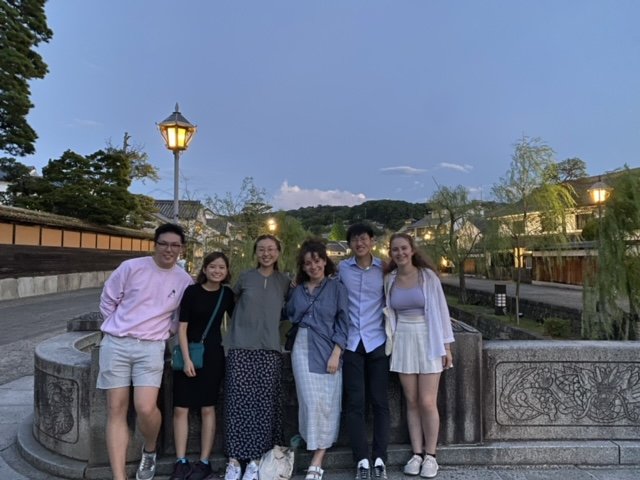
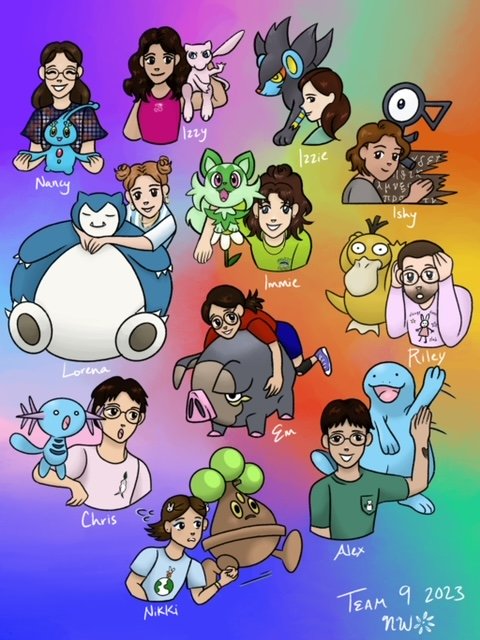
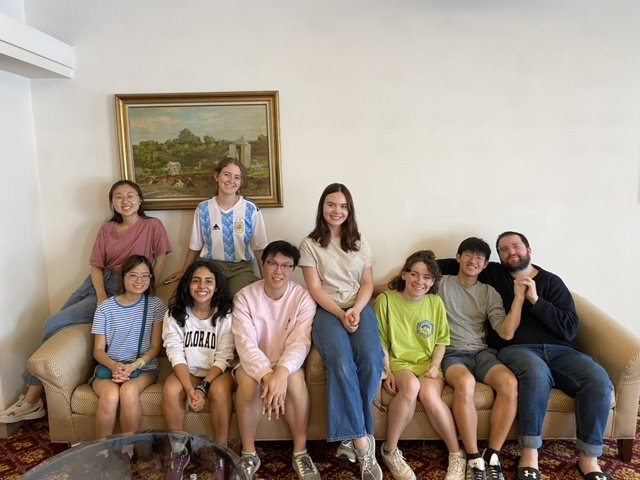
On Monday of the following week, we moved to our first location. My team, which consisted of two leaders and nine coaches, traveled around the Kansai region in western Japan (an area that includes Kyoto and Osaka, as opposed to the eastern Kanto region containing Tokyo). We then further split in half for the second and third weeks of coaching. While my entire team taught in Osaka week one, my half went to Shiga and then Kurashiki while the other half stayed in Osaka and then traveled to Fukuchiyama. We reunited back in Osaka for week four just in time to welcome Typhoon Lan, whose scariest effect was probably just having us complete the program in four days instead of five.

Our weekly schedule involved teaching Tuesday to Saturday from 10 am to 5:30 pm. We had Sunday off (which we often used for day trips), then traveled to the next location on Monday to start the cycle anew. Classroom sizes ranged from a whopping 3:2 coach:student ratio our first week to a more typical 1:5 ratio. I personally found both advantages and disadvantages to co-coaching – more coaches resulted in less individual teaching time, but maximized one-on-one interaction with the students. In addition, if you got stuck you could always bounce ideas off of your fellow coach. On the other hand, teaching alone maximized your overall interaction with the students but minimized individual conversations. Additionally, support now had to come from the slightly-farther-away source of a leader.

After experiencing both a 3:2 and 1:5 ratio, I just have to say that no matter what the group size, you can always create a fun team experience. Breaks are the perfect time to get to know your students better by asking them to teach you something for a change (like whether “strawberry” ichigo is the same as Bleach protagonist Ichigo! “Is it because he has red hair?” I asked after a lightning flash of inspiration, only for my students to shake their heads sadly. Apparently they’re written with different kanji ).

I was pleasantly surprised by our housing during the program; of the seven accommodations I stayed in, five were single rooms. They ranged from the smallest being pods in a capsule hotel to the largest being private rooms in Come on Up share houses. Commute times varied accordingly, from a blissful two minutes in Kurashiki (where both the hotel and teaching venue were attached to a mall) to about forty-five minutes by train and bus.

Moving teaching venues and accommodations every week might sound stressful, but even after moving seven times in five weeks, I found I didn’t mind. It was exciting to pack up and ship out not knowing where the next train, bus, or bullet train would take you (or knowing, for the true planners out there. For the improvisers: Google Maps). It was exciting to go to a place that had no memories or associations and make new ones. And most importantly, it was exciting to know that no matter what, you would find the random little things that would make your experience special.


The Random Little Things…

1.     Conversations with students

I Coached for Global English Workshop 2022 (the shorter, online version of GEC during the pandemic) and Global English Camp 2023. After these two experiences, I can safely say that the conversations with the students were always the best but most unexpected parts of the program.

During the first day of GEW last year, one of my students mentioned that her favorite hobby was kendama, a Japanese skill game that involves catching a ball (tama) with a wooden stick (ken). It requires an extraordinary amount of concentration, hand-eye coordination, and most importantly, patience. Within minutes she was showing us every kendama trick in the book, and a few that were probably out of it, too.

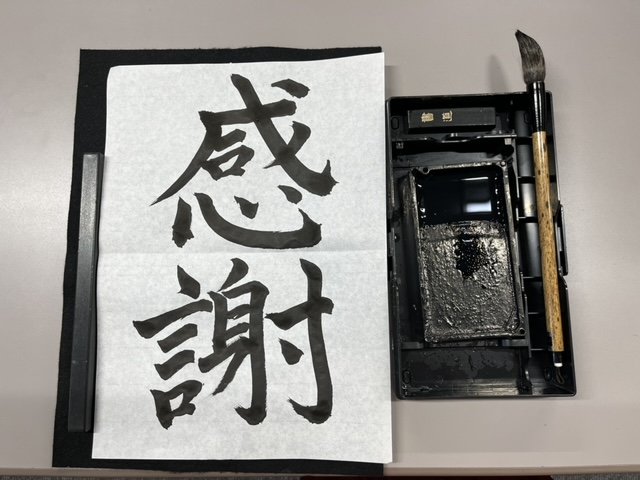
The skills didn’t stop there – I’ve had students who can write perfect calligraphy, who know every TWICE dance by heart, and who can fold the tiniest paper cranes known to man. Their interests span everything from Detective Conan to flower arranging to professional racing, and they aspire to be everything from wildlife specialists to Disney executives to businessmen who drive Ferraris.

However, the one thing they all have in common is that they are passionate about what they do, as are they passionate about making the world a better, safer, more fun place to be. In short, you are always learning from your students! They have amazing things to say and amazing stories to tell. Just don’t be surprised if you hear something unexpected mixed in. (One of my students suddenly asked if Arizona, my home state, had buildings. Apparently his English teacher visited over the summer, but which part remains a mystery...)

2.     Interactions with other coaches

Speaking of bragging about your hometown (Arizona happily contains several buildings), coaches come from all over, so there’s a good chance you’ll be teamed up with someone from Canada, Spain, the UK, or South Africa. Besides learning from your students, sometimes the best thing you can do is learn from your fellow coaches. For example, who knew that “pants” in the UK means underwear, not trousers? Or that Brits are still mourning the loss of the £3 meal deal? Or that Canadian colleges have high acceptance rates but low retention rates?

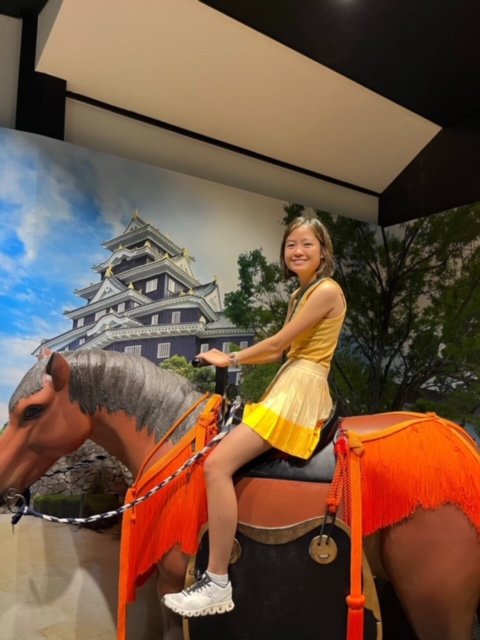
However, that’s not to say that a bunch of young people from different countries will always succeed by pooling their collective knowledge. After visiting a summer festival, my friend and I accidentally spent two hours trying to get back to Osaka after accidentally taking a train halfway to Kyoto. Later, one of my teammates and I bought tickets for Okayama Castle, whose informational displays were (unknown to us) solely in Japanese. We proceeded to stop politely in front of each panel just to blend in, but the entire time we were wondering whether our illiteracy was written on our foreheads, or if we’d even be able to read it if it was.

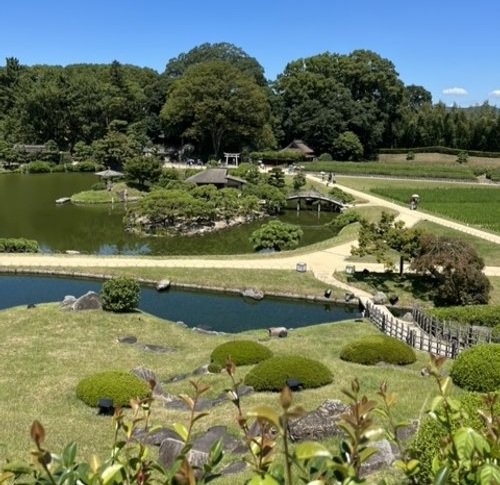
However, when things happen in a foreign country full of people you’ll never meet again, you get over them. After Okayama Castle we visited the beautiful Okayama Koraku-en Garden, which made the experience well worth it. (The part we liked the most besides the amazing ponds, streams, and overall Studio Ghibli-esque atmosphere? There were no signs.)

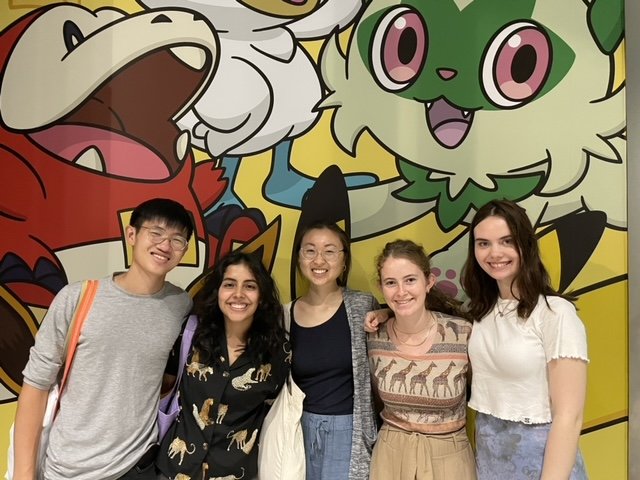
Despite these unexpected setbacks, you might wander into some of the best experiences of your trip with fellow coaches. You might catch a midnight jazz show, or get lost in a huge shopping mall, or have an inimitable matcha latte. Regardless, they’ll be things that you would never find on your own, and which would be much less enjoyable if you didn’t have your fellow coaches or leaders along for the ride (even if it’s on the wrong train).


3.     Rediscovering Your Life Mission

Your Life Mission presentation is about how you see yourself contributing to the world. It’s meant to be delivered by a Coach in the first few days of the program to get their students thinking about their own Life Missions, which they present on the final day. As I’ve mentioned before, I’ve seen all kinds of Life Missions in my two years with Come on Out – most are career-based, with students wanting to become doctors or lawyers (or, yes, wildlife specialists or Disney executives or businessmen who drive Ferraris), but some remain more vague (like traveling around the world and learning new languages, for which a certain program called Come on Out – Japan may be helpful…).

However, I have a confession to make: my own Life Mission was a lie.

I didn’t lie about all of it – I was telling the truth when I said that I wanted to be an author and write books; I just wasn’t when I said I was sure about it. Sure, I liked to write, but did I really like to write as much as I said I did? Did I really have what it took to be an author? Was my writing good enough? As I made my PowerPoint on different types of creative writing, I was struck by imposter syndrome. It suddenly seemed not only childish to talk about being an author, but arrogant.

However, after delivering my Life Mission presentation four weeks in a row, I slowly started believing it. (You can only shout out, “I want to be an author!” so many times before you actually start convincing yourself.)

During the farewell retreat in Chiba, I was discussing the topic of Life Missions with a fellow coach when he said, “I could tell you were a little nervous about presenting, but once you got going I could see how passionate you are about writing. You really love it.”

I’d always thought the Life Mission presentations were for the students to get them thinking about university and beyond. I never really believed they could be for us, too. After all, we were the ones who were supposed to have everything figured out. We were the adults.

But after hearing those words, I realized that maybe it was important for everyone to have a Life Mission, regardless of how old you are or if you actually stick to it. Even if it’s not strictly true, it reminds you of what you love and why you love it. It reminds you of what got you excited about living in the first place.

Overall, what I learned from GEC is that it doesn’t matter if things don’t go exactly to plan. Plans fail, and maybe it’s better if they do. After all, it’s the random little things – talking to your students, talking to other coaches, and having an honest conversation with yourself – that end up being better than you could ever imagine.

Come On OutComment