

Performing Music at an Open Mic in Tokyo

By Lyla Bariso

As an indie songwriter, I’ve done many open mics to get practice performing in front of an audience, introduce my music to a new audience, and meet fellow musicians. When I travel, I love to take the opportunity to explore the local music scene while I’m there, and I was determined to find something in Japan. I kept forgetting about it until my last week while I was coaching in Tokyo Shinjuku, but eventually I found an event online that sounded perfect for me: an Acoustic Open Mic Night at a small venue called eltopito

The online description was written in both Japanese and English. It described their casual atmosphere where anyone can play two songs, and that there would be an acoustic guitar to borrow–great for me, who wasn’t able to bring my guitar to Japan and wanted to practice! Additionally, the description said there’d be an hour of English conversation before the music started, but I’d have to miss that part. I wondered if there would be other foreigners present and performing music in English. 

The open mic was the night after the last day of coaching, so I knew most coaches would be busy with their post-Global English Camp festivities. While I couldn’t find any coaches who wanted to go, I knew I’d be fine because I’d been training all summer to navigate Tokyo’s transportation. I successfully took the Odakyu line from Shinjuku station all 37 kilometers to this fairly quaint area called Odakyu-Sagamihara; a one-hour trip. The venue wasn’t far from the station, and I could soon see tonight was going to be the true “hole-in-the-wall” experience. One interesting part of Japanese urban architecture is things are pretty clustered together, so tiny spaces for businesses are stacked on different floors in the same building. Once I got to the correct street, signs for different businesses were everywhere, and it took me a while to find the tiny sign saying eltopito with their adorable dog mascot. Another sign mentioned “eltopito English Club” on the third floor, and that today’s conversation topic was, “Which can you tolerate more: sweltering heat or freezing cold?” 

I heard the sound of women singing and playing guitar growing louder as I climbed the stairs. The venue was cozy, intimate, and looked something like a living room. Cozy couches, rugs, and coffee tables filled the space. A calm audience group of various ages sat at the corner couch under beaded dreamcatchers. Amplifiers, microphones, guitar stands, a small piano, and a romantic disco ball lit up the small performance space as two women sang a guitar ballad. Various trinkets and dolls decorated the intricately organized shelf behind the singers. 

Source: https://www.meetup.com/tokyo-acoustic-open-mic/events/308725616/?eventOrigin=group_past_events 

I made my way to the counter, talking to the owner to pay the entrance fee. I spoke in a combination of English and Japanese, assuming English was fine since they’d just had English Club, after all. Of course, I’d forgotten the fee was almost certainly cash only, and I hadn’t brought enough. “I’ll be back shortly,” I said as I made a brief adventure to a Lawson ATM. 

Once I was back, I took another look around and noticed everyone was speaking Japanese! I was surprised that no English-speakers in a similar situation to me had discovered the posting online and admired its openness to English-speaking. I told the owner in Japanese I wanted to perform, and he wrote down my name and said there were three more acts and then I’d perform! I ordered mint-flavored tea and made myself comfortable in a seat in front of the performances. I set my tea tray on the table behind me.  

After the next act ended, the two emcees and a nice woman sitting near me asked my name and where I was from. I explained I was doing an internship coaching English for Toshin High School, and they thought it was so cool! The woman next to me, Maria, offered me her chips, Jagarico, and I said I loved these when I worked at Daiso in Chicago.

I realized it would be polite to introduce my performance in Japanese, and a good chance to practice my language skills. As I watched the next performers, I anxiously rehearsed all the sentences for my self-introduction over and over again. One older woman performed a sweet rendition of the traditional “You Are My Sunshine”. It was my turn. I picked up the guitar and the disco lights and attention went on me. I spelled the name of my band: “In English, it’s L-Y-L-A-J-E-A-N,” as the owner quickly interrupted me, saying in English, “One more, please!” Light laughter went around the room as I spelled my band’s name once again, and the owner repeated the letters to ensure he got it. 

I performed my songs “But When I Know Who I Am” and “Airpush Down the Stairs”. I felt so grateful for everyone’s kindness, and also proud of myself, as the whole audience, although small in size, erupted in applause for me. I sat back down and people had many questions for me. The woman who’d performed “You Are My Sunshine” earlier wanted to practice her English with me. We talked about her English teacher who was in the US now, and it was interesting to hear her passion for the language. I did the same, practicing my Japanese and making it a bilingual conversation. I made sure to tell her to visit Chicago if she ever came to the US. I felt a bit silly taking people’s attention, as it was the next performer’s turn to go, and he looked me in the eye, smiling and saying “Can I sing?”

I had to leave, as I was getting up real early tomorrow for another adventure. I thanked my new friends again from the bottom of my heart and went back to the station. It took almost two hours to get back, as I had to back to Shinjuku and then go north to Kawaguchi. The open mic night was such a last-minute plan, and a bit scary to go so far east of Tokyo all by myself, but it was truly everything I’d hoped for–everyone was nothing but welcoming, and I got to explore and connect with the local scene. 

Come On OutComment
Monet Water Lilies: A Beautiful Scene and a Symbol of War

BY TATSIANA COQUEREL

“It took me a long time to understand my water lilies…. I grew them without thinking of painting them…. And then, all of a sudden, I had the revelation of the enchantment of my pond. I took up my palette.” —Claude Monet, 1924

Sometimes you want to write a story about something extraordinary, sometimes you want to tell the readers about your feelings and emotions, and sometimes you just want to evoke some behaviour that will lead to some actions that might bring positive changes in our very busy contemporary world. Today I want to talk about something that turned my view on Art upside down. I was always a big fan of Impressionist works, with their portrayal of nature through quick brush strokes and accents on light and colours. 

Fig.1 Reflets verts (détail) C. 1915-1926 Oil on canvas, 200 x 850 cm Musée de l’Orangerie - Room 1, MUSÉE DE L’ORANGERIE, https://www.vogue.fr/fashion-culture/article/musee-de-lorangerie-monet-water-lilies-available-online-virtual-art-visit

Claude Monet is definitely one of the artists who knew how to use natural light to give a very dynamic and hypnotic feeling to his paintings. During his career, Monet was very often labelled as a “chocolate box artist” - overexposed or too easy. His last works, the enormous Water Lilies canvases, now known as the "Nymphéas", (Fig.1-3), are amongst the most popular artworks in the world. Nevertheless, there is nothing traditional or cozy about these last paintings of Claude Monet. They are fundamental to Art because they break all the boundaries and change our vision of art with their strange, confusing and mesmerizing vision. 

Very often we are viewing Monet’s “Water Lilies” as simply an artistic interpretation of the garden, a great passion of the artist. But did you know that these paintings are a direct response to the most violent and apocalyptic period in modern history? They were in fact perceived as a war memorial to the millions of lives tragically lost in the first world war. By the age of 74, Claude Monet lost his sight and, instead of retiring, he decided to take a revolutionary approach to create Water Lilies - a collection of paintings that would define his career as a great artist. 

Today we can enjoy Water Lilies visiting the Musée de l'Orangerie in Paris. The installation has 22 paintings divided into 8 panels in two rooms. They were developed in such a way that the four panels in one gallery would represent sunrise and the four in the other would evoke dusk, recreating the beginning and end of darkness. One of the greatest artistic achievements of the early 20th century, they cover 200 square metres of canvases, which surround and enclose the viewer with desolate nonverbal abstractions. Monet himself described them as “something that gives an illusion of an endless whole with no horizon and no shore”. By omitting the horizon from the picture, Monet did not give us a sense of scale, positioning the viewer above the waters with a fast field of deep void, light and air. 

Fig.2 Les huit compositions des Nymphéas, Orangerie Museum Paris, https://www.musee-orangerie.fr/fr/collection/les-nympheas-de-claude-monet

Ultimately, these Water Lilies canvases became a war memorial, representing those battlefields with no horizon - no beginning and no end - when time is forgotten. Monet was deeply affected by the horrors of war and Water Lilies would be his personal response to the mass tragedy of the first world war. There is a sense of mourning in it. We can see them today the same way the viewer could see them in 1927, when they were first installed in the Musée de l'Orangerie in Paris after the death of the great artist. Unfortunately, critics did not see something extraordinary in these grand paintings and characterised them as being extremely dull. These mesmerising Water Lilies were forgotten for decades until the abstract expressionists such as Mark Rothko and Jackson Pollock rediscovered Monet in the 1950s. Nowadays, in visiting the Musée de l'Orangerie we can appreciate how artistic genius Monet planned and calculated every little detail of the installation of his paintings, placing them in an egg-shaped room with carved walls. The larger-than-life scale space in the room, the space between panels, the rhythm, the daylight coming from above, mesmerizing energy and emotional effect thrills every visitor who grasps the Water Lilies in Musée de l'Orangerie, which is now called “The Sistine chapel of Impressionism'' (Fig.3).


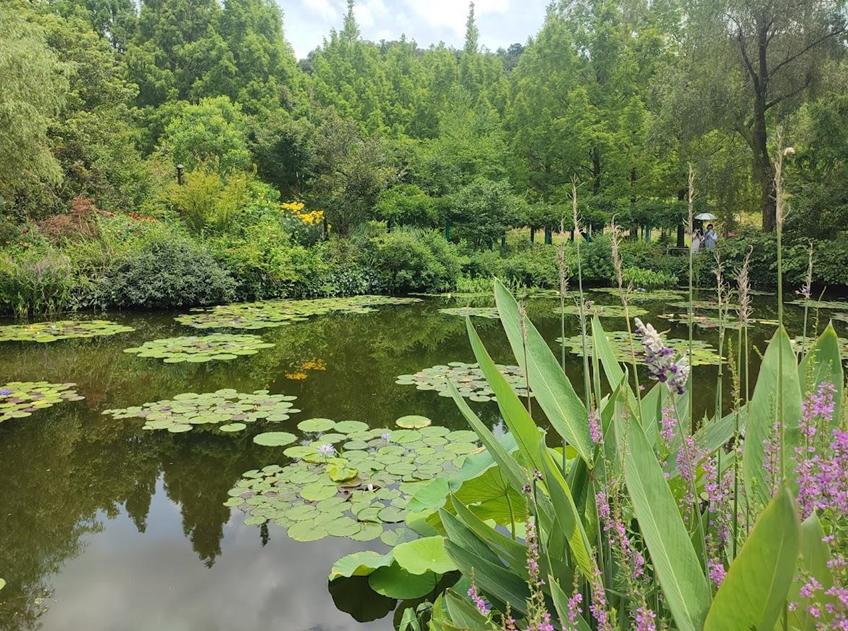
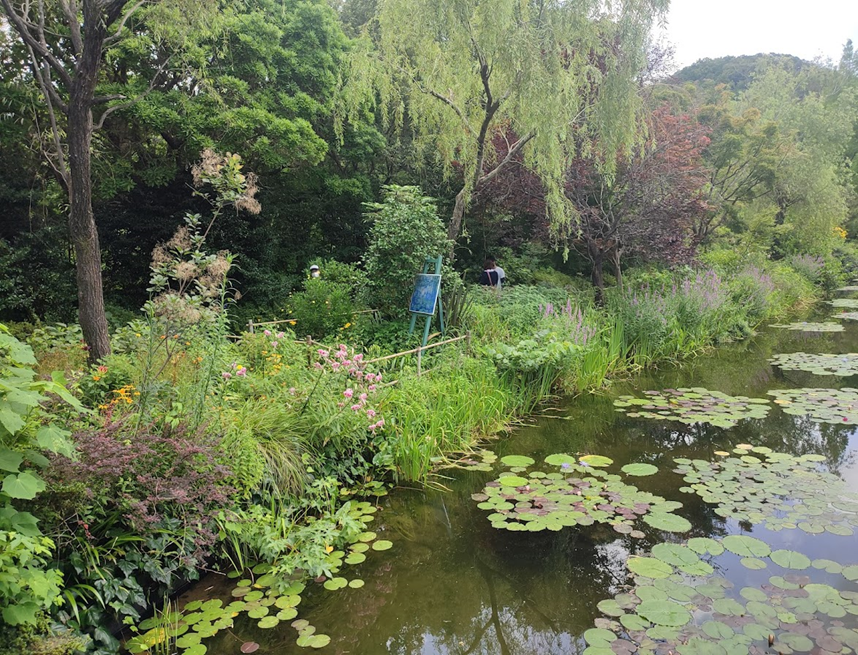
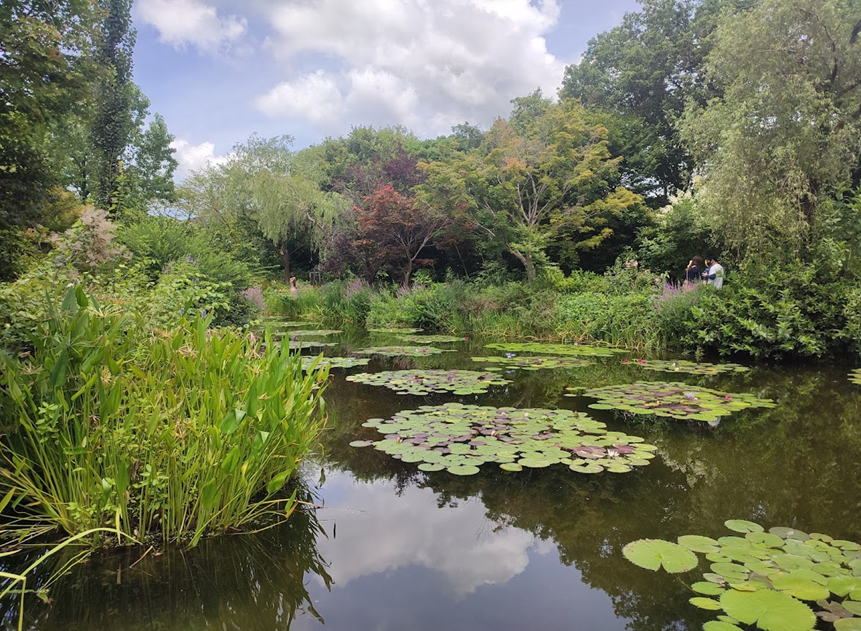
Today, the impacts of the impressionists’ work can be seen around the world. Claude Monet gardens and his water lilies inspired Kitagawa Village in Shikoku, Kochi Prefecture, Japan to open "Monet's Garden" Marmottan in 2000 as a garden that reproduces the garden of Claude Monet in Giverny in France. Kitagawa and Giverny villages both share a similar goal of creating Monet’s gardens, while overcoming obstacles caused by global industrialisation.

Fig.3 Nymphéas Orangerie 01 Les Nymphéas de Claude Monet, Room 1 Musée de l’Orangerie NYMPHÉAS MUSÉE DE L’ORANGERIE, https://www.vogue.fr/fashion-culture/article/musee-de-lorangerie-monet-water-lilies-available-online-virtual-art-visit

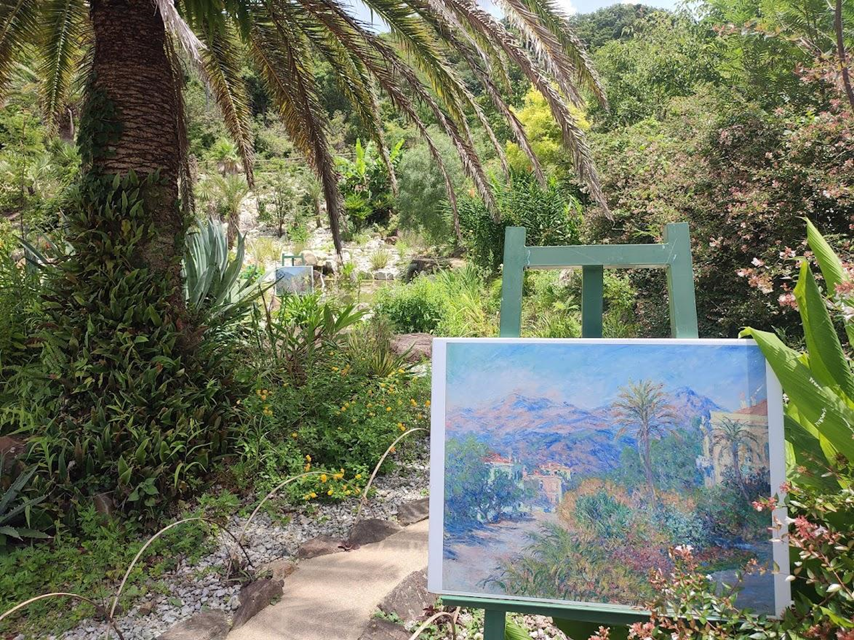
Kitagawa Village "Monet's Garden" Marmottan supports sustainable living, trying to avoid using pesticides and striving to protect flowers and trees from pests and diseases. They also promote education and local industries as a place to deepen their contribution to the region and develop together with the region. It is the world’s only facility that is allowed to use the name “Monet’s Garden.” Approximately 70,000 plants are grown on the premises of about 30,000 square meters and you can enjoy a beautiful landscape that changes from season to season. Blue water lilies that are particularly popular are in full bloom in the garden from around late June to early November. Monet’s Garden Marmottan is divided into 3 sections. In the Water Garden (Mizu no Niwa) the famous multi-coloured water lilies float upon the shimmering ponds; vibrant flowers that canvas the Flower Garden (Hana no Niwa) from the ground up to arches and trellises change through the seasons like a never-ending painting; and the Garden of Bordighera brings ambience of the Mediterranean to Japan (Fig. 4-7 below: Kitagawa Village "Monet's Garden" Marmottan, Photos by Sebastien M., 2021).


The creation of the replica of Monet’s gardens in Japan continues the invisible connection between East and West over the centuries. The artist himself had a huge passion for Japanese art and was known as a great collector of some of the profound collectable pieces by Japanese artists.  Monet’s remarkable collection of Japanese prints comprises two hundred and thirty-one engravings. Some of the art pieces from this collection can be seen in Giverny, in the house of Claude Monet. The dining room of Monet’s house in Giverny is decorated with yellow panels, furniture, sideboards, cupboards in the same colour, offering visitors to embrace an abundance of Japanese prints (Fig.8). 

The Japonisme (a French term that defines the popularity and influence of Japanese art and Design in the second half of the 19th century) was very fashionable among French intellectuals and artists, such as Vincent van Gogh, Edouard Manet, Camille Pissarro and Claude Monet. Such a change of influence in Western art and culture took place after Japanese ports reopened to Western trade in 1854, which had been closed to the West for over 200 years. While in the 19th century it was common for European artists to idealize the beauty of nature, they would pay more attention to harmony, symmetry and to the composition of empty spaces after being introduced to the Japanese artists.

The most essential input of Japanese art in Europe can be seen through insertion of the most ancient Japanese philosophy Wabi-Sabi into European Art and Design not only in the 19th century but nowadays as well. Japanese artists are very careful with overcharging their artworks, while in Europe, on the contrary, the space filled with different objects and different colours very often defines the sense of beauty. The Wabi-Sabi fundamentals of empty spaces provide artists with a new possibility of introducing hidden meanings or sentiments. The outstanding characteristics of Japanese art with its flat and bold colours and dramatic stylisation, had significant influence on Claude Monet’s work.

Fig.8 Japanese woodblock prints, Monet’s house dining room, Fondation Claude Monet Giverny, https://fondation-monet.com/visite-virtuelle/#/salle_a_manger/

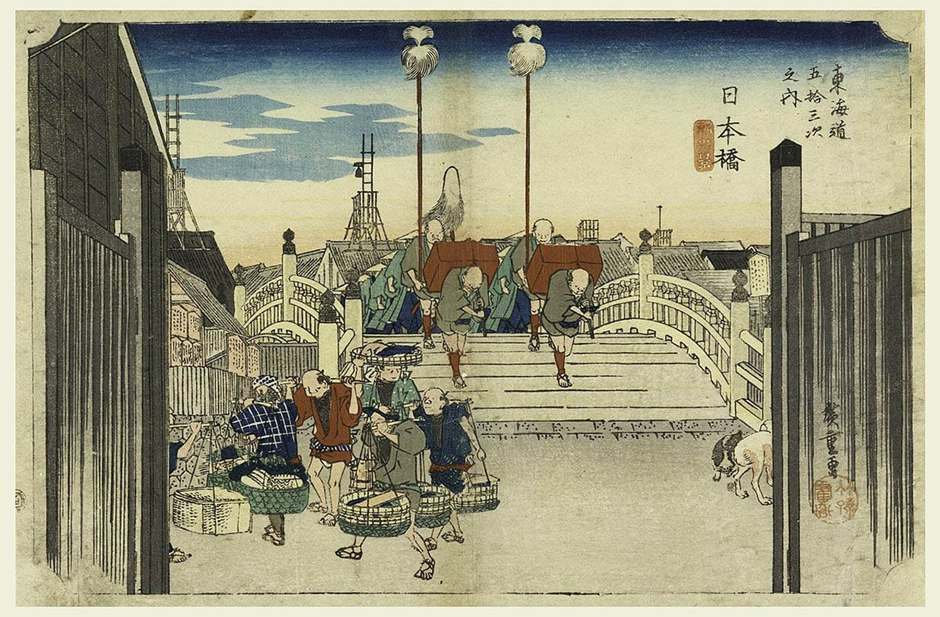
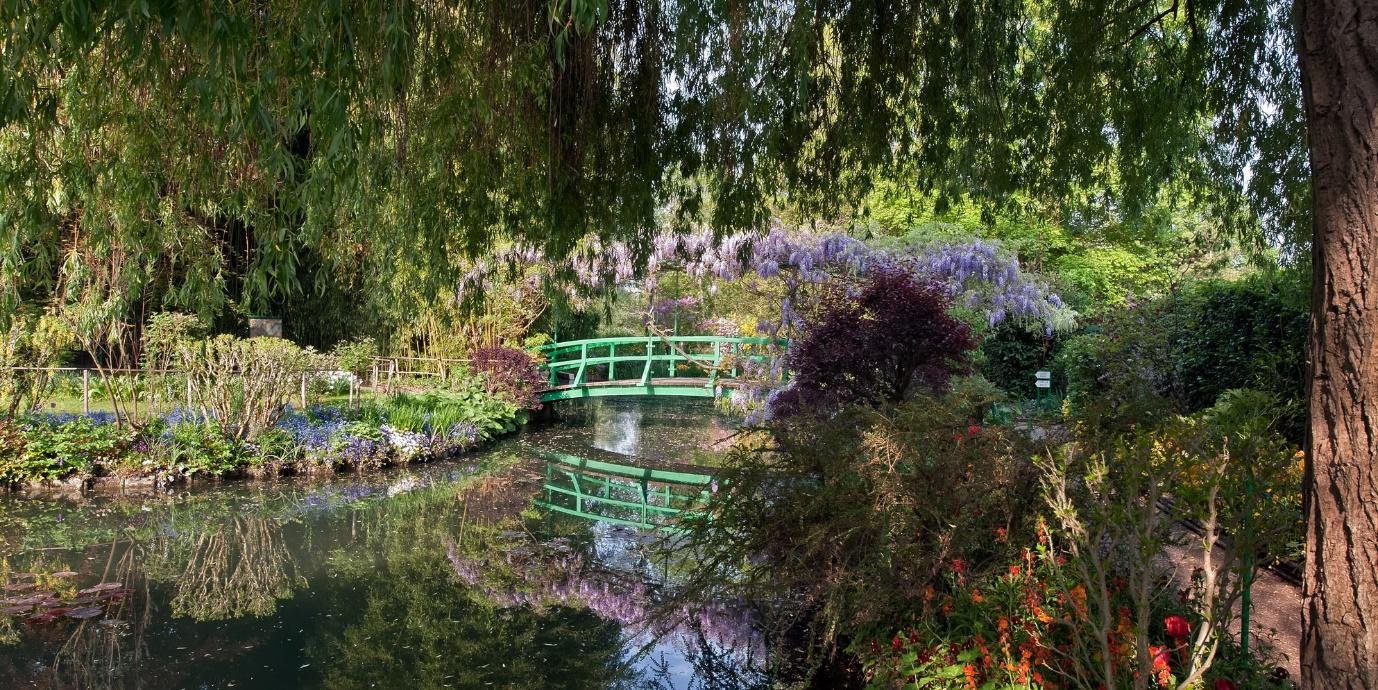
The artist turned his water lily ponds into poetic projection surfaces of an inner world. It is very interesting to mention that Claude Monet's fascination with all things Japanese started from a small food shop in Amsterdam, where he spotted some Japanese prints being used as wrapping paper for purchased goods. This purchase in a little shop in Amsterdam changed the life of Claude Monet and the history of Western art. Inspired by works of Japanese artists, such as Utagawa Hiroshige, (Fig 9 below, Nihon Bridge Morning View, The Fifty Three Stations of the Tokaido Road by Utagawa Hiroshige, 1834, via The Hiroshige Museum of Art, Ena ), Monet created a Japanese garden in his cherished home in Giverny. He turned a small, existing pond into an Asian-influenced water garden and added a Japanese-style wooden bridge (Fig.10 below - The water garden at Giverny, via Fondation Claude Monet, Giverny, https://fondation-monet.com/). What happened next? We all are witness to the miracle - he started to paint the pond and its water lilies, and never stopped.

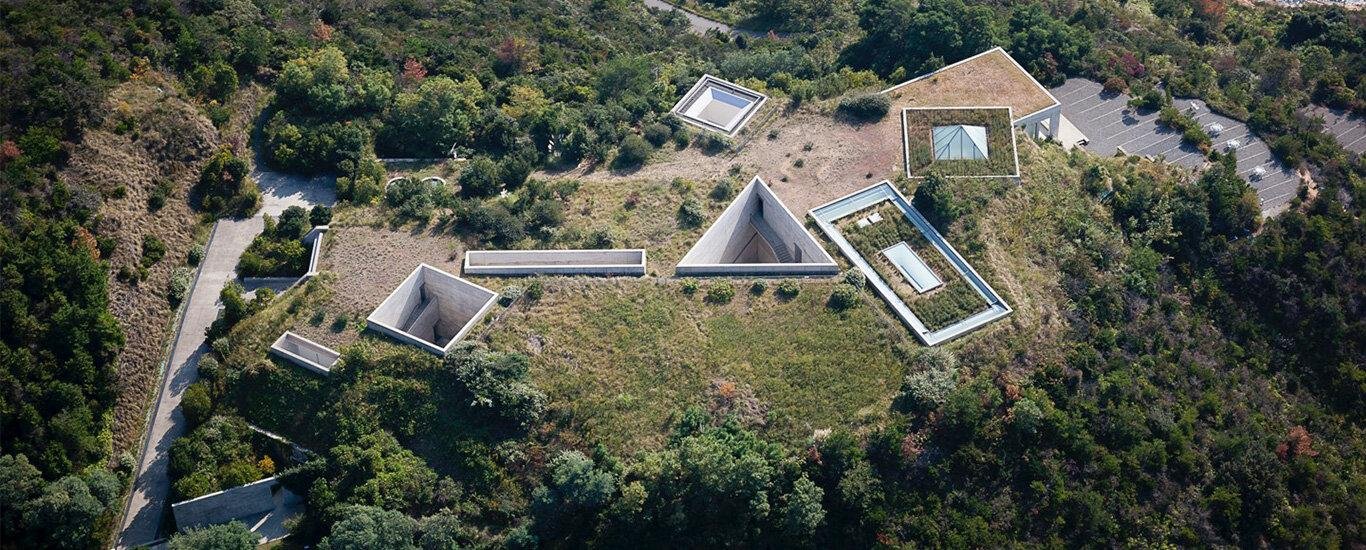
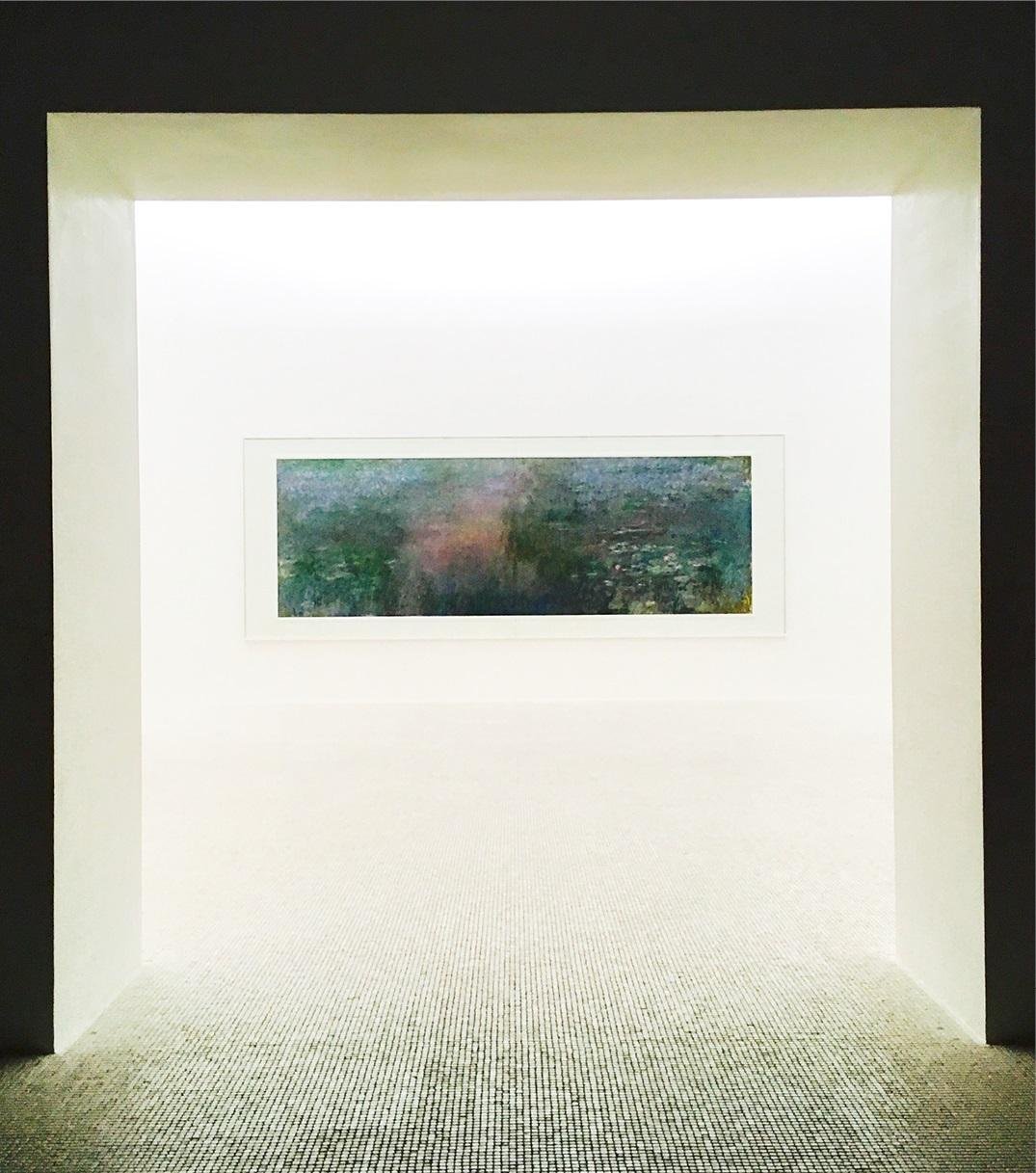
Claude Monet understood how to apply Japanese motifs in his own work, developing his very distinct artistic style by concentrating on light, which was, in fact, the very subject of all his paintings. It explains why Monet’s works remain so popular in Japan nowadays. The proof of such a great respect towards artists is the Chichu Art Museum, which is the most important monument in Japan dedicated to Claude Monet. The Museum was established in 2004 by artists and architects. The building was designed by star architect Tadao Ando. It is placed in the midst of wild nature on a small island in the Seto Inland Sea. The whole idea of this Museum is to enable everyone to rethink the relationship between nature and people. The museum was built mostly underground to avoid affecting the beautiful natural scenery (Fig.11 below - Chichu Art Museum, Benesse Art Site, Naoshima, https://benesse-artsite.jp/art/chichu.html). In Japanese, the word ‘chichu’ means ‘underground’, therefore one tends to imagine a dark and hazy space where the natural light is cut off. But it is quite the opposite – the natural light here complements creatively designed spaces given the depth and volume and sense of endless eternity occupied with light.  As we can see the light plays an essential role here in the same way as it plays at the Musée de l'Orangerie. Monet water lilies here are surrounded by space, light and a feeling of being close to nature as never before. The only difference in comparison with Musée de l'Orangerie installation space is the square shape of the rooms with Monet art works in the gallery of the Chichu Art Museum (Fig.12 below - Claude Monet at the Chichu Art Museum, Benesse Art Site, Naoshima, https://www.harpersbazaararabia.com/culture/art/art-exhibitions/claude-monet-at-the-chichu-art-museum-benesse-art-site-naoshima).

For admirers of Monet’s Garden, the Chichu Art Museum has a garden that consists of nearly 200 kinds of flowers and trees corresponding to those planted at Giverny by Claude Monet. Visitors can enjoy the water lilies, willows, irises, and other plants here. The garden aims to provide a touchable experience of the nature which Monet was trying to capture in his paintings all his life. And if you have a “love affair” with all things sweet and yummy, then the museum shop will offer you honey cookies and raspberry jam based on the recipes left behind by Monet. The connection between Claude Monet and Japan over the years established both ways and with the Chichu Art Museum, this bond became even stronger.

Every time I start writing a new little story or article - I always know that I will find something interesting, captivating, new and inspiring for myself and for the readers. Going through the biography of Claude Monet and analysing his work, I realised that the key element of life is a constant hunger for knowledge, for learning something new from other cultures, people, designers, musicians, artists, scientists and of course nature. The richness of something different, unknown coming into our life can change it forever, no matter who we are and what kind of job we are doing in our everyday routine. And speaking of art, as the main subject of this article, maybe sometimes we have to open our hearts to the colourful silence on the canvas, instead of trying so hard to understand it. At the end everything is simple in life: we can not see what we feel, but we always can feel what we see…

Reference list and Places to Visit:

Official website of  Kitagawa Village "Monet's Garden" Marmottan https://www.kjmonet.jp/about/

Chichu Art Museum, Naoshima, Kagawa :

https://benesse-artsite.jp/art/chichu.html

Utagawa Hiroshige Museum:

https://hiroshige-ena.jp/english

Official website of Monet’s Gardens in Giverny:

https://fondation-monet.com/

Musée de l'Orangerie, Paris:

https://www.musee-orangerie.fr/fr

https://www.musee-orangerie.fr/fr/collection/les-nympheas-de-claude-monet


Other related resources:

https://shikoku-tourism.com/en/see-and-do/10052

https://visitkochijapan.com/en/see-and-do/10003

https://www.vogue.fr/fashion-culture/article/musee-de-lorangerie-monet-water-lilies-available-online-virtual-art-visit

https://www.thecollector.com/claude-monet-japonism/

https://www.sothebys.com/en/articles/7-things-you-need-to-know-about-japonisme

https://www.studiointernational.com/index.php/the-chichu-art-museum

https://www.harpersbazaararabia.com/culture/art/art-exhibitions/claude-monet-at-the-chichu-art-museum-benesse-art-site-naoshima

https://www.giverny.fr/en/information/cultural-information/giverny-collection-of-japanese-prints-of-claude-monet/

https://www.vogue.fr/fashion-culture/fashion-exhibitions/diaporama/explore-monets-house-and-gardens-in-giverny/50372

Come On OutComment
Noble Shoes – A Kind Way to Bring Changes
 

By Tatsiana Coquerel

“Everything, all sorts of things in the world, appear through multiple-lens spectacles as different views of the shoe’s form to me.” -Noriyuki Misawa


“A pair of old boots”, illustration by Tatsiana Coquerel

Shoes are powerful personal items that we use to define ourselves as individuals. We throw away shoes only when we have destroyed them. A pair of shoes can be discarded, but the memories associated with wearing them will stay with us for the rest of our lives. The perception of movement in a pair of comfortable shoes and success was always clear for me. I remember very well my first runners and sensation of freedom under my feet. It felt like I was running for all eternity. I adapted with great joy the Nike “Just Do It” slogan in my everyday life as a reminder to drive, to push myself beyond my limits. Shoes have always given me a sense of balance, comfort and strength in my life: “as long as you have running shoes and have a good road, you can run to your heart’s content”.  

Flicking through the pages of the glossy magazines today, featuring luxury footwear and fashion, we are unlikely to come across the image of the craftsman carefully cutting the patterns and hand-stitching the shoes. The idea of the contemporary designer or shoemaker of the 21st century will inevitably be clean and sophisticated, portraying the strength and the power of the manufacturing force of the footwear empire they own. Unfortunately, the popularity of handcrafted shoes by hand today is decreasing, being replaced by the shoes mass produced. There is a notable nostalgia in it when you realise that something beautiful is vanishing or going to disappear. And then you ask yourself a question - Can I stop it? Can I hold on to it? What can I do to keep it alive?  

Imagine for a second that the craftsmanship of making shoes by hand has died and been forgotten, and we all wear 3D-printed shoes. And one day we stumble across a pair of beautifully crafted old brogues somewhere in the attic. We would recognise the beautiful quality of leather, attention to detail and perfect shape. What would we do after that? Some of us would throw them away, some of us would be curious if they still can be repaired. For me, personally, they would be a subject for research about who made them, how and when…

What defines an excellent hand-made shoe? The perfect shoe for me is the shoe that was made by craftsmen using their learnt ability of heart, head and hands in balance during the process of creation. In comparison the skills possessed by the machine cannot be equal to the skills of the artisan. Human knowledge of the craft is intricate and comprises emotional, physical and intellectual involvement. The more well-made shoes are, the more care has gone into them, the more they will last a whole lifetime and will be handed down from one generation to the next.

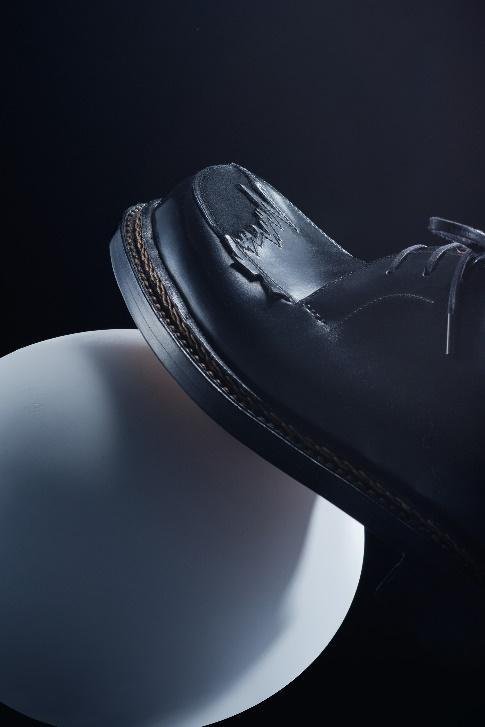
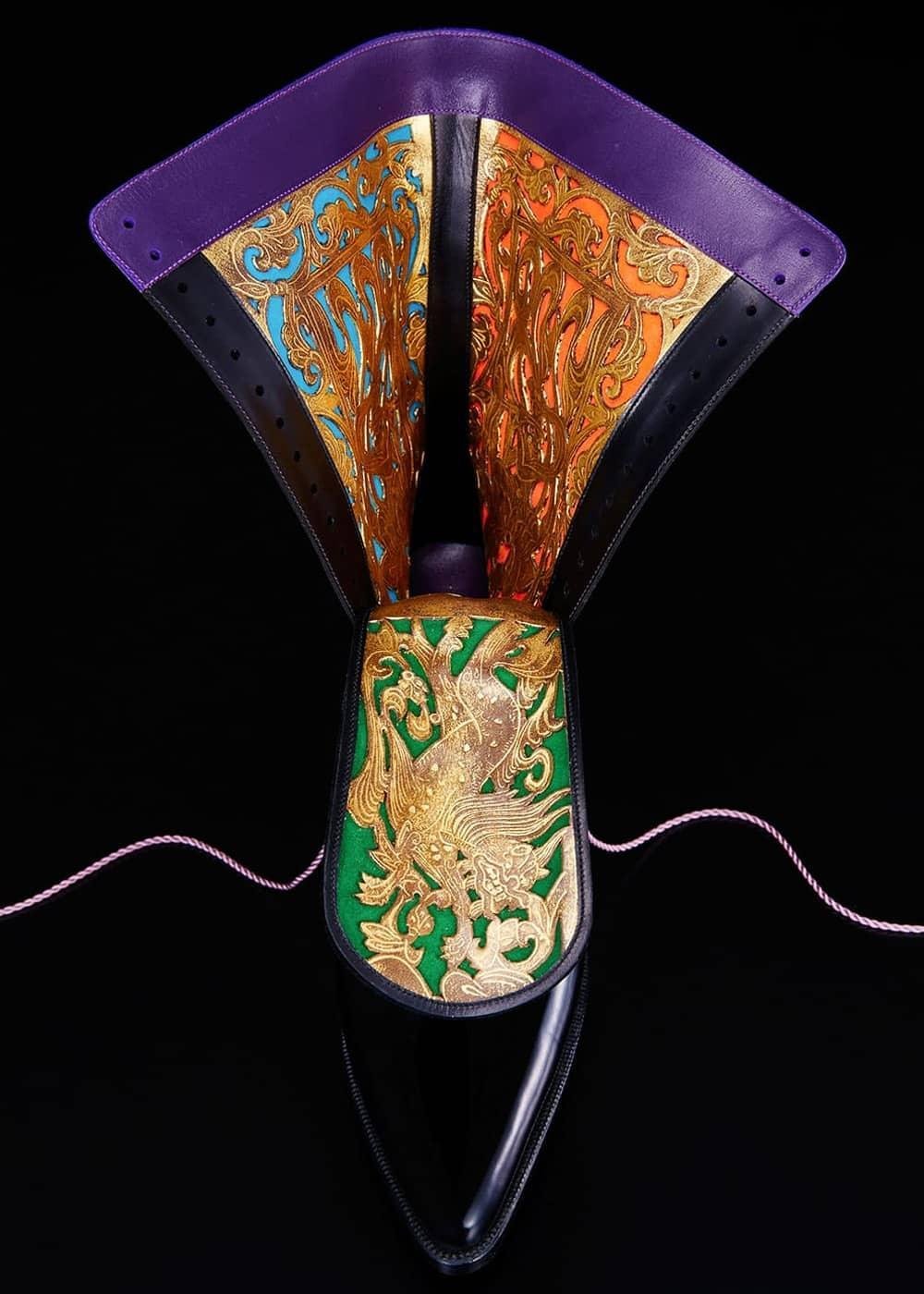
The knowledge of shoemaking craft in Japan, built up over the centuries, has been enriched with the technology over the last decades. In this technology, there are ideas for future development. The story of contemporary shoemaking craft in Japan is a vivid “fairy-tale” filled with many hardships, creativity and great achievements in the realm of mass-consumption and mass-production. While the craft of making shoes by hand is dying in Europe, it is blooming in Japan. Japanese artisans brought back shoemaking skills learned in Europe, producing functional bespoke footwear. Noriyuki Misawa is a contemporary Japanese footwear designer, whose shoes can be described not just as functional, but as real pieces of art. Trained as a shoemaker in Austria, Misawa carries on old traditions in shoemaking trying to find his own path as an artist and designer (Fig1-2 below).

As shoe consumption has increased, they have become harder to recycle. The quality has gotten worse, so people just throw them into the bin. Leather from disposable garments and footwear has a damaging effect on Earth despite the common view that it is harmless. In fact, the chemical processes employed during manufacturing inhibit natural decomposition. 

The growing interest of the contemporary consumer in the origin of manufactured goods and its quality inspires many companies around the world to improve the quality of the materials and encourages a sustainable approach in manufacturing. Yoshihisa Tanaka, designer from Tokyo, found a solution in producing eco-friendly footwear packaging by transforming the waste into shoeboxes for a New Balance’s runners. The designer investigates the upcycled materials and blends them in washi paper, which is used after to make a shoe box (Fig.3).

Fig. 3 Boxes for runners made from washi paper

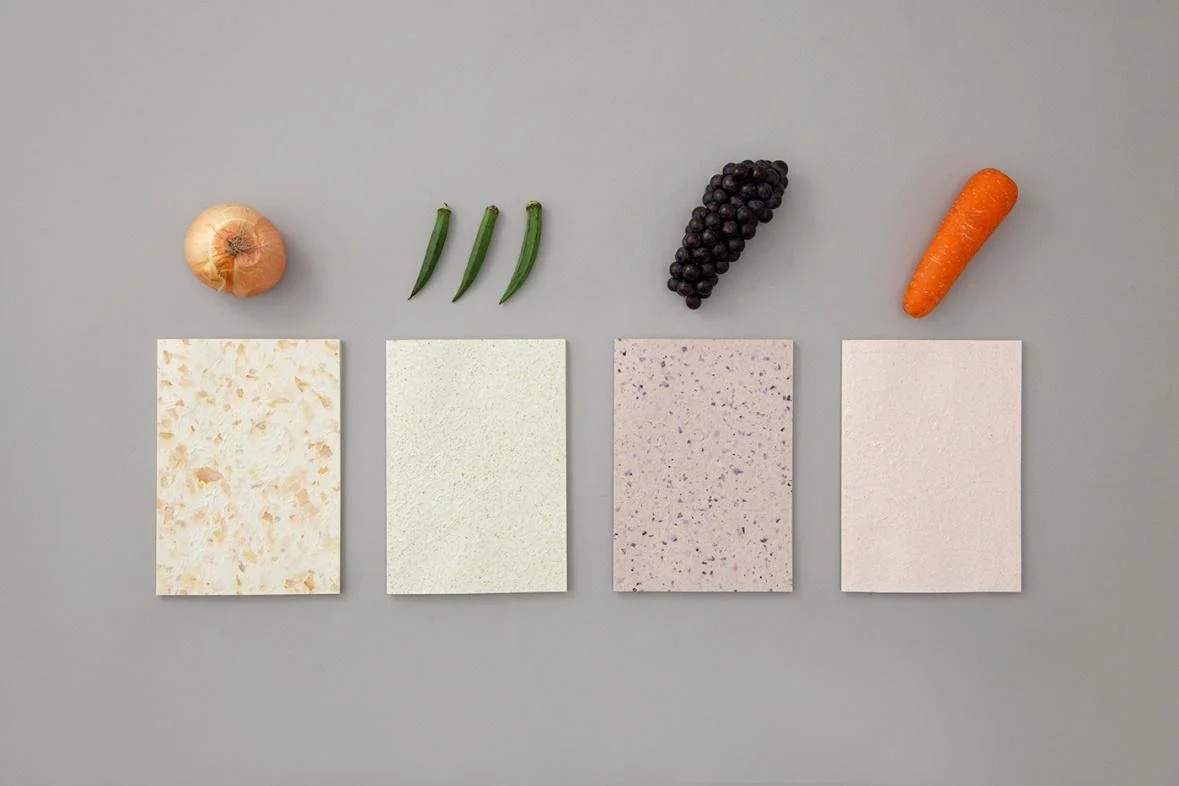
Washi paper is a traditional Japanese paper made by hand using natural ingredients. “According to the Nihon Shoki, a chronicle of Japan that was written in A.D. 720, paper was introduced by Korean Buddhist monks in the early A.D. 600s. At that time, paper was initially used for writing scriptures as Buddhism took root throughout Japan”. Washi paper is very adaptable and eco-friendly. In comparison with paper produced by factories, the process in creating washi paper only uses new branches cut from trees, which means saving the trees and forests. Hand-made washi paper is also chemical-free and biodegradable. Machine-made paper has largely replaced washi paper, but there are few artisans in different cities throughout Japan that keep the old paper-making traditions alive. An example is the Food Paper brand. Located in Echizen, a birthplace of the craft of making traditional Japanese washi paper, Masami Igarashi, the creator behind the Food Paper, uses vegetable peels and other food waste as the basis of her paper products (Fig.4).

Fig.4 Washi paper made by Masami Igarashi, Food Paper

By creating innovative and eco-friendly products and things, designers and researchers bring modern aesthetics, constant innovation and change the way people think. Are many designers following this path? It depends on each brand and how they define "sustainability." German brand WILDLING as an example brings innovation and creativity in producing contemporary footwear from washi paper. The brand is using washi paper produced by Japanese company ITOITEX, which regards washi as their important Japanese culture and the gift from the nature (Fig.5).

Making shoes or making washi paper by hand is a very skilled craft, which involves processes and actions that, step by step, transform from a material into an artefact.  In any discussion about craftsmanship and manufacturing of things, it is easy to overstate the value of tradition or progress. Uncompromising narratives of tradition can restrain a craftsman's material intelligence of established ways of doing things, while industrial reforms that concentrate on development, incline to believe that new is necessarily better, and thus ignore the importance of craftsmanship. But it is best to see these two concepts equally dependent on each other rather than opposed.

What is the life of the shoe today? It is desired, attained, briefly used and then promptly discarded. Such a cycle of production, consumption and waste is spinning out of control. Mechanisation has made it possible for consumers in the 21st century to have many pairs of shoes. Despite the fading importance of handcrafted goods produced individually and with care, craftsmanship still has relevance in today’s culture. There is nothing wrong with mass-produced shoes. But there is something extraordinary in knowing that shoes were put together piece-by-piece by skilful hands of an artisan. There is a noble feeling in owning something bespoke. You can see and feel the difference in quality, and you know that someone else cared enough to make it perfect. It is something far out of reach of the cold, metal machines. 

Fig.5 TANUKI UMI by WILDLING, Shoes made using washi paper,

Writing this article, I hope to awaken the art of appreciation of forgotten and disappearing things, such as shoemaking craft, the craft of making traditional washi paper and furthermore simplicity of life, detached from materialistic obsessions.  It means going back to the elements of pure quality rather than the false pretence with an idealisation of “perfection”. It means treading lightly on the planet and knowing how to appreciate whatever is coming across. Our predisposition to chop it up into parts—craft versus industry, producer versus consumer, handmade versus mass-produced—is in itself a big problem. Such easy antagonism makes it impossible to share sympathies for both craftsmanship and industrial methods of making things, preventing us from fully appreciating material intelligence in its entirety. We should remember how absolutely vital the new technology is and how much meaning every handmade object brings into our lives. I do not intend to praise the craftsmanship and critique the effect of the industrialisation on the development of the contemporary footwear industry. By taking close analyses of both craftsmanship and mechanisation, we must not forget about the past. The 21st-century technological achievements do not need to diminish our appreciation for the hand-made things. There are many ways in which new technology aids, rather than destroys. It is so vital in this case to resolve the artistic dilemma about how to create beautiful things without disheartening materialism. There is a ‘middle way’: respect all forms of material intelligence, no matter how established, innovative or old-fashioned they are. For those companies around the world that are determined to bring craftsmanship back to the forefront of the footwear market, it is a constant struggle to convince consumers that quality beats price in the long term. The battle is both ideological and economic. Luckily mass-production has not absolutely won this battle yet. Therefore, it is in everyone’s interest to prevent the traditional skills from disappearing. Keeping the tradition of hand-made shoes and hand-made washi paper as discussed above - means keeping a vanishing aesthetic of craft alive in any form of expression available.  

Cambridge Dictionary gives the definition of “noble”, as “moral, honest, brave and kind”. Why are all these definitions relevant in our discussion? I think they can be linked perfectly to the picture of a master shoemaker or a washi paper artisan, who are brave enough not to follow the trends, who are kind enough in the way of thinking about the impact of their creations on people’s life, who are moral and noble in a way they are choosing the materials and techniques to preserve the nature and most importantly the environment. It would be no surprise that the hands of the artisans like this will create “noble shoes”, shoes that can bring changes and a new way of thinking towards a sustainable future. And as a result, hopefully, we will take deeper interest in the craftsmanship of handmade shoes or handmade washi paper in the era of mass-production and never-ending technological changes. Shoes help people to walk better. I hope that by ‘walking better’ people will start “thinking better”. By saying this, I mean our personal choices as individuals, designers, artists and human beings. If we stop cherishing and buying things crafted by hand, we will lose the awareness that making something with care and skill is precious in the sense of knowledge and traditions. I believe that the forgotten shoemaking craft like the craft of making washi paper will never die. It may be overlooked from time to time, but like a phoenix will be born again. 

Every story we tell or write has the beginning and inevitably the end. I know that my passion for Japanese culture and craft and my appreciation of all brave artisans in Japan and around the world will not end here in this article. I will be traveling around cities and little villages, around the stories written and spoken in a search of a perfect shoe or a perfect washi paper or maybe a perfect kimono. Maybe one day I will be lucky and I will find my “wabi-sabi”. But this will be another story to tell…

Reference list: 

Noriyuki Misawa shoes:

https://www.noriyukimisawa.com/profile/

https://www.instagram.com/noriyukimisawa/

Yoshihisa Tanaka × Tokyo Design Studio cooperative research vol.02:

https://vimeo.com/572815829

http://awagami.jugem.jp/?cid=3

What is Japanese washi paper:

https://japanobjects.com/features/washi-paper

Information about Eshizen washi paper (artisans, history):

https://www.echizenwashi.jp/english/

Paper and Culture Museum in Eshizen to visit:

https://www.echizenwashi.jp/english/information/museum.html

Udatsu Craft centre and Museum in Eshizen. Paper-making house: information about paper making techniques and tools:

https://www.echizenwashi.jp/udatsu/about/

Igarashi Paper Mill Co, Ltd, Food Paper:

https://foodpaper.jp/

Wildling footwear:

https://www.wildling.shoes/en

https://www.wildling.shoes/en/collections/shop/products/tanuki-umi-rw

ITOITEX washi paper brand:

https://itoitex.co.jp/en/

Sources:

Murakami, H, What I talk about when I talk about running (London 2009), p.33

Noriyuki Misawa shoes, https://www.noriyukimisawa.com/artandcraft/ [accessed 24.10.21]

Boxes made from Washi paper, http://awagami.jugem.jp/?cid=3 [accessed 23.10.21]

Unlocking the mystery of Japan’s perfect paper, National Geographic, https://www.nationalgeographic.com/travel/article/unlocking-mystery-of-japans-perfect-washi-paper [accessed 23.10.21]

Washi paper made by Masami Igarashi, Food Paper, https://foodpaper.jp/ [ accessed 23.10.21]

TANUKI UMI by WILDLING, Shoes made using washi paper, https://www.wildling.shoes/en/collections/shop/products/tanuki-umi-rw [accessed 24.10.21]

Come On OutComment