
The Art of Japanese Dolls

By Tatsiana Coquerel

What is a doll? For most of us, it represents a toy, but the human form has been replicated for other purposes for as long as people have been living on the earth. Dolls have a long history and they represent different cultural platforms around the world. They have been collected by their admirers, they can be found in different museums, private collections and just at homes of ordinary people. In some countries, dolls are closely associated with rituals and religion. In Japan, a doll is not just a child’s toy. It is a God, a hero, an emperor, an amulet. It can be a religious sculpture, a decorative statuette, a treasured family heirloom, a souvenir and an art object. A Japanese Doll has many functions: it is a healer of illnesses, a giver of health, a granter of wishes, it will make you rich, it is a living national treasure and folkcraft artefact very often made by anonymous artists. They are everything other than a plaything, standing separately from the ones that are made for the masses. Japanese dolls can be considered as ethnic copies of the people from the past in folk costumes with traditional objects in their hands. The use of traditional images and deep folk roots create an expressive world for viewers and admirers of these dolls. 

Fig. 1 - Dolls in the form of the Emperor and Empress, Edo period (1603-1868 AD), National Museum of Ireland 2018, Dublin, (catalogue reference DB:1938.13, DB:1938.14).

Fig. 1 - Dolls in the form of the Emperor and Empress, Edo period (1603-1868 AD), National Museum of Ireland 2018, Dublin, (catalogue reference DB:1938.13, DB:1938.14).

Throughout the whole cultural history of Japan, the doll motif is weaved like a silk thread into it. The material culture of these dolls embraced all aspects of Japanese life serving different purposes in culture, religious traditions and education. My passion and desire to investigate the world of dolls and how they are made in different countries led me to the National Museum of Ireland, where there is a big collection of dolls. Among them, there are two Japanese Dolls: Wooden figures in the form of Emperor and Empress. They belong to the Albert Bender Collection (Fig. 1) and represent Dairi-bina dolls for the girls’ festival in Japan. These dolls are six inches high and made from wood, carved and painted. The Emperor figure is in a ceremonial robe and head accessory. The Empress is also in a ceremonial dress, head accessory is missing. These dolls were made during the Edo period (1603-1868) by the artist Sadaichi Tanaka.

Japanese dolls hina ningyo have been a very popular traditional worldwide known craft. The tradition of doll making in Japan goes back in time to around 300 years ago. Hina ningyo dolls go far beyond our definition of dolls. Frederick Starr (1858-1933), the noted University of Chicago anthropologist, in addressing the members of the Atlantic Society of Japan in 1926 on the subject of hina ningyo dolls said, “Suffice it to say that anyone who thinks of the doll’s festival as a play, or a display, for the amusement of little girls, is wide of the mark. It is a serious ceremonial, the significance of which deserves recognition” (Scott Pate, 2008, p.54). 

Japan’s ningyo culture was established during the Edo period (1603-1868), when dolls emerged into big businesses, souvenir items and luxurious gifts. Dolls of various forms were produced and sold throughout Japan. As the nation prospered economically, so did the ningyo market. The three most important markets of these dolls were found in three cities: Edo (Tokyo), Kyoto and Osaka. These cities held the largest concentrations of doll shops in the country. These shops sold to locals, visiting tourists of all classes and were also shipping dolls to different regions in Japan. Based on the reliable statistics of the Japanese economy, there were doll exports and imports through the port of Osaka. In the 1930s, ningyo became recognized as an art, and an independently Japanese and highly diverse culture of ningyo dolls was established. 

image3.png

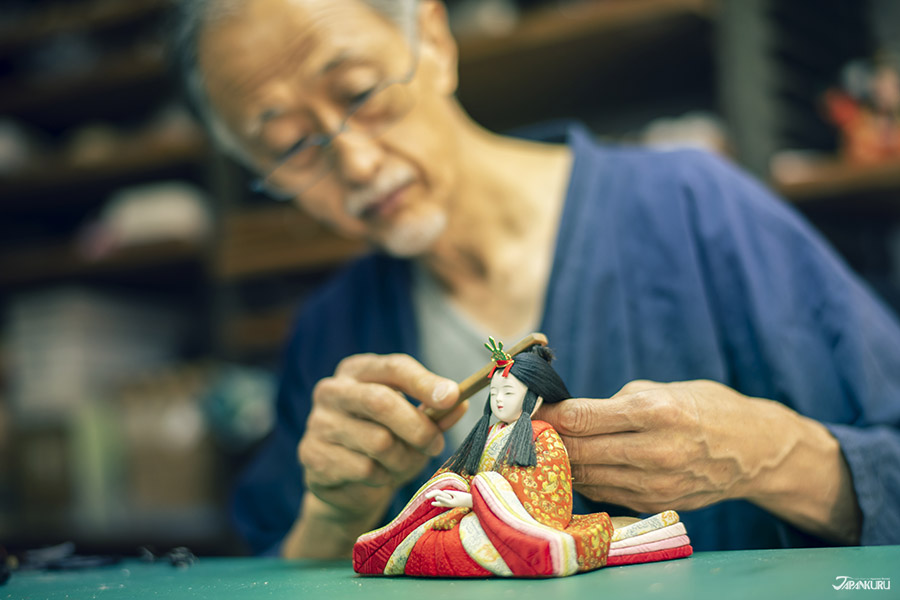
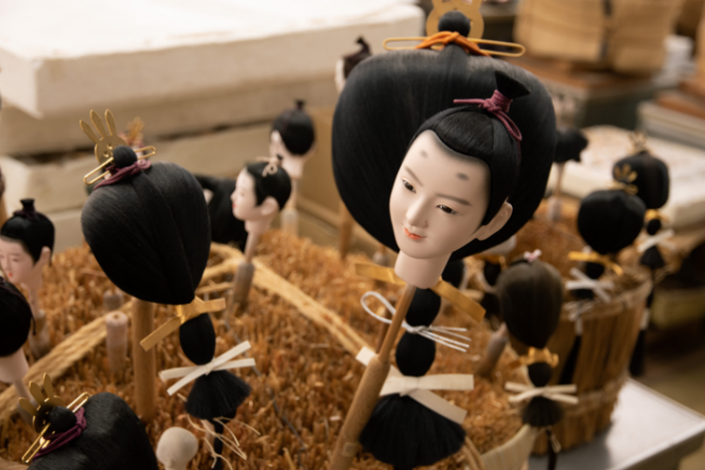
  The history of many ningyo forms is hidden in their mystery. Like most of the ningyo dolls, they were made for personal amusement for the elite class, but over the centuries their adorable qualities attracted a wider audience. At the present, the castle town of Iwatsuki is the largest producer of dolls in Japan and the major center of doll making craft. The doll makers of Iwatsuki are highly respected. They’ve been carrying the traditional craft of making dolls since the 1700s. The main reason for the location of this craft during the Edo period in Iwatsuki was the access to a very special wood from the paulownia trees that was excellent for woodcarving. Since then, it has become a center of traditional doll making craft in Japan. It is very common for grandparents to buy a set of hina dolls for new granddaughters, and the shops in Iwatsuki are very popular in the months before the Hinamatsuri holiday (also called Doll’s Day or Girls’ Day). This is a religious holiday in Japan, which is celebrated on the 3rd of March each year. Japanese people believe that Hina dolls bring happiness and prosperity to their families. They cherish these dolls with grace and warmth in their hearts. At the present, Iwatsuki takes great pride in its status as Japan’s largest producer of traditional dolls (Fig. 2 above, Fig. 3-6 at the bottom of the page).

It takes more than ten artisans to make a doll, where each artisan is responsible for different stages of the process creating the head of the doll, hands, arms, and little accessories to go with a doll. In the era of industrialization, when toys are mass-produced, this is such a remarkable example of a truly handmade craft. If you are interested to know more about Iwatsuki doll making craft, visit the Iwatsuki Ningyo Museum, located in Saitama Prefecture, which is Japan’s largest producer of ningyo dolls. The main purpose of the museum is to provide an overview of the beauty and history of ningyo in connection to Japanese culture.

There is a common saying that “Beauty is in the eye of the beholder.” The essential beauty of art objects never changes, but how this beauty is interpreted frequently does. Japanese dolls are a great example of subjective changes in perceiving beauty and value, and thus, evolved into a very popular collecting activity. The best collections of Japanese dolls belong to Japanese museums and academic communities. Thanks to the passion and enthusiasm of the private collectors, the art of Japanese dolls was preserved and continued to evolve.  Alan Scott Pate is a leading expert on Japanese Dolls in the US. He specializes in religious and figural art of Japan from the Edo period and earlier. Pate has curated exhibitions, lectured on Japanese dolls and has been published widely in journals focusing on Japanese antiques. Thanks to his passion and shared knowledge about Japanese dolls of different forms, the art of Hina Dolls attracts more attention from the public, collectors, curators of the museums and contemporary doll artists. Read more about Pate and curated collections here: https://www.antiquejapanesedolls.com/
Since times of antiquity, there has been a strong belief that Japanese dolls function as a wish for the happiness of children at the time of their birth. Now, at the hands of many contemporary skilled craftsmen, Japanese dolls act as kind guardian spirits, who watch over Japanese people and protect them in their journey through life. They comfort them in times of sadness, give them courage in times of loneliness, and share their joy in times of happiness. A doll given as a blessing for the happiness and prosperity of a child will embody the sincerity of the giver’s wish, and help the child to grow up happy and healthy. 

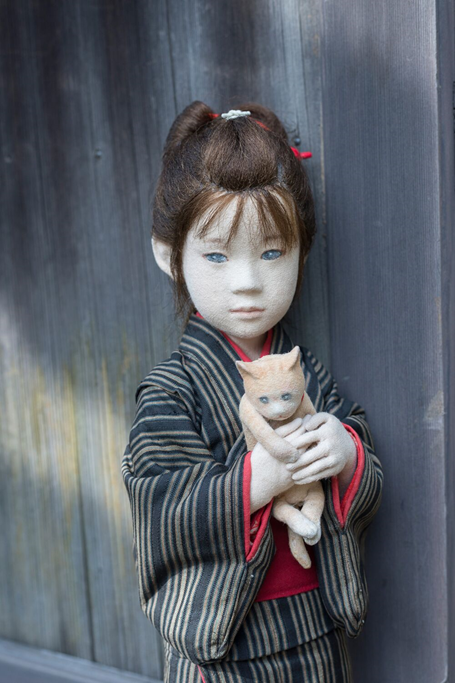
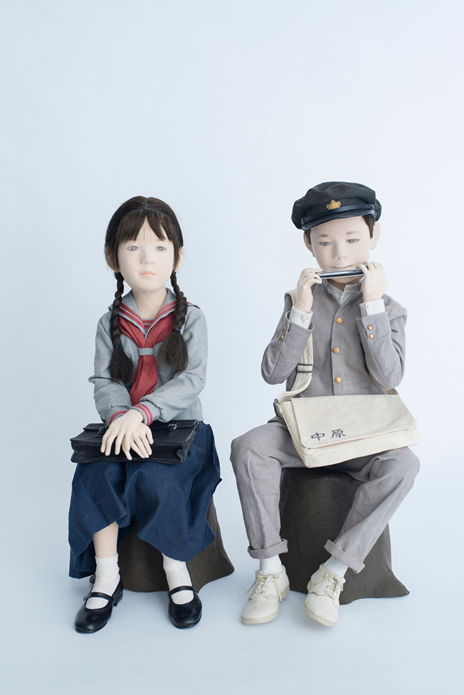
Very often when we mention the definition “doll” to describe artistic work, it brings negative association. The word “doll” indicates certain expectations. Some artists prefer to call their work creation or figurative sculpture. Whether described as dolls or as mixed-media decorative sculptures, each piece of an artwork opens a dialogue between the artist and the viewer. Yuki Atae is one of the most highly recognized contemporary doll artists in Japan. His delicate and nostalgic art dolls have gained popularity worldwide. He mainly portrays everyday moments in ordinary people’s lives with realism, humor and warmth (Fig. 6-7 left). Yuki Atae explained why he is creating dolls: “I thought this is the only thing I should do. I didn’t care whether I could make a living by it or not.'' The work of the artist you can admire at the Kawaguchiko Muse Museum, which together with Yoyukikan are small museums located in a corner of Yagizaki Park on the shores of Lake Kawaguchi at the foot of Mt. Fuji. Opened in June, 1993 and named after the Goddess of Greek mythological art, the museum displays Yuki Atae’s doll works. You can visit an exhibition here or DollCafe or simply marvel at Mt. Fuji from the muse garden facing Lake Kawaguchiko. People that highly admire dolls by Yuki Atae mention that his work brings back memories about childhood, their families and Japanese traditions. With his miniature dolls, he reminds them about the tenderness that people have lost nowadays. This is an example of how a doll can speak to us about ourselves and our conditions as humans. 
Dolls connect to people spiritually. We should never forget it or ignore it. Dolls make us feel more alive in their presence. This is why we cherish them. Perhaps one day, hundreds of thousands of years from now, archeologists will extract ancient artifacts from the 21st century in the buried remains of our cities. Among the ruins they may discover an exquisite doll with delicate features. They may even find several of these lost, crafted remnants across different continents around the world. Charmed by their beauty, they will marvel at the people who created, owned and loved them and the civilization that left them behind.

References / Places to visit in Japan:

Iwatsuki - The Town of Japanese Dolls:

https://www.japankuru.com/en/culture/e2251.html

Iwatsuki Ningyo Museum:

https://ningyo-muse.jp/modules/info/index.php?action=PageView&page_id=13

KAWAGUCHIKO MUSE MUSEUM:

http://www.fkchannel.jp/muse/facility/

Yuki Atae Dolls:

https://atae-yuki.com/

SCOTT PATE, A., (2008) Japanese Dolls. The fascinating world of Ningyo. Singapore: Tuttle Publishing, 2008

Come On OutComment
Onsens 101: Where to Go and What to Do

By Lena Strong

      Traveling to a foreign country is fun and exciting! As a Come On Out Japan intern, you get the chance to travel all over Japan— hopping from plane to shinkansen (Japan’s high-speed rail), visiting different islands and prefectures— a whirlwind of movement from place to place. You’ve probably heard the wise advice to pack as light as possible, but no matter how strict you adhere to this advice, traveling is tiring. Lugging suitcases around, switching time zones, moving in and out of share houses, all while working hard in the classroom can be exhausting.

      This may seem overwhelming at first but don’t worry, for Japan has the key to ultimate relaxation...onsens. If you are walking through a village and see the symbol ♨ or the kanji 湯, then you have come upon an onsen, or a Japanese hot spring. Japan being a volcanically active island, people have been harnessing the land’s natural resources for thousands of years, and to this day public bath culture continues to thrive.

Screen Shot 2021-03-07 at 9.06.27 AM.png

Where should I go?

      The geothermally heated water, rich with minerals and natural gases, provides health benefits in addition to a soothing experience. Traditionally located outdoors, there are a variety of facilities that offer both indoor and outdoor bathing, though it is tough to beat immersing yourself in the steaming waters amidst the sounds and sights of Japan’s beautiful forests. If you are staying in Tokyo, then you are close to the well-known waters of Hakone. However, the most famous onsen in Japan is Kusatsu, known for its high-quality hot springs that are said to heal every illness but lovesickness.

      If you are a history lover, or a fan of Spirited Away, then you should visit Dōgo Onsen, Japan’s oldest public bath. Around 3,000 years old, this hot spring has been the frequent destination of common people and the Imperial Family alike. Its most famous attraction is the Dōgo Onsen Honkan, a wooden public bathhouse with a maze of stairways, passages, and rooms that is said to have inspired Miyazaki’s popular animated film.

What should I do?

Here are some tips to help you during your own visit to a Japanese onsen:

Screen Shot 2021-03-07 at 9.02.06 AM.png

1. Check whether the facility allows tattoos.

Tattoos are a bit of a taboo in Japan and some onsens do not allow guests with tattoos. For this reason, it is important to check beforehand whether the onsen allows tattoos if you have any too large to cover up. 

2. Hit the locker room.

When you first arrive at an onsen, the proper etiquette is to shower before entering the baths to ensure cleanliness. The onsen will provide you with a key to a locker where you can secure your items during the time you spend at the baths. 

Screen Shot 2021-03-07 at 9.01.50 AM.png

3. Strip!

Everyone using the hot springs will be naked, so don’t be shy! Though traditionally men and women bathed in the same space, most places nowadays have separate bathing areas for men and women.

4. Alternate between cold and hot baths.

If you get overheated from the hot springs, cool off a bit in the colder baths available. This allows you to maintain a comfortable body temperature and increase your stamina for relaxing in the hot baths. It is also nice to sit in the sauna for a bit if you need a break from the water. 

Screen Shot 2021-03-07 at 9.02.19 AM.png

5. Hydrate.

Drink lots of water before and after your visit as long periods of sitting in hot baths can leave you dehydrated. Lots of places offer refreshments and snacks you can purchase after your visit.  

6. Be respectful.

It is good to be mindful of proper etiquette when you are a foreigner traveling to Japan for the first time. In general, onsens are social places where quiet chit-chat is acceptable, just don’t get too rowdy. You are able to take a small towel into the baths with you, but be careful to not let it under the water. Also, if you have long hair make sure you tie it up or wrap it in a small towel— nobody wants to sit in a bath with floating hairballs!

      Whether you are visiting Japan in the summertime or winter, the experience of an authentic onsen is well worth your time. Even the macaques destress and enjoy the natural hot springs in the land of the rising sun!


daniel-gregoire-Yn4OgJ4WocU-unsplash.jpg
Come On OutComment
Guide to Tokyo Nightlife: Best Places to Visit

By Sergio Razo

pexels-photo-1134166.jpg

Tokyo, Japan’s capital, has built a reputation of having some of the most popular nightlife spots in the country, a few are even world renowned. Nightlife in Tokyo is concentrated in four major areas: Shibuya, Shinjuku, Roppongi, and Ginza. While this is a guide to some popular bars, clubs, and Izakayas, we suggest you do your own research as well.

pexels-eva-elijas-5761962.jpg

Izakayas

Izakaya, which basically translates to “stay-drink-shop”, is unique to Japan’s nightlife experience. Izakayas are a part-bar-part-restaurant hybrid, great for groups to get cheap drinks and some comfort food after work or school.

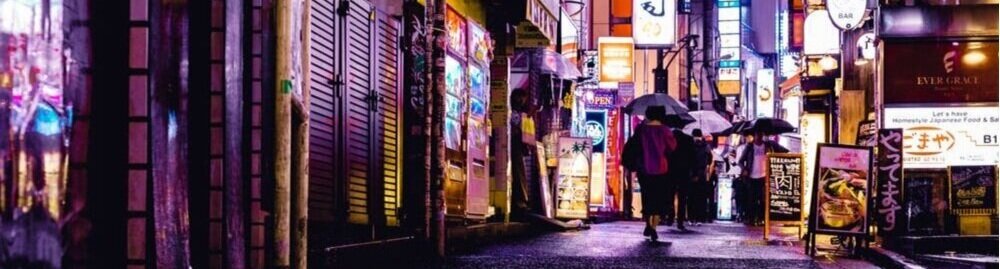
There are two common types of Izakayas: franchised establishments, and local, independent ones. Izakayas tend to be bunched together and are pretty recognizable with neon signs and traditional lanterns, usually located on strips and busy streets. The good thing about Izakayas is that they are pretty dense, so if you see one that’s full, chances are you’ll find an empty one next door.

Tip: There’s usually a bunch of Izakaya near train stations.


fidel-fernando-gVlENSMpR4g-unsplash.jpg

Depending on the Izakaya, foods vary from tempura and sashimi to meat-skewers and fried food platters. There’s also a large variety of drinks such as: beer, sake, highballs, and sours. Izakaya chains usually have menus in English, but it never hurts to ask the local ones if they have any, and if not you can always point out what you’d like. 

Even though drinks and appetizers are relatively cheap, around $3-$5 USD, it’s always smart to carry some cash around, especially if you're going to a local Izakaya. Some Izakayas also offer an “all you can drink” option called ‘nomihodai’ and an “all you can eat” option called ‘tabehodai’ for a flat rate, usually around $8-$17 for nomihodai and $30 for both. 

Izakayas usually close before midnight, which makes them great spots to chill out, drink, get a bite to eat, and still catch the train back home. However, if you have plans to stay out, Izakayas are a great place to pregame and start your night before going to bars and clubs.

Tip: Google Translate has a helpful feature where you can take a picture, highlight, and translate kanji, hiragana, and more!

Bars 

Bars are also relatively easy to find and usually don’t have cover charges but if you want to check out some of the unique bars Tokyo has to offer, here are three that are a must see: 

marcel-ardivan-eCSAg01ZhVE-unsplash.jpg

1. Shinjuku Golden Gai

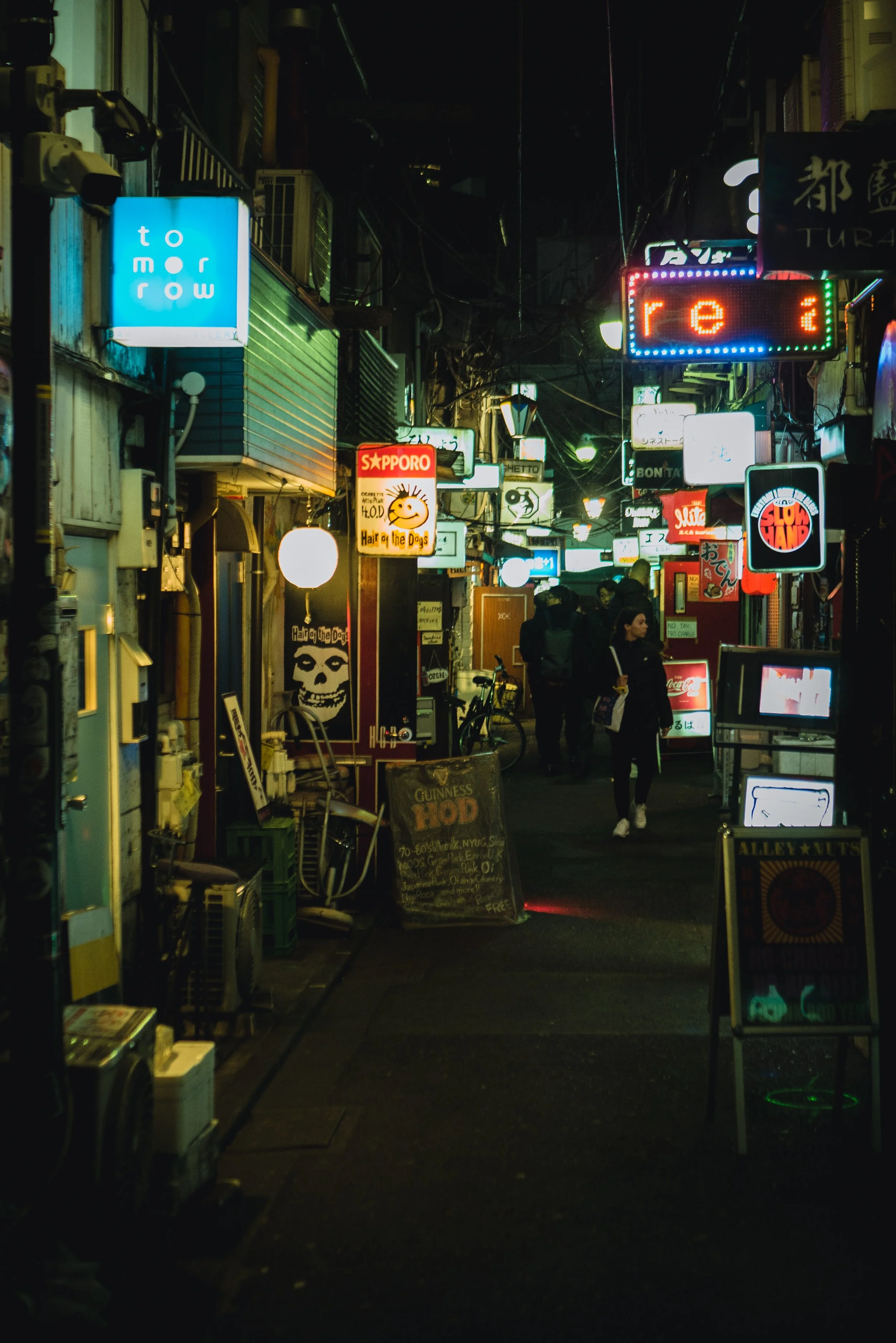
Golden Gai is a hidden alley of miniature bars near Shinjuku Station, dating back as early as the 1950s. Even though each of these mini bars hold about 4 to 7 people, between the six alleys there’s over 200 altogether. A great cozy place to start off your night and experience a casual yet intimate experience with locals and other foreigners. Drinks range between $4-$7. 

Tip: Look above and for staircases, some bars are stacked up on each other!


2. Tasuichi 

If you happen to find yourself in Shibuya, Tasuichi is a modern sports bar with TVs, English menus, and cheap drinks as low as $3.75. It’s also surrounded by other small bars such as Coins Bar, Shibuya Bar The Legless Arms, BEATCAFE, and some Izakayas in case you get hungry.


3. Tokyo Pub Crawl 

The famous Tokyo Pub Crawl is the best way to drink, dance, and gather with travelers and locals and is a must-have experience in Tokyo. The Tokyo Pub Crawl usually starts at the Propaganda Bar in the Roppongi area, and travels to about 4 other locations, lasting about 4 to 5 hours. Even though the crawl usually happens Friday and Saturday nights, definitely check the website when you plan to book, since there’s occasional special events and themes such as the “Cherry Blossom Party”. 


Even though barhopping is a great way to meet new people and familiarize yourself with Tokyo’s nightlife, here’s a few guidelines that you should remember: 

  • The trains stop at midnight and won’t start back up until 5am, so if you’re going to be out past then, have a plan. 

  • There isn’t uber or lyft and cabs tend to be pricey. 

  • Always be aware of your surroundings and remember to have a good sense of judgement. 


Clubs 

Clubs in Tokyo can be harder to find unless you have people to show you around or you do some research of your own. Clubs in Tokyo are a little pricey compared to bars, usually because they charge a cover fee to enter. 


1. Alife

Alife is a three-floor club in Roppongi, each with their own atmosphere and music genres, also conveniently near Roppongi Station. The entrance fee is about $32 and has lockers to store your personal belongings. 

2. Club Camelot 

If you happen to be in Shibuya, Club Camelot is a club that also has three floors, plays a variety of different music, and a good mix of locals and travelers. Cover charge is about $32 for men and $14 for women and also includes a drink voucher. 

3. Ageha

Ageha, which translates to “swallowtail butterfly” is a nightclub like no other. Ageha is in Koto City, the farthest club and away from the nightlife areas, mainly because it holds up to 5000 people. Ageha is basically a music festival with a huge stage, food trucks, and lounge areas, perfect to spend the entire night, however could be on the pricier side, around $35 for admission. This club often features famous DJs, so be sure to do your research to see who’s playing! 

Tip: Carry cash for cover charges, many clubs don’t accept card. 

Although Japan has great izakayas, bars, and clubs to try always be conscious of your surroundings, respectful of the locals and the environment, and overall have good judgement.  Whether you’re mentoring students or doing some other work, at the end of the day you’re a representative of Come On Out and a guest in someone’s homeland. For tips on Japanese etiquette, refer to the previous blogs and faqs. 

FAQs  

  • How much cash should I bring on a night out to club, barhop?

    • $40-$50 and more if you expect to go to multiple clubs. 

  • Is public drinking allowed?

    • Totally legal to pick up a alcoholic drink from the store and drink it at a park, but walking while drinking and even eating is not the social norm. 

  • Are there public restrooms?

    • There aren’t many public restrooms, usually the only ones are in train stations, however you have to buy an entrance ticket. 

  • What if I’m sensitive to cigarette smoke? 

    • Be aware that cigarrete smoking in Japan is very common, they even smoke inside some bars and izakayas, so if you’re sensitive to smoke, try to keep your distance or carry a face mask. 

Come On Out Comment